
In Print & Avicultural Literature

The Red Factor Canary has occupied a prominent place in avicultural print media since the breed's earliest decades. German-language journals devoted to ornithology and bird breeding published some of the first detailed accounts of the hybridization experiments between domestic canaries and Red Siskins during the 1920s and 1930s, and these early reports circulated widely among breeders across continental Europe. As the breed stabilized in the post-war period, English-language publications such as Cage and Aviary Birds in the United Kingdom and the American Cage-Bird Magazine in the United States began featuring Red Factor Canaries on their covers and in technical articles that explained the genetics of red pigmentation and the emerging practice of color feeding.

Books dedicated to canary keeping have given the Red Factor substantial coverage since at least the 1960s. G. T. Dodwell's comprehensive guide to color canary breeding, widely regarded as a foundational text in the English-speaking fancy, devoted entire chapters to the red factor gene, its inheritance patterns, and the dietary protocols required to achieve competitive color. Later authors expanded on this foundation, incorporating advances in carotenoid biochemistry and genetic mapping that reflected the growing scientific sophistication of the hobby. These texts remain in print or have been digitized, continuing to serve as references for new generations of breeders.

The breed's visual impact has also made it a favorite subject for avicultural coffee-table books and photographic anthologies. Collections celebrating the diversity of domesticated birds frequently feature Red Factor Canaries alongside species far larger and more exotic, a testament to the variety's ability to command attention despite its small size. The intense red plumage photographs exceptionally well, and publishers have recognized that a well-captured Red Factor image can anchor a cover or a chapter spread in ways that few other small cage birds can match.

Specialty newsletters produced by national and regional canary clubs have further expanded the breed's presence in print. These publications, often modest in format but rich in technical detail, provide show reports, breeding records, dietary tips, and profiles of successful breeders that collectively document the Red Factor Canary's ongoing development. While many of these newsletters have migrated to digital formats in recent years, their archives constitute a valuable historical record of the breed's evolution over the past half-century.

Television & Documentary Appearances

The Red Factor Canary has made periodic appearances on television, most commonly in documentary programming devoted to animal breeding, genetics, or the broader world of competitive animal showing. Nature documentaries produced by networks and studios in the United Kingdom, Germany, and the United States have used the Red Factor Canary as a case study in selective breeding, illustrating how human intervention can introduce traits from one species into another through planned hybridization. The breed's story lends itself particularly well to visual storytelling because the contrast between a standard yellow canary and a deep red specimen is immediately striking on screen.

Several programs in the competitive animal showing genre have featured canary exhibitions in which Red Factor birds figure prominently. These segments typically follow breeders as they prepare their birds for judging, capturing the meticulous grooming, cage presentation, and color-feeding regimens that go into producing a show-quality specimen. The visual drama of a row of vibrantly colored canaries lined up on a judging bench translates well to television, and producers have frequently used Red Factor Canaries as the focal point of these segments because of their photogenic appeal.

Educational television aimed at younger audiences has occasionally featured the Red Factor Canary as an entry point into discussions about genetics, inheritance, and the science of color in nature. The breed's dependence on both genetic makeup and dietary carotenoids provides a clear, accessible example of gene-environment interaction, a concept that can be difficult to illustrate with more complex organisms. Segments of this type have appeared on public broadcasting networks and science-oriented children's programs in multiple countries.

Despite these appearances, the Red Factor Canary has not achieved the kind of sustained television presence enjoyed by dog or cat breeds, which benefit from dedicated competition shows, reality series, and recurring roles in scripted programming. The canary fancy remains a comparatively niche pursuit, and television coverage tends to be episodic rather than ongoing. Nevertheless, each appearance introduces the breed to a broader audience and generates a measurable uptick in public interest, as evidenced by spikes in online search traffic following major broadcasts.

Photography & Visual Arts

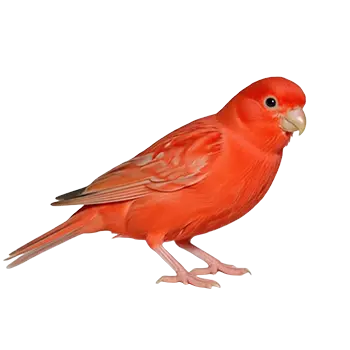
The Red Factor Canary's vivid plumage has made it a compelling subject for photographers working in the fields of nature, pet, and fine-art photography. Unlike many small cage birds whose muted or pastel coloring can be difficult to capture dramatically, the Red Factor offers a naturally saturated palette that rewards careful lighting and composition. Professional avicultural photographers have produced studio portraits of Red Factor Canaries that rival the best wildlife photography in their technical quality, using macro lenses and controlled lighting setups to reveal the microstructure of individual feathers and the subtle gradations of color across the bird's body.

Show photography constitutes a dedicated subgenre within avicultural visual culture, and Red Factor Canaries are among the most frequently photographed subjects at competitive exhibitions. Judges, breeders, and spectators alike document winning birds in formal portraits that are then published in club newsletters, online galleries, and social media feeds. These images serve both an archival function, recording the phenotypic standards of the breed at a given point in time, and a promotional one, attracting new enthusiasts to the hobby by showcasing the breed at its visual best.

Beyond the avicultural world, the Red Factor Canary has appeared in fine-art contexts that draw on the long tradition of birds in painting and decorative arts. Contemporary artists working in watercolor, oil, and digital media have depicted Red Factor Canaries in compositions that reference the Dutch and Flemish still-life tradition, in which exotic birds served as symbols of wealth, beauty, and the transience of life. The canary's association with domesticity, song, and human artifice adds layers of meaning that artists have explored in both representational and conceptual works.

Stock photography libraries contain extensive collections of Red Factor Canary images, reflecting the breed's utility as a visual asset in contexts ranging from pet-care advertising to editorial illustration. The bird's compact size, cooperative temperament in front of the camera, and arresting color make it an efficient subject for commercial shoots, and Red Factor images regularly appear in contexts that have little direct connection to aviculture, serving instead as generic representations of beauty, nature, or domestic companionship.

Digital Media & Online Communities

The rise of digital media has transformed the Red Factor Canary's cultural footprint, connecting breeders and enthusiasts across geographic and linguistic boundaries in ways that print publications and regional club meetings could not. Online forums dedicated to canary breeding, such as those hosted on specialized avicultural platforms, have served as primary gathering places for Red Factor breeders since the early 2000s. These forums contain vast archives of discussions covering every aspect of the breed, from genetic theory and pedigree analysis to color-feeding formulations and veterinary care, constituting a collectively authored knowledge base that surpasses any single printed reference.

Social media platforms have amplified the breed's visibility considerably. Instagram, Facebook, and YouTube host active communities of Red Factor Canary breeders and admirers who share photographs, videos, and breeding updates with audiences that can number in the tens of thousands. High-quality video content showing Red Factor Canaries in breeding aviaries, at shows, or simply perching and singing in home settings has attracted viewers well beyond the traditional canary fancy, introducing the breed to pet enthusiasts, bird watchers, and general animal lovers who might never attend a canary exhibition in person.

YouTube in particular has become a significant educational platform for the Red Factor Canary community. Breeders in countries including Spain, Brazil, Portugal, and Italy, where canary keeping has deep cultural roots, produce detailed video tutorials on topics such as pairing strategies, molt management, color-feeding schedules, and show preparation. These videos, often narrated in the breeder's native language with subtitles available, have democratized access to expertise that was previously transmitted only through personal mentorship or membership in local clubs.

The digital landscape has also created new competitive formats for the breed. Virtual canary shows, in which breeders submit high-resolution photographs of their birds for judging by panels of accredited judges, emerged as a practical necessity during periods when in-person exhibitions were disrupted but have persisted as a supplementary format that allows participation from breeders in remote areas or countries without established show circuits. These virtual competitions have their own standards for image quality and presentation, and the results are published online, extending the competitive life of the hobby into spaces that earlier generations of fanciers could not have anticipated.

Advertising & Commercial Representation

The Red Factor Canary's striking appearance has made it a recurring visual element in commercial advertising, particularly in campaigns associated with pet care products, home decor, and lifestyle brands. Pet food manufacturers and supplement companies have used images of Red Factor Canaries in packaging and promotional materials for decades, leveraging the bird's vivid color to suggest vitality, health, and the premium quality of the product being sold. The association between a brilliantly colored bird and a well-formulated diet is not purely aesthetic; in the case of the Red Factor Canary, the connection between nutrition and plumage color is biologically real, lending an air of scientific credibility to marketing claims.

Beyond the pet industry, the Red Factor Canary has appeared in advertising contexts that trade on its visual impact without reference to its biological identity. Interior design magazines and home furnishing catalogs have occasionally featured the bird in styled photographs that use its red plumage as a color accent against neutral or minimalist backgrounds, treating the canary as a decorative element rather than a living animal. While this usage has drawn criticism from avicultural advocates who object to the commodification of live birds as aesthetic props, it reflects the broader cultural reality that the Red Factor Canary's color is its most immediately recognizable and commercially exploitable trait.

The breed has also appeared in educational and institutional advertising. Zoos, aviaries, and natural history museums that maintain canary collections have used Red Factor images in promotional materials to illustrate themes of selective breeding, genetic diversity, and the relationship between humans and domesticated animals. University biology departments have featured the breed in outreach materials explaining genetics and inheritance, capitalizing on the bird's accessibility as a teaching example that requires no specialized knowledge to appreciate visually.

In the digital advertising ecosystem, Red Factor Canary images circulate widely as stock photography assets, appearing in contexts that range from veterinary clinic websites to general-interest articles about pet ownership. The breed's versatility as a visual subject, compact, colorful, and universally appealing, ensures that it surfaces in commercial contexts far removed from the avicultural world in which it was developed. This diffuse commercial presence contributes to a level of public recognition that is unusual for a variety of domesticated bird that most people will never encounter in person.

Educational Media & Scientific Outreach

The Red Factor Canary holds a distinctive position in educational media because its very existence illustrates fundamental principles of genetics, biochemistry, and selective breeding in a format that is visually engaging and conceptually accessible. Biology textbooks at the secondary and undergraduate levels have used the breed as a case study in Mendelian and non-Mendelian inheritance, demonstrating how a trait from one species can be transferred to another through hybridization and then refined through generations of backcrossing and selection. The breed's dependence on dietary carotenoids for full color expression adds a layer of complexity that makes it a particularly effective teaching tool for illustrating gene-environment interactions.

Science museums and natural history institutions have featured the Red Factor Canary in exhibits devoted to domestication, artificial selection, and the history of human relationships with animals. These exhibits typically present the breed alongside its wild ancestor, the Atlantic Canary, and the Red Siskin, allowing visitors to see the phenotypic differences that selective breeding has produced and to understand the genetic pathway that connects the three birds. Interactive displays in some institutions allow visitors to explore the effects of different color-feeding regimens on plumage color, reinforcing the concept that phenotype is not determined by genotype alone.

Popular science writing has given the Red Factor Canary attention in articles exploring the broader themes of animal breeding, genetic engineering, and the ethical dimensions of manipulating other species for human purposes. Journalists and science communicators have used the breed as a historical precedent for modern genetic technologies, drawing parallels between the hybridization experiments of the 1920s and contemporary techniques such as gene editing with CRISPR. These comparisons are not always precise, but they serve to ground abstract discussions of genetic technology in a concrete and relatable example.

Podcasts and online science communication channels have also discovered the Red Factor Canary as a subject that combines narrative appeal with genuine scientific substance. The breed's origin story, involving a quest that took decades to realize, a collaboration between scientists and hobbyists, and an unintended conservation crisis, contains the elements of compelling storytelling that science communicators seek. Episodes devoted to the Red Factor Canary have appeared on programs covering topics as diverse as evolutionary biology, the history of pet keeping, and the ethics of interspecies hybridization, reaching audiences that would never encounter the breed through traditional avicultural channels.

Always consult a qualified professional before making any health-related decisions. This content is provided for informational reference only and should not replace professional guidance specific to your animal.