
Film & Television

Parrots have been a fixture of cinema since the earliest adventure and pirate films, and Amazon parrots as a group have contributed to that legacy more than almost any other psittacine genus. While the Lilac-Crowned Amazon has not achieved the individual screen celebrity of certain African Greys or cockatoos, it belongs to a genus whose members have appeared in dozens of Hollywood and international productions. The green-bodied, colorful-headed Amazon parrot silhouette is one of the most immediately recognizable bird profiles in visual storytelling, deployed by filmmakers to signal tropical settings, eccentric characters, and the exotic allure of the natural world.

In live-action productions, trained Amazon parrots — including Lilac-Crowned Amazons — have served as on-set animal actors in films and television series requiring a parrot that is visually striking but temperamentally manageable. Animal trainers working in the entertainment industry have noted that the Lilac-Crowned Amazon's relatively calm disposition makes it a practical choice for on-camera work, where the bird must tolerate lights, crew activity, and repeated takes without becoming excessively agitated. This temperamental advantage has given the species a behind-the-scenes role in productions where the specific parrot species is not identified on screen but a reliable avian performer is needed.

Television nature documentaries have given the Lilac-Crowned Amazon its most direct screen exposure. Productions focusing on the biodiversity of Mexico's Pacific coast, the ecology of tropical dry forests, and the broader crisis facing Neotropical parrots have featured footage of wild Lilac-Crowned Amazons in flight, at feeding sites, and at nesting cavities. These documentary segments have introduced the species to international audiences who might otherwise never encounter it, presenting the bird in its native habitat rather than in the domesticated context that dominates popular perception of parrots.

Animated features and children's programming have drawn heavily on the Amazon parrot archetype without always specifying a particular species. The animated film genre's fascination with talking, colorful birds owes a significant debt to the Amazon genus, whose real-world vocal abilities and vivid plumage provide the template for countless fictional parrot characters. While these animated portrayals rarely name the Lilac-Crowned Amazon specifically, they draw from the same visual and behavioral vocabulary that the species embodies, reinforcing the Amazon parrot's position as the default parrot of popular imagination.

Literature & Published Works

The Lilac-Crowned Amazon appears across a range of published literature, from scientific monographs and field guides to popular nonfiction and avicultural handbooks. In the ornithological literature, the species has been the subject of detailed accounts in major references including Joseph Forshaw's Parrots of the World, long considered the definitive global survey of psittacine species. Forshaw's treatment of Amazona finschi provides taxonomic, distributional, and behavioral information that has served as a baseline for subsequent authors and researchers. The species also features in regional field guides to Mexican birds, where its range-restricted distribution and distinctive plumage make it a noteworthy entry for birdwatchers visiting the Pacific lowlands.

Popular nonfiction about parrots has given the Lilac-Crowned Amazon a presence in the broader literary conversation about avian intelligence, companionship, and conservation. Books exploring the parrot trade, such as those documenting the scale and consequences of wild bird trafficking from Latin America, reference the species as one of many Amazona parrots affected by decades of commercial exploitation. These accounts place the Lilac-Crowned Amazon within a narrative framework that connects individual species to the larger story of how the international pet trade reshaped parrot populations across the Neotropics.

Avicultural publications — both print magazines and their digital successors — have featured the Lilac-Crowned Amazon in breed profiles, care guides, and breeder interviews for decades. Publications such as Bird Talk, Parrots Magazine, and the AFA Watchbird have published articles covering the species' dietary needs, breeding behavior, and personality traits, contributing to a body of practical literature that prospective and current owners rely on. These articles often emphasize the Lilac-Crowned Amazon's reputation as an underappreciated gem within the Amazona genus, a bird that rewards attentive keepers with a depth of personality that rivals its more famous relatives.

In Mexican literature, parrots appear as cultural motifs in poetry, short fiction, and essays that explore the relationship between human communities and the natural landscapes of the Pacific coast. While these literary references are not always species-specific, the presence of large green parrots in the deciduous forests of western Mexico is a recurring image in the regional literary tradition, evoking a landscape that is at once familiar and increasingly fragile. The Lilac-Crowned Amazon, as one of the most visible avian inhabitants of that landscape, is woven into this literary fabric even when it is not named directly.

Social Media & Digital Communities

The rise of social media platforms has given the Lilac-Crowned Amazon a visibility that earlier media channels could not provide. On YouTube, Instagram, TikTok, and Facebook, individual Lilac-Crowned Amazons have accumulated substantial followings through videos and posts showcasing their vocal abilities, playful behavior, and interactions with their human companions. The format of short-form video is particularly well suited to parrot content: a 30-second clip of a Lilac-Crowned Amazon singing, talking, or engaging in an amusing antic can reach hundreds of thousands of viewers and introduce the species to audiences who have never encountered it in person.

Instagram and TikTok accounts dedicated to individual Lilac-Crowned Amazons have become micro-communities in their own right, with comment sections functioning as informal forums where owners exchange care tips, share behavioral observations, and discuss the quirks of the species. The visual emphasis of these platforms highlights the bird's subtle but beautiful coloring — the soft lilac crown, the green body plumage, and the flash of red at the forehead — in ways that static photographs in printed field guides cannot fully capture. Video content reveals the species' expressiveness: the pinning of the eyes, the fanning of the tail, and the characteristic Amazon body language that experienced keepers read as fluently as spoken language.

Facebook groups and online forums dedicated to Amazon parrots provide a more structured digital community for Lilac-Crowned Amazon owners. Groups such as those focused specifically on Amazona species or on Mexican parrots host discussions covering diet, veterinary care, behavioral challenges, and breeding. These communities serve as repositories of collective knowledge that supplement published care guides, and they provide a support network for owners navigating the long-term commitment of living with a parrot that may share their home for half a century.

The digital footprint of the Lilac-Crowned Amazon extends beyond pet-focused content. Wildlife photographers and birdwatching enthusiasts share field images and sighting reports through platforms like eBird and iNaturalist, creating crowd-sourced distribution data that supplements formal ornithological surveys. This citizen science dimension of the species' online presence bridges the gap between popular media and scientific research, turning casual observers into contributors to the broader understanding of where and how the Lilac-Crowned Amazon persists in the wild.

Video Games & Digital Entertainment

Parrots as a category have secured a durable niche in the video game industry, appearing across genres from open-world adventure games to casual mobile titles. The Amazon parrot body type — compact, green, with a colorful head — serves as the visual template for many in-game parrot characters and companion animals. In pirate-themed and exploration games, parrot companions are a near-universal feature, and the design of these digital birds frequently reflects the proportions and color patterns associated with Amazona species rather than the crested silhouettes of cockatoos or the long tails of macaws.

Open-world and sandbox games have offered some of the most detailed digital representations of parrot species. Titles set in tropical or subtropical environments sometimes include parrots as ambient wildlife, populating forest canopies with flocks that add visual and auditory atmosphere to the game world. While few games identify individual parrot species by name, the presence of green parrots with colored head markings in game environments modeled on Latin American landscapes aligns visually with the Amazona genus and, by extension, with species like the Lilac-Crowned Amazon that inhabit those real-world settings.

The mobile gaming market has embraced parrots as characters in puzzle, simulation, and virtual pet games. Bird-themed titles that allow players to collect, care for, or breed virtual birds have introduced parrot species — sometimes by name — to audiences who engage with them as game mechanics rather than as wildlife. These games occasionally include Amazon parrots in their species rosters, and even when the Lilac-Crowned Amazon is not individually represented, the broader visibility of Amazon parrots in gaming contributes to public familiarity with the genus.

Beyond interactive entertainment, parrots have appeared in digital media including web animations, podcast artwork, and streaming channel graphics. Content creators who keep parrots often incorporate their birds into their branding, using illustrations or photographs of their companions as channel logos, overlay graphics, and merchandise designs. Lilac-Crowned Amazon owners who create content in this space contribute to a growing library of species-specific digital media that exists outside traditional publishing and broadcasting channels, building the bird's cultural profile one stream, one episode, and one thumbnail at a time.

Photography & Fine Art

Wildlife photography has been instrumental in shaping public perception of the Lilac-Crowned Amazon, and the species presents both opportunities and challenges for photographers working in its native range. The tropical deciduous forests of western Mexico offer dramatic backdrops — rugged coastal cliffs, sun-drenched canopy, and seasonal landscapes that shift between lush green and skeletal gray — but the terrain is often steep and the birds can be wary of human approach. Photographers who have successfully captured the Lilac-Crowned Amazon in flight, at fruiting trees, or emerging from nesting cavities have produced images that convey both the beauty of the individual bird and the character of its habitat in ways that text descriptions cannot match.

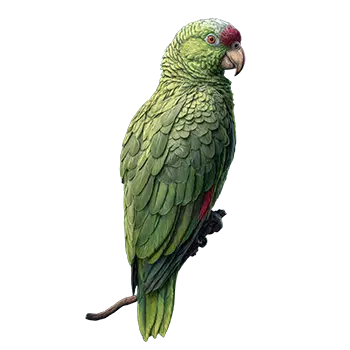
The species' plumage, while less overtly flamboyant than that of macaws or lorikeets, rewards close observation and careful photographic technique. The lilac-violet crown that gives the bird its name is a subtle wash rather than a bold patch, and capturing it accurately requires attention to lighting angle and exposure. The interplay of green body feathers, red forehead band, and pale eye ring creates a portrait that is quietly striking rather than immediately dazzling — a quality that has made the Lilac-Crowned Amazon a favorite subject among photographers who specialize in understated natural beauty rather than maximum chromatic impact.

In the fine art world, parrots have a long and distinguished history as subjects for painters, printmakers, and sculptors. The tradition stretches from the natural history illustrations of the 18th and 19th centuries — where artists like Edward Lear and John Gould produced meticulously detailed lithographs of parrot species — to contemporary wildlife artists who work in oil, watercolor, acrylic, and digital media. The Lilac-Crowned Amazon appears in this tradition both as a named species in ornithological art portfolios and as part of the broader Amazon parrot visual vocabulary that artists draw upon when depicting the birdlife of Mexico's Pacific coast.

Contemporary artists working in mixed media, ceramics, textiles, and mural painting have incorporated parrot imagery into works that engage with themes of biodiversity, environmental change, and cultural identity in Latin America. In the towns and cities of western Mexico, murals featuring parrots in flight are a visible element of public art, reflecting the bird's role as a regional symbol. These artistic representations serve a cultural function that extends beyond decoration: they assert the parrot's place in the visual identity of communities that have coexisted with the species for generations, and they communicate the bird's significance to viewers who may never enter the forest.

Advertising, Branding & Commercial Imagery

The visual appeal of parrots has made them enduring figures in advertising and commercial branding, and the Amazon parrot silhouette in particular carries associations with tropical vitality, natural abundance, and vibrant color that marketers have exploited across industries. Tourism campaigns for Mexico's Pacific coast states — Jalisco, Nayarit, Colima, Sinaloa — have incorporated parrot imagery into promotional materials that position the region as a destination for ecotourism, birdwatching, and nature-based travel. The Lilac-Crowned Amazon, as one of the signature bird species of this coastline, appears in regional tourism branding alongside imagery of coastal landscapes, traditional villages, and forest reserves.

Beyond tourism, parrot imagery surfaces in the branding of food and beverage products, hospitality businesses, and artisanal goods across western Mexico. Restaurants, hotels, and shops in towns along the Pacific coast use parrot logos and decorative motifs that reference the region's avifauna, and the Lilac-Crowned Amazon's profile is among the species drawn upon for these purposes. This commercial use of the bird's image reflects a broader pattern in which charismatic wildlife species become informal brand ambassadors for the regions they inhabit, their likeness signaling authenticity, locality, and connection to the natural environment.

In the pet industry, Amazon parrots feature prominently in the marketing of bird food, cages, toys, and health products. Product packaging and advertising campaigns use photographs and illustrations of Amazon parrots to convey quality, expertise, and species-appropriate care. While the most commonly depicted Amazons in pet industry advertising tend to be the larger and more widely kept species such as the Double Yellow-headed or Blue-fronted Amazon, the Lilac-Crowned Amazon appears in marketing materials from specialty avicultural suppliers and breeders who cater to knowledgeable parrot enthusiasts rather than the mass market.

The species has also found its way into the visual vocabulary of nonprofit and environmental branding. Organizations working on Neotropical bird conservation, habitat preservation, and sustainable development in western Mexico have used the Lilac-Crowned Amazon's image in logos, campaign graphics, and fundraising materials. In this context, the bird functions as a flagship species — a visually compelling representative of the broader ecosystem whose image communicates the value and urgency of conservation work to donors, policymakers, and the general public. This branding role, while distinct from entertainment or commercial advertising, represents another dimension of the Lilac-Crowned Amazon's presence in the visual culture that surrounds it.

Always consult a qualified professional before making any health-related decisions. This content is provided for informational reference only and should not replace professional guidance specific to your animal.