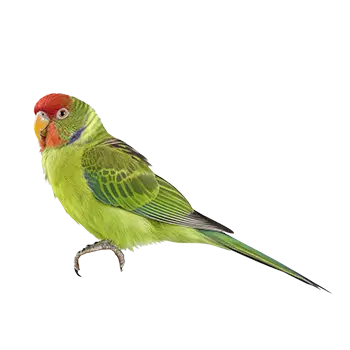

Origins & Native Habitat

The Kakariki, whose name derives from the Māori word for "small parrot" or more literally "small green one," is a group of parakeets endemic to New Zealand and its outlying island territories. The genus Cyanoramphus includes several species, with the red-crowned kakariki (Cyanoramphus novaezelandiae) and the yellow-crowned kakariki (Cyanoramphus auriceps) being the most widely recognized. These birds evolved in the isolated ecosystems of New Zealand over millions of years, developing distinct characteristics shaped by the absence of mammalian predators.

Before the arrival of humans, kakariki were among the most abundant bird species across both the North and South Islands. They thrived in dense native bush, particularly in beech and podocarp forests, where they fed on seeds, berries, flowers, and small invertebrates. Their population stretched from coastal lowlands to subalpine zones, and their bright plumage and constant chatter made them a defining presence in the New Zealand soundscape.

The arrival of Polynesian settlers around the thirteenth century, followed by European colonization in the nineteenth century, brought dramatic changes to kakariki populations. The introduction of rats, stoats, cats, and other mammalian predators devastated their numbers, as these ground-foraging and cavity-nesting birds had no evolved defenses against such threats. Habitat clearance for farming further reduced their range, pushing many populations to the brink of extinction on the mainland.

Today, several kakariki species survive primarily on predator-free offshore islands, such as Little Barrier Island and Codfish Island, while intensive conservation programs work to reintroduce them to protected mainland sanctuaries. The orange-fronted kakariki (Cyanoramphus malherbi), one of the rarest parakeets in the world, is the subject of particularly urgent recovery efforts involving captive breeding and habitat restoration.

Historical Roles & Human Interaction

Kakariki have a long history of interaction with humans in New Zealand. For Māori communities, these parakeets were an important resource in daily life. Their vibrant feathers, especially the red and yellow crown plumes, were prized for decorating cloaks and other garments. The birds were also hunted for food, with traditional methods including the use of snares and tamed decoy birds to attract wild flocks.

Māori ecological knowledge included detailed observations of kakariki behavior, migration patterns, and seasonal abundance. The birds' activity levels and calls were sometimes used as indicators of forest health and seasonal change. This deep familiarity with the species was woven into oral traditions, place names, and everyday language, reflecting the close relationship between Māori and their natural environment.

European naturalists who arrived in the eighteenth and nineteenth centuries took a keen scientific interest in kakariki. Early explorers and collectors documented multiple species and sent specimens to museums across Europe. These collections became the foundation for the formal taxonomic classification of the Cyanoramphus genus. Some of the earliest color illustrations of New Zealand birds prominently featured kakariki, contributing to European awareness of the country's unique avifauna.

By the late nineteenth century, the dramatic decline in kakariki numbers was already being noted by both Māori and European observers. Early conservation voices raised concerns about habitat destruction and introduced predators, though meaningful legislative protections would not arrive for decades. The kakariki's story became an early example of the broader conservation challenges facing New Zealand's native wildlife.

Cultural Symbolism & Māori Heritage

In Māori culture, the kakariki holds a meaningful place within the broader spiritual and symbolic framework that connects people to the natural world. Birds in general occupy a special role in Māori cosmology, as descendants of Tāne Mahuta, the god of the forest. The kakariki, as a forest dweller, was considered a child of Tāne and thus part of the sacred web of relationships between humans and the environment.

The bird's bright green plumage and energetic behavior contributed to its symbolic associations with vitality, liveliness, and the lush abundance of the native bush. The name "kakariki" itself became a general Māori word for the color green, demonstrating how deeply the bird's image was embedded in the language and everyday thought of its human neighbors.

Kakariki feathers were used in traditional arts and ceremonies, though they were not as highly prized as the plumes of the huia or kākāpō. Red-crowned kakariki feathers, in particular, added flashes of color to woven cloaks and hair adornments. The use of these feathers carried cultural significance beyond mere decoration, linking the wearer to the forest and the spiritual world it represented.

In contemporary Māori culture, the kakariki serves as an emblem of both ecological loss and hopeful restoration. Conservation efforts led by iwi (tribal groups) frequently center kakariki recovery as part of a broader mission to heal the relationship between people and the land. The birds appear in educational programs, art, and public awareness campaigns that blend traditional knowledge with modern conservation science.

Conservation Milestones & Recovery

The conservation history of the kakariki is closely tied to New Zealand's broader journey toward protecting its unique native species. The Wildlife Act of 1953 provided the first comprehensive legal protections for native birds, including all kakariki species. This legislation marked a turning point, shifting kakariki from a historically hunted species to one recognized as requiring active preservation.

Throughout the latter half of the twentieth century, conservation efforts focused on protecting the offshore island populations that had become the last refuges for several kakariki species. Islands such as Little Barrier, Tiritiri Matangi, and Whenua Hou (Codfish Island) were cleared of introduced predators and managed as sanctuaries. These predator-free environments allowed kakariki populations to stabilize and, in some cases, recover significantly.

The development of mainland eco-sanctuaries in the late 1990s and early 2000s opened new possibilities for kakariki reintroduction. Fenced sanctuaries like Zealandia in Wellington became sites where kakariki could once again inhabit mainland forests, protected from predators by pest-proof barriers. These projects captured public imagination and brought kakariki into closer contact with urban communities, boosting awareness and support for conservation.

The orange-fronted kakariki remains one of New Zealand's most critically endangered birds, with a wild population that has at times numbered fewer than two hundred individuals. Intensive management, including captive breeding at the Isaac Conservation and Wildlife Trust, supplementary feeding, and nest monitoring, has been essential to preventing extinction. The species has become a symbol of the painstaking, long-term commitment required to save the country's most vulnerable wildlife.

The Kakariki in Aviculture

While wild kakariki populations have faced serious threats, the red-crowned and yellow-crowned species have established a strong presence in aviculture worldwide. European aviculturists began keeping and breeding kakariki in the nineteenth century, drawn by their vivid coloring, manageable size, and lively personalities. By the mid-twentieth century, captive breeding programs in Europe, Australia, and North America had created self-sustaining avicultural populations largely independent of wild stock.

In captivity, kakariki gained a reputation as charming and entertaining companions. Their energetic ground-foraging behavior, curiosity, and willingness to interact with humans set them apart from many other parakeet species. Breeders also developed color mutations, including cinnamon, pied, and lutino varieties, which increased their popularity among hobbyists and show breeders.

The avicultural community has played an important supporting role in kakariki conservation. Captive breeding expertise developed by private breeders has informed official recovery programs, and some avicultural populations have served as genetic reservoirs. Organizations such as the Avicultural Society and various national parrot societies have promoted responsible breeding practices and public education about the species' conservation needs.

Despite their popularity in aviculture, kakariki remain relatively less well known than budgerigars, cockatiels, or lovebirds in many markets. Enthusiasts value this relative obscurity, arguing that it attracts more dedicated and knowledgeable keepers. The species' growing visibility in online bird-keeping communities has introduced kakariki to a new generation of aviculturists who appreciate both their appeal as pets and their significance as ambassadors for New Zealand's wildlife heritage.

Notable Individuals & Conservation Figures

Several individuals and organizations have played pivotal roles in the kakariki's conservation story. Don Merton, one of New Zealand's most celebrated wildlife biologists, contributed significantly to understanding and protecting native parakeets as part of his broader work on endangered bird recovery. His pioneering techniques in nest management and predator control informed strategies used in kakariki recovery programs.

The Isaac Conservation and Wildlife Trust, founded by Sir Neil and Lady Diana Isaac near Christchurch, has been instrumental in the captive breeding of orange-fronted kakariki. The trust's breeding facility has produced birds for release into the wild and has served as a critical safety net against extinction. The dedication of the trust's staff and volunteers over decades exemplifies the sustained human effort required to preserve a critically endangered species.

In the realm of aviculture, breeders like the late Stan Sindel of Australia made important contributions to understanding kakariki genetics, husbandry, and color mutations. His publications and mentorship helped shape best practices for captive management across the Southern Hemisphere. European breeders, particularly in the Netherlands and Belgium, also played a significant role in establishing and maintaining healthy avicultural populations during the twentieth century.

More recently, community-led conservation groups have emerged as key players in kakariki protection. Organizations such as the Kakariki Trust and local volunteer groups participate in monitoring, habitat restoration, and public education. These grassroots efforts complement the work of government agencies like the Department of Conservation, creating a network of support that spans professional science and passionate community involvement.

Always consult a qualified professional before making any health-related decisions. This content is provided for informational reference only and should not replace professional guidance specific to your animal.