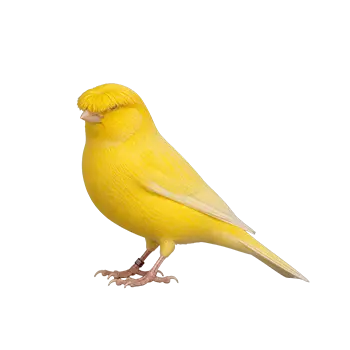

The Bowl-Cut Bird Goes Viral

The Gloster Canary's most recognizable feature, the Corona variety's round, flat crest of feathers radiating outward from the top of its head, bears an unmistakable resemblance to a human bowl cut or moptop hairstyle. This visual quirk, invisible to most people before the era of social media, proved to be the catalyst for the breed's unexpected leap from avicultural obscurity into mainstream internet culture. When photographs of Corona Glosters began circulating on platforms like Reddit, Twitter, and Instagram in the late 2010s, the reaction was immediate and enthusiastic. Viewers who had never heard of the Gloster Canary, and in many cases had never given canaries a second thought, found themselves captivated by a bird that appeared to be wearing a perfectly groomed 1960s hairstyle.

The comparisons to the Beatles' iconic moptop haircut became the dominant framing for the breed's online persona. Article headlines, social media captions, and meme text consistently drew the connection between the Corona Gloster's crest and the look popularized by the Fab Four during the British Invasion. This association gave the Gloster a cultural shorthand that made it instantly recognizable even to people with no interest in birds or aviculture. The breed's name, the Corona, acquired an additional layer of popular recognition that had nothing to do with its Latin etymology and everything to do with the visual punchline it delivered.

The viral spread of Gloster Canary images followed a pattern common to animal memes: an initial wave of organic sharing driven by genuine delight, followed by a secondary wave of derivative content including edited images, humorous captions, and comparison posts. Gloster images appeared in compilation articles with titles like "birds with better hair than you" and were shared by major media outlets, pet-focused websites, and humor accounts with audiences numbering in the millions. Each new wave of attention introduced the breed to a wider audience and cemented its status as one of the internet's most recognizable bird breeds.

What distinguished the Gloster's viral moment from many other animal memes was its durability. Rather than peaking and fading within a news cycle, Gloster Canary content has continued to surface and resurface over several years, driven by the steady availability of new photographs from breeders and owners, the breed's inherent photogenic quality, and the apparently inexhaustible public appetite for birds that look like they have human hairstyles. The Gloster has become a perennial fixture in the online ecosystem of cute and unusual animals, a status that shows no sign of diminishing.

Notable Individuals & Social Media Stars

Among the individual Gloster Canaries that have achieved internet fame, the most prominent is Barry, a Corona Gloster based in the United Kingdom whose Instagram account attracted thousands of followers and hundreds of thousands of likes. Barry's owner began posting photographs after noticing that images of the bird generated outsized reactions online, and the account quickly grew beyond anything the owner had anticipated. Barry's Instagram bio described him as the bird with the fringe, a characterization that leaned into the hairstyle comparison while giving the bird a distinct personality that followers could engage with.

Barry's appeal extended well beyond Instagram. Images and stories about the bird were picked up by major news outlets and viral content aggregators, spreading his likeness to audiences who would never have encountered the original Instagram posts. One particularly popular image showed Barry's crest reflecting rainbow light, an image that accumulated hundreds of thousands of interactions across multiple platforms. The bird's owner described Barry as something of a diva who was paradoxically camera-shy, freezing when the camera appeared despite being otherwise lively and vocal. This personality quirk added to Barry's narrative appeal, making him feel less like a commodity and more like a character.

Barry is far from the only Gloster Canary to develop an online following. Across Instagram, TikTok, YouTube, and Facebook, individual Glosters have accumulated dedicated audiences drawn by daily updates, singing videos, and the sheer visual charm of the Corona's crest. Some accounts focus on the birds' singing abilities, posting videos that showcase the surprisingly rich vocal output of these small canaries. Others emphasize the humor inherent in the breed's appearance, pairing photographs with comedic captions or editing birds into incongruous contexts. Still others document the breeding process, offering educational content that introduces casual followers to the complexities of Gloster genetics, diet, and husbandry.

The cumulative effect of these individual accounts has been to transform the Gloster Canary from a breed known primarily within avicultural circles into a recognizable cultural presence with appeal that crosses demographic and geographic boundaries. Followers of Gloster accounts include not only current and prospective bird owners but also people who simply enjoy animal content, fashion enthusiasts amused by the hairstyle parallels, and educators who use the breed's genetics as a teaching tool. This broad base of interest has given the Gloster a media footprint disproportionate to its population size or its significance within professional aviculture.

Representation in Traditional Media

The Gloster Canary's presence in traditional media predates its internet fame, though the earlier coverage was confined almost entirely to specialist publications. Magazines such as American Cage Bird Magazine, Cage and Aviary Birds in the United Kingdom, and the AFA Watchbird in the United States published articles about the breed from the 1960s onward, covering topics ranging from breeding technique and show preparation to the breed's history and genetic peculiarities. These publications served a dedicated readership of aviculturists and provided the foundational documentation that later informed popular accounts of the breed.

As the Gloster's internet popularity grew, mainstream media outlets began covering the breed with increasing frequency. News organizations in the United Kingdom, United States, Australia, and elsewhere published feature articles about viral Gloster Canaries, typically framing the stories around the breed's unusual appearance and its unexpected social media success. These articles introduced the Gloster to readers of general-interest publications who might never encounter a specialist bird magazine, broadening the breed's cultural visibility and driving further social media engagement in a self-reinforcing cycle.

Television coverage has been less extensive but not absent. Morning shows and lifestyle programs in several countries have featured segments on Gloster Canaries, usually in the context of unusual or adorable pets. These segments tend to emphasize the breed's visual appeal and its suitability as a companion animal, offering brief but positive exposure to large audiences. Documentary programming on nature and animal channels has occasionally included the Gloster as part of broader coverage of domestic canary varieties, though the breed has not been the subject of a dedicated documentary production.

The Gloster Canary also appears in the growing body of illustrated bird books and coffee-table photography collections that cater to both ornithological enthusiasts and general audiences drawn to beautiful animal imagery. The Corona variety's photogenic crest makes it a natural subject for this format, and high-quality images of Glosters have appeared in publications celebrating the diversity of domestic bird breeds. These print appearances contribute to the breed's cultural presence in a medium that carries a different kind of permanence and authority than social media, lending the Gloster a degree of visibility that extends beyond the ephemeral cycles of online content.

The Canary in Art & Historical Imagination

While the Gloster Canary itself is a twentieth-century creation, it inherits a deep artistic and cultural legacy from the broader canary family. Domestic canaries have appeared in European painting, literature, and decorative arts for centuries, serving as symbols of domesticity, beauty, captivity, and song. Dutch and Flemish still-life painters of the seventeenth century occasionally included caged canaries in their compositions, using the bird as a marker of household refinement and the pleasures of private life. Eighteenth- and nineteenth-century genre paintings across Europe frequently depicted women with canaries, establishing a visual association between the singing bird and idealized feminine domesticity.

In literature, the canary has served as a rich metaphor. Kate Chopin's famous short story used a caged songbird as a symbol of feminine confinement and suppressed identity, a literary device that drew on centuries of cultural association between canaries and captive beauty. The phrase "canary in a coal mine" entered common English as a metaphor for early warning, drawn from the literal practice of using canaries to detect toxic gases in mining operations. These cultural associations, while not specific to the Gloster, form the backdrop against which the modern Gloster Canary is perceived and appreciated.

The Gloster's distinctive appearance has inspired a modest but growing body of contemporary artistic work. Illustrators and graphic designers have used the Corona's crested silhouette in logos, greeting cards, and decorative prints, drawn by the breed's instantly recognizable profile. The combination of round body, flat crest, and small stature creates a silhouette that reads clearly even at small scales, making it well suited to graphic applications. Independent artists on platforms like Etsy and Redbubble offer Gloster-themed merchandise including prints, stickers, enamel pins, and apparel, capitalizing on the breed's internet-driven popularity.

The Gloster also occupies an interesting position in the history of selective breeding as a form of biological artistry. The deliberate shaping of a living organism to achieve a specific aesthetic vision, refining proportions, crest symmetry, and feather quality over generations, parallels artistic processes in sculpture and design. Breeders themselves often describe their work in aesthetic terms, speaking of balance, harmony, and proportion in ways that echo the vocabulary of visual art. This perspective positions the Gloster not merely as a product of agricultural technique but as a living artifact of human creative ambition.

Meme Culture & the Gloster Aesthetic

The Gloster Canary's integration into internet meme culture represents a case study in how a niche subject can achieve broad cultural recognition through the visual grammar of social media. The breed's success as a meme relies on several qualities that align with the characteristics of effective viral content: an immediately legible visual hook, an element of surprise or incongruity, and an emotional register that skews toward delight rather than controversy. The sight of a bird that appears to have styled its own hair triggers a cognitive double-take that is inherently shareable, and the positive emotional response it generates makes it the kind of content that people are willing to pass along to friends and followers.

Gloster memes have taken multiple formats. Simple image macros pair photographs of Corona Glosters with humorous captions, often riffing on hairstyle jokes or imagining the bird's inner monologue. Comparison posts place Gloster photographs alongside images of human hairstyles, celebrity bowl cuts, or other animals with unusual head feathering, creating visual punchlines that require no explanation. Video content on TikTok and YouTube has expanded the meme vocabulary, with short clips of Glosters singing, bathing, or simply sitting on a perch accumulating millions of views, often accompanied by trending audio tracks that heighten the comedic or charming effect.

The breed's meme presence has had measurable effects on public awareness and demand. Breeders report increased inquiries from prospective owners who first encountered the Gloster through social media, and online searches for the breed spike noticeably following each new wave of viral content. This attention is a double-edged phenomenon within the breeding community. While increased interest supports the breed's long-term viability and introduces new enthusiasts to aviculture, it also raises concerns about impulse purchases by unprepared owners who may not understand the commitment involved in caring for any bird, however small and hardy.

The Gloster's meme identity has also influenced how the breed is perceived within avicultural circles. Some experienced breeders welcome the increased visibility, viewing it as an opportunity to educate a broader audience about responsible bird keeping and the art of selective breeding. Others express concern that the emphasis on visual novelty and humor may trivialize a breed that represents decades of careful genetic work. This tension between popular appeal and specialist identity is not unique to the Gloster, but the breed's unusually high meme profile has made it a particularly visible example of the dynamic.

Influence on Bird-Keeping Culture

The Gloster Canary's media visibility has contributed to measurable shifts in the culture of bird keeping, particularly among younger and first-time owners. Social media platforms have become primary discovery channels for prospective bird owners, and the Gloster's strong visual presence on these platforms has positioned it as a gateway breed that introduces people to the world of aviculture who might otherwise never have considered keeping a bird. Online communities dedicated to Gloster ownership and breeding have grown in parallel with the breed's media profile, creating spaces where newcomers can access husbandry advice, breeding guidance, and the shared experience of other Gloster keepers.

The breed's internet fame has also elevated the profile of canary keeping more broadly. Canaries had, for much of the late twentieth century, been overshadowed in popular culture by parrots, cockatiels, and other species perceived as more interactive or dramatic. The Gloster's viral success reminded a wide audience that canaries possess their own distinctive charm, and the resulting media coverage frequently expanded to discuss canary breeds in general, their history, their care requirements, and their diversity. In this sense, the Gloster has served as an ambassador for the entire canary family, drawing attention to a category of companion birds that had faded from mainstream awareness.

Within the exhibition community, the Gloster's media presence has encouraged clubs and associations to develop their own online strategies. Organizations like the International Gloster Breeders Association and its affiliated chapters now maintain websites, social media accounts, and digital resources that serve both existing members and the broader public. Show results, breeding articles, and educational content that were once available only through printed newsletters or in-person meetings are now accessible to anyone with an internet connection, lowering barriers to entry and supporting the growth of the fancy.

The long-term impact of the Gloster's media moment on bird-keeping culture remains an open question. If the increased interest translates into a sustained population of informed, committed owners and breeders, the breed's viral fame may prove to be one of the most consequential events in its history. If, on the other hand, the attention proves to be largely superficial, generating more clicks than actual adoptions or breeding commitments, the Gloster's cultural significance may ultimately be measured more in pageviews than in populated aviaries. The evidence to date suggests a meaningful, if modest, net positive effect, with the breed's global population and organizational infrastructure both stronger than they were before the internet discovered the bird with the bowl cut.

Always consult a qualified professional before making any health-related decisions. This content is provided for informational reference only and should not replace professional guidance specific to your animal.