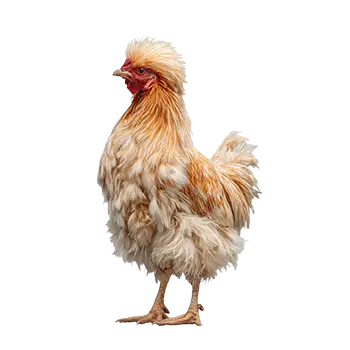

The Cochin, in both its large and bantam forms, was one of the most frequently illustrated chicken breeds during the Victorian era, a period when poultry literature experienced an unprecedented boom. The hen fever of the 1840s and 1850s generated enormous public demand for printed material about exotic breeds, and publishers responded with lavishly illustrated books, periodicals, and broadsheets that featured detailed engravings and later chromolithographs of prize-winning birds. The Cochin's profuse feathering and rounded silhouette made it an especially rewarding subject for artists, whose renderings emphasized the dramatic contrast between the Cochin type and the leaner, less ornamental breeds that had previously dominated European poultry yards.
Among the most significant publications of this era was The Poultry Book by William Bernhard Tegetmeier, first published in 1867, which included meticulous illustrations of Cochins alongside detailed breed descriptions. Harrison Weir, the celebrated animal artist who would later organize the first major cat show, contributed illustrations of Cochins to several Victorian-era poultry publications, capturing the breed's distinctive form with an accuracy and artistry that remain admired by poultry historians today. Lewis Wright's The Illustrated Book of Poultry, published in 1872, featured color plates of Cochins that became iconic images within the fancy and are still reproduced in breed reference materials.
These Victorian illustrations did more than simply document the Cochin's appearance; they helped establish and codify the breed ideal. Breeders used published images as visual benchmarks against which to evaluate their own stock, and the circulation of these images across national boundaries helped create a shared understanding of the Cochin standard that transcended local variation. The bantam Cochin, as it emerged in the later decades of the 19th century, inherited this tradition of careful visual documentation, and early illustrations of bantam specimens played a similar role in defining what the miniature version of the breed should look like.
The legacy of Victorian poultry illustration continues to influence how the Cochin Bantam is perceived and presented. Modern breed publications, websites, and social media accounts frequently reference or reproduce 19th-century images as a way of connecting contemporary birds to the breed's historical roots. The visual language established by Victorian artists, emphasizing fullness of feather, roundness of body, and elaborateness of foot feathering, remains the template against which Cochin Bantams are judged and appreciated.