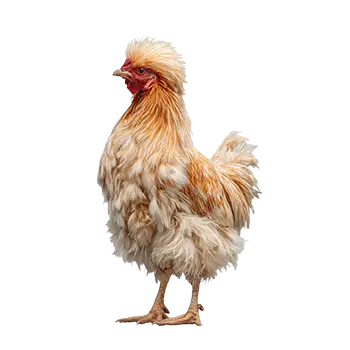

The Cochin Bantam traces its ancestry to the large feather-legged fowl that Western traders encountered in the port city of Shanghai during the 1840s. These birds, broadly referred to as Shanghai fowl or Cochin-China fowl by Europeans, were substantially larger and more heavily feathered than any domestic poultry familiar to British or American breeders at the time. The original imports were full-sized birds, and the bantam variety that exists today was developed later through selective miniaturization, but the cultural and genetic roots of the Cochin Bantam lie squarely in those mid-19th-century Chinese exports.
China's long history of ornamental poultry breeding provided the foundation for the Cochin type. Chinese fanciers had been selectively breeding chickens for centuries, emphasizing traits such as profuse plumage, feathered shanks and toes, and a calm, approachable disposition. These were not strictly utility birds in the Western sense; they occupied a cultural niche that valued beauty and temperament alongside egg and meat production. When British sea captains and merchants began acquiring specimens from Shanghai-area markets, they were tapping into a deep tradition of deliberate avian refinement.
The exact circumstances of the first Cochin imports to England remain a subject of some historical debate. Most accounts credit the arrival of Shanghai fowl in the mid-1840s, with birds reaching both private collectors and public exhibitions by 1843 to 1845. Queen Victoria herself received a gift of several large feather-legged fowl, reportedly from a returning sea captain, and her enthusiastic display of the birds at the Royal Poultry Yard helped ignite the public fascination that would soon become a full-blown cultural phenomenon.
The birds that arrived in those early shipments were variable in appearance, reflecting the diversity of Chinese poultry stock rather than a single standardized breed. British and later American breeders would spend decades refining the Cochin type into the round, densely feathered bird recognized by modern standards. The bantam version emerged as part of this broader project of selective breeding, driven by fanciers who admired the Cochin's form and character but desired a more manageable, space-efficient bird.