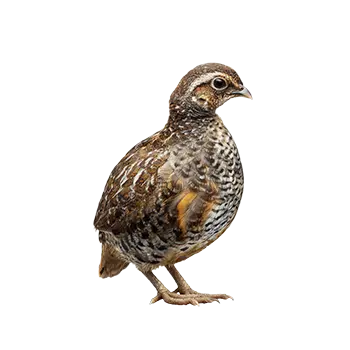

The Button Quail's presence in wildlife documentaries has been modest compared to more visually dramatic or behaviorally conspicuous species, yet it has appeared in a number of productions focused on Asian and Australian grassland ecosystems. Nature programs exploring the biodiversity of Southeast Asian rice paddies and tropical lowlands have occasionally featured footage of King Quail foraging through dense ground cover, often as part of broader segments on the diversity of ground-nesting birds. Australian wildlife documentaries, particularly those examining the ecology of tropical savannas and coastal grasslands in Queensland, have included the species in surveys of native birdlife, highlighting its role as an indicator of healthy grass-dominated habitats.
The challenge of filming Button Quail in the wild lies precisely in the traits that define the species. They are small, cryptically colored, and reluctant to flush unless nearly stepped upon. When they do take flight, the burst is brief and low, making sustained tracking shots difficult. As a result, many of the most widely seen footage segments of Button Quail come from captive settings where the birds can be filmed at close range under controlled lighting. Aviculture-focused video series and educational productions have capitalized on this, offering viewers intimate looks at courtship displays, nesting behavior, and chick development that would be nearly impossible to capture in the field.
The species has not played a starring role in any major theatrical wildlife film, a distinction it shares with the vast majority of small, ground-dwelling birds worldwide. Its cinematic appearances remain primarily within the domain of natural history television and online video channels dedicated to birdwatching and aviculture. Nevertheless, the footage that does exist has contributed to public awareness of the species, particularly among audiences in regions where the Button Quail does not occur naturally and might otherwise remain entirely unknown.
As wildlife filmmaking technology has advanced, with smaller cameras, drones, and motion-triggered setups becoming standard tools, the potential for capturing Button Quail behavior in wild settings has improved. Several independent wildlife filmmakers working in northern Australia and the Malay Peninsula have produced short-form documentary content featuring the species, distributed primarily through online platforms. These productions, while lacking the budgets of major broadcast documentaries, have reached enthusiastic niche audiences and have helped fill a gap in the visual record of one of the world's smallest quail species.