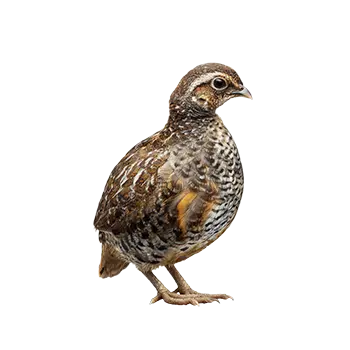

The Button Quail, also known as the King Quail or Chinese Painted Quail (Synoicus chinensis), is a diminutive ground-dwelling bird native to a vast range spanning from southeastern India and Sri Lanka through mainland Southeast Asia, across the Indonesian archipelago, and into northern and eastern Australia. Within this broad territory the species occupies warm grasslands, scrubby lowlands, rice paddies, and the margins of wetlands, favoring dense ground cover where it can forage for seeds, small insects, and tender shoots without exposing itself to aerial predators. Its preferred habitats are typically below 1,200 meters in elevation, though isolated populations have been recorded at somewhat higher altitudes in montane grasslands.
As the smallest member of the Old World quail group, the Button Quail rarely exceeds five inches in total length and weighs roughly an ounce and a half at maturity. Males display striking plumage that varies by subspecies, often featuring a blue-grey breast, chestnut flanks, and a bold black-and-white throat pattern, while females wear subtler brown and buff tones that provide camouflage on the nest. Several subspecies have been described across the bird's geographic range, with plumage variation and slight differences in size reflecting adaptation to local conditions from the tropical lowlands of Malaysia to the temperate grasslands of southeastern Australia.
The species' ecology is closely tied to seasonal rainfall patterns. In monsoonal regions, Button Quail populations fluctuate with the availability of seeding grasses and the cover provided by dense vegetation during and after the wet season. Pairs are typically found in loose associations rather than large flocks, and their territorial behavior during breeding season involves distinctive low-frequency booming calls produced primarily by the female, a reversal of the typical avian pattern that has long fascinated ornithologists. Nesting occurs on the ground in shallow scrapes lined with grass, and clutches of four to eight eggs are incubated primarily by the male.
Habitat loss through agricultural intensification, wetland drainage, and urban expansion has reduced suitable habitat for the species across portions of its range, particularly in densely populated regions of India, China, and the Philippines. In Australia, land clearing and the introduction of feral predators such as cats and foxes have likewise pressured local populations. Despite these threats, the species maintains a large overall range and is currently assessed as being of Least Concern on the IUCN Red List, though localized declines continue to be documented by field researchers.