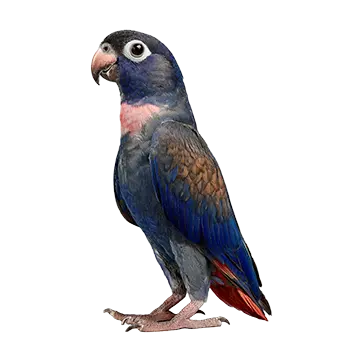

Airline Policies & Air Travel

Air travel with a Bronze-Winged Pionus requires careful advance planning, as airline policies regarding live birds vary significantly between carriers and are subject to change with limited notice. Most major U.S. airlines do not permit birds in the passenger cabin, relegating avian travelers to the cargo hold where temperature-controlled compartments are available on certain aircraft types. A smaller number of carriers allow small birds in approved cabin carriers, but restrictions on species, carrier dimensions, and the number of live animals permitted per flight can make securing a booking a complex process. Owners should contact the airline's live animal desk directly rather than relying on general customer service representatives, who may not be familiar with the specifics of avian transport policies.

For Bronze-Winged Pionus parrots traveling in cargo, the International Air Transport Association's Live Animals Regulations provide the baseline standards that most airlines reference. These regulations specify minimum container dimensions based on the bird's body length and wingspan, ventilation requirements, food and water provisions, and labeling protocols. Containers must be sturdy enough to prevent escape, allow adequate airflow from multiple sides, and include perches positioned so that the bird can maintain its balance during handling and flight. Owners should verify that their chosen carrier meets IATA specifications well in advance of the travel date, as non-compliant containers will be rejected at check-in.

Temperature is a critical concern for any bird traveling by air, and the Bronze-Winged Pionus's montane origins make it somewhat more tolerant of cool conditions than many tropical parrot species. Nonetheless, cargo holds can experience temperature extremes during ground handling, particularly during summer heat on tarmac surfaces and winter cold during extended layovers. Most airlines impose temperature embargoes that restrict live animal transport when ground temperatures at the departure, arrival, or connecting airport fall outside a specified range. Planning travel during temperate months and selecting direct flights where possible reduces the risk of temperature-related stress.

The Pionus genus is known for a stress response that can alarm unfamiliar observers: when frightened or restrained, Pionus parrots may exhibit rapid, wheezy breathing that resembles respiratory distress. This behavior, while normal for the species, has occasionally led to birds being removed from flights by well-meaning but uninformed airline personnel who mistake the stress response for illness. Owners can mitigate this risk by including a brief explanatory note with the shipping documentation and by ensuring that any veterinary health certificate accompanying the bird identifies the species and notes this characteristic behavior.

Ground Transportation

Ground transport is generally the simpler and less stressful option for moving a Bronze-Winged Pionus, particularly for short to moderate distances. Car travel allows the owner to maintain direct control over temperature, noise level, and the bird's immediate environment throughout the journey. A well-ventilated travel carrier secured with a seatbelt or placed on a flat, stable surface in the vehicle provides a safe and contained space for the bird during transit. The carrier should be positioned away from direct sunlight and air conditioning vents to prevent thermal stress, and it should be oriented so that the bird can see out without being exposed to the full visual chaos of passing traffic.

For longer road trips, planning regular rest stops is important. Bronze-Winged Pionus parrots should be offered water at intervals of no more than two to three hours, and fresh food should be available during extended stops. Owners should never leave a bird unattended in a parked vehicle, even for brief periods, as interior temperatures can reach dangerous levels within minutes during warm weather and can drop rapidly in cold conditions. If a stop requires leaving the vehicle, the bird should accompany the owner or remain in the care of a trusted companion.

Professional animal transport services offer an alternative to personal car travel for owners who cannot accompany their bird on a long-distance move. These services range from dedicated avian transport companies that specialize in door-to-door bird shipping to general pet transport businesses that handle a variety of species. When selecting a professional transporter, owners should verify the company's experience with psittacines, confirm that their vehicles are climate-controlled, and request references from previous avian clients. The Animal and Plant Health Inspection Service maintains a list of licensed animal transporters, which can serve as a starting point for research.

Public transportation presents additional challenges for parrot owners. Policies regarding live animals on buses, trains, and subway systems vary by transit authority, and many systems prohibit non-service animals entirely. Where birds are permitted, they must typically remain in a fully enclosed carrier at all times. The noise and vibration of public transit can be stressful for any parrot, and the Bronze-Winged Pionus's sensitivity to environmental disruption makes it particularly important to minimize exposure to loud, unpredictable sounds during transit. Owners who must use public transportation with their bird should choose off-peak travel times and select the quietest available car or seating area.

International Travel Requirements

Crossing international borders with a Bronze-Winged Pionus involves a layered set of regulatory requirements that must be satisfied in advance. At the international level, CITES documentation is required for any cross-border movement of the species, whether the bird is a personal pet accompanying its owner or a commercial shipment being transferred between breeders. The specific permits needed depend on the direction of travel and the CITES implementation laws of both the exporting and importing countries, but in most cases a re-export certificate from the country of departure and an import permit from the destination country will be required.

Veterinary health requirements add a second layer of complexity. Most countries require an official health certificate issued by a government-accredited veterinarian within a specified window prior to travel, typically seven to ten days. This certificate must attest that the bird has been examined, found free of clinical signs of communicable disease, and in some cases, tested for specific pathogens. Avian influenza testing is frequently required, and some countries mandate testing for psittacosis, Newcastle disease, or other diseases of regulatory concern. Testing protocols, acceptable laboratory methods, and required turnaround times differ by destination, making early consultation with both the veterinarian and the destination country's import authority essential.

Quarantine requirements represent a third consideration that can significantly affect travel planning. Some countries impose mandatory quarantine periods on imported birds, during which the animal is held at a government-approved facility at the owner's expense. Quarantine durations vary from a few days to several weeks, and the conditions in quarantine facilities may not meet the standards that a Bronze-Winged Pionus owner would consider acceptable for a long-term companion animal. Owners contemplating international relocation should investigate quarantine requirements early in the planning process, as the prospect of an extended quarantine may influence the decision of whether to bring the bird at all.

Return travel can present its own regulatory hurdles. Owners who travel abroad with their Bronze-Winged Pionus and plan to return to their home country should not assume that the permits obtained for outbound travel will be sufficient for the return journey. Re-entry requirements may differ from initial import requirements, and some countries require advance notification or pre-approval before a CITES-listed species can be re-imported. Maintaining meticulous records of all permits, health certificates, and test results throughout the trip is essential for smooth passage through customs and border inspection on both legs of the journey.

Carrier Selection & Travel Gear

Selecting an appropriate travel carrier is one of the most important practical decisions a Bronze-Winged Pionus owner will make when preparing for any journey. The carrier must balance security, ventilation, visibility, and portability while complying with any applicable regulatory standards. For air travel, IATA-compliant hard-sided carriers constructed from durable plastic or fiberglass are the standard, featuring ventilation openings on at least three sides, a secure locking mechanism, and a solid floor that prevents droppings from leaking during transit. For car travel and short excursions, lighter-weight carriers with mesh panels or clear acrylic sides offer better visibility for the bird and easier monitoring for the owner.

Size is a critical consideration. The carrier should be large enough for the bird to stand upright, turn around, and extend its wings partially without contacting the walls, but small enough to prevent the bird from being thrown around during sudden stops or turbulence. For a Bronze-Winged Pionus, which measures roughly eleven to twelve inches in length, a carrier with interior dimensions of approximately fourteen inches long by ten inches wide by twelve inches tall provides a reasonable balance between comfort and containment. A single natural-wood or textured perch mounted at a height that allows the bird to grip comfortably during movement is preferable to the smooth dowel perches that come standard with many carriers.

Accessories for the carrier should be chosen with an eye toward both the bird's comfort and the practical demands of travel. A shallow, spill-resistant water dish that can be refilled from outside the carrier without opening the main door reduces the risk of accidental escape during stops. A small food cup stocked with familiar pellets or a preferred treat provides nutritional support and a reassuring source of routine. Lining the carrier floor with an absorbent material such as paper towels or untreated paper bedding simplifies cleanup and helps maintain hygiene during extended journeys.

Beyond the carrier itself, a basic travel kit for a Bronze-Winged Pionus should include a supply of the bird's regular food sufficient for the journey plus an emergency buffer, bottled water from the bird's home supply to avoid digestive upset from unfamiliar water sources, a basic first-aid kit including styptic powder and a small towel for handling, copies of all relevant documentation including health certificates and ownership records, and contact information for avian veterinarians along the travel route and at the destination. Preparation of this kit well in advance of departure allows the owner to identify and address any gaps before the stress of travel day.

Health Preparation & Veterinary Documentation

A pre-travel veterinary examination is essential for any Bronze-Winged Pionus that will be transported over a significant distance, regardless of the mode of travel. This examination serves multiple purposes: it confirms that the bird is in adequate health to withstand the physical stress of travel, it fulfills the regulatory requirements for health certification that apply to most forms of commercial transport and all international movement, and it provides the owner with a current baseline against which any post-travel health changes can be assessed.

The pre-travel examination should be performed by a veterinarian experienced with avian species and, ideally, one who is accredited by the relevant national authority to issue official health certificates. In the United States, USDA-accredited veterinarians are authorized to sign the federal health certificates required for interstate and international transport of live birds. The examination typically includes a physical assessment of body condition, feather quality, respiratory function, and the condition of the eyes, nares, and vent. Depending on the destination requirements, laboratory tests for avian influenza, psittacosis, and other diseases may be required as part of the certification process.

The Bronze-Winged Pionus's particular susceptibility to aspergillosis warrants special attention during pre-travel health screening. The stress of transport, combined with potential exposure to unfamiliar air quality conditions in cargo holds, hotel rooms, or new homes, can create conditions favorable to fungal infection in a species that is already predisposed. A veterinarian familiar with Pionus species may recommend baseline blood work including a complete blood count and plasma protein electrophoresis to screen for subclinical disease before clearing the bird for travel.

Documentation generated during the pre-travel veterinary visit should be organized and kept accessible throughout the journey. This includes the signed health certificate, any laboratory test results, vaccination records if applicable, and a written summary of the bird's current medications or dietary supplements. Owners should carry both original documents and copies, as border inspectors or airline personnel may retain originals for processing. For international travel, health certificates may need to be endorsed by the national veterinary authority after the examining veterinarian has completed the initial certification, adding an additional step and processing time that must be factored into the pre-departure timeline.

Destination Planning & Accommodation

Arriving at the destination with a healthy, calm Bronze-Winged Pionus is only part of the travel equation. Advance planning for the bird's accommodation and care at the destination is equally important, whether the trip involves a temporary hotel stay, a visit to a friend or family member's home, or a permanent relocation. Hotels and vacation rentals that accept pets may not explicitly permit birds, and policies can vary between properties within the same chain or booking platform. Owners should confirm bird-specific acceptance in writing before booking and should inquire about any additional deposits, fees, or restrictions that apply.

For temporary stays, setting up a familiar environment in the destination space helps reduce the stress of displacement. Bringing the bird's regular food and water dishes, a favorite toy or two, and a lightweight portable perch or small travel cage that allows more room than the transport carrier provides a sense of continuity that can ease the adjustment. The Bronze-Winged Pionus's relatively calm disposition serves it well in unfamiliar settings, but even well-adjusted birds may exhibit behavioral changes such as reduced appetite, increased quietness, or reluctance to leave the carrier for the first several hours in a new environment.

Environmental hazards at the destination require assessment before the bird is released from its carrier. Open windows and doors, ceiling fans, uncovered pots of water, exposed electrical cords, houseplants that may be toxic to birds, and the presence of other animals in the space all represent potential risks. A quick safety check of the room or area where the bird will be housed takes only a few minutes and can prevent accidents that would be difficult or impossible to reverse. Non-stick cookware, scented candles, aerosol sprays, and other sources of airborne chemicals that are hazardous to avian respiratory systems should be identified and removed or avoided.

For owners relocating permanently with a Bronze-Winged Pionus, the transition plan should extend well beyond the logistics of the move itself. Identifying an avian veterinarian at the new location before arrival ensures continuity of care and provides a professional resource in the event of a post-travel health issue. Researching local parrot groups or aviculture clubs can help establish a social support network for the owner and, in some cases, provide emergency boarding contacts. The Bronze-Winged Pionus's long potential lifespan means that most owners will face at least one major relocation during the bird's life, making the development of a reliable travel and transition protocol a practical investment in the long-term welfare of both bird and keeper.

Always consult a qualified professional before making any health-related decisions. This content is provided for informational reference only and should not replace professional guidance specific to your animal.