
Representation in Aviculture Literature

The Bronze-Winged Pionus has appeared in aviculture literature with increasing frequency since the 1980s, though its coverage has never matched the volume dedicated to African Greys, cockatoos, or the large macaws. Early references in English-language parrot guidebooks tended to group the Bronze-Winged Pionus with its congeners under a general Pionus heading, offering a paragraph or two on the species alongside the more commonly kept Blue-Headed and Maximilian's varieties. These brief entries typically highlighted the species' dark plumage, its calm disposition, and its suitability for keepers seeking a quieter alternative to the Amazons.

As the Pionus genus gained popularity in North American and European aviculture during the 1990s, more detailed treatment began to appear. Specialty publications such as the AFA Watchbird, Parrots magazine, and Bird Talk devoted feature articles to individual Pionus species, giving the Bronze-Winged Pionus standalone coverage that addressed its particular dietary needs, breeding requirements, and behavioral characteristics. These articles played an important role in distinguishing the Bronze-Winged from its better-known relatives and in establishing it as a species worthy of individual attention rather than a footnote in the Pionus chapter.

Comprehensive reference works on neotropical parrots, including Joseph Forshaw's landmark volumes, have provided the most thorough published accounts of the species' natural history, taxonomy, and distribution. These texts remain essential resources for breeders and ornithologists alike, offering detailed range maps, plumage descriptions, and ecological observations gathered from field work across the northern Andes. Their treatment of the Bronze-Winged Pionus, while necessarily concise within the scope of a multi-species reference, set a standard for accuracy and depth that subsequent popular accounts have not always matched.

In recent years, self-published ebooks and breed-specific digital guides have expanded the available literature on the Bronze-Winged Pionus, often written by experienced breeders or avian veterinarians drawing on decades of firsthand observation. These resources tend to emphasize practical husbandry advice over natural history, filling a gap left by the more academic reference works. Their accessibility and affordability have made them particularly popular among prospective owners researching the species before committing to adoption or purchase.

Online Communities & Social Media

The internet has been transformative for the Bronze-Winged Pionus's visibility. Prior to the rise of online forums and social media, a prospective owner hoping to learn about the species would have needed access to specialized aviculture publications or personal connections within the breeding community. Today, dedicated Pionus groups on platforms such as Facebook, Reddit, and avian-specific forums provide a continuous stream of photographs, husbandry discussions, veterinary advice, and personal stories that collectively paint a vivid picture of life with this species.

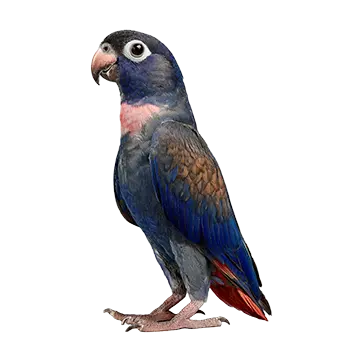
Facebook groups devoted to the Pionus genus have become particularly active hubs, with membership numbering in the thousands across several English-language communities. Within these groups, Bronze-Winged Pionus owners share photos and videos that showcase the species' subtle beauty and endearing personality. The iridescent bronze and blue-green plumage, which can appear almost black in poor lighting, reveals its true complexity in the close-up photographs and slow-motion videos that social media encourages. Many newcomers to the species report that it was precisely this kind of user-generated visual content that first attracted their interest.

YouTube channels maintained by parrot enthusiasts and avian educators have also contributed to the Bronze-Winged Pionus's growing profile. Videos documenting daily routines, training sessions, dietary preparation, and veterinary visits provide prospective owners with a realistic preview of the species' needs and behavior. Some channels have produced comparison videos that place the Bronze-Winged Pionus alongside other popular companion parrots, highlighting its quieter vocalizations and steadier temperament as distinguishing features. These videos accumulate views over time and serve as a persistent educational resource.

Instagram and TikTok have introduced the Bronze-Winged Pionus to audiences that might never visit an aviculture forum. Short-form video content featuring the species' gentle interactions with its owners, its curious exploration of enrichment toys, and its characteristically calm demeanor during handling has broadened awareness beyond the traditional parrot-keeping community. While no individual Bronze-Winged Pionus has achieved the viral fame of some cockatoo or macaw personalities, the species benefits from steady, organic exposure driven by devoted owners who enjoy sharing their daily experiences.

Photography & Visual Media

Photographing the Bronze-Winged Pionus presents a distinctive challenge that has made it a favorite subject among skilled avian photographers. The species' plumage, which appears uniformly dark at a glance, reveals an extraordinary palette of bronze, violet, blue-green, and deep rose under controlled lighting or in the golden tones of early morning and late afternoon sun. Capturing these colors accurately requires an understanding of angle, light quality, and exposure that elevates the act of photographing a Bronze-Winged Pionus from casual snapshot to deliberate artistic exercise.

In the wild, the species has been documented by ornithological photographers working in the cloud forests of Colombia and Ecuador, often as part of broader projects cataloging Andean birdlife. These field photographs, published in ornithological journals, birding magazines, and online databases such as the Macaulay Library at the Cornell Lab of Ornithology, provide the primary visual record of the species in its natural habitat. The difficulty of locating and approaching Bronze-Winged Pionus parrots in dense, fog-laden forest means that high-quality wild photographs remain relatively scarce, lending each successful image particular documentary value.

Captive photography has produced the most widely circulated images of the species. Breeders, owners, and professional animal photographers have created portfolios that emphasize the bird's plumage detail, its expressive eyes ringed with bare pinkish skin, and its compact, well-proportioned body. Studio-style portraits using diffused lighting and neutral backgrounds have become especially popular on social media and in breed profiles published by aviculture organizations. These images have played a measurable role in raising the species' profile by making its understated beauty visible to audiences accustomed to the saturated reds and blues of macaws and eclectus parrots.

The Bronze-Winged Pionus has also appeared in illustrated field guides and natural history art, where artists working in watercolor, gouache, and digital media have rendered the species with attention to the precise distribution of color across individual feathers. These illustrations, often commissioned for regional bird guides covering Colombia, Ecuador, or Venezuela, serve a dual purpose as both identification aids and aesthetic objects. The best examples capture the interplay of light and iridescence that makes the Bronze-Winged Pionus such a rewarding subject for anyone willing to look closely.

Documentary & Educational Programming

The Bronze-Winged Pionus has not been the subject of a dedicated television documentary or feature-length natural history film, a distinction it shares with most medium-sized neotropical parrots that lack the dramatic visual impact of macaws or the celebrity associations of African Greys. Nonetheless, the species has appeared in segments within broader programming about Andean biodiversity, cloud forest ecosystems, and the global parrot trade. These appearances, while brief, have introduced the Bronze-Winged Pionus to audiences beyond the aviculture community and contributed to a general awareness of the ecological richness of montane South American forests.

Educational videos produced by zoos, aviaries, and conservation organizations have provided more focused coverage. Institutions that maintain Bronze-Winged Pionus in their collections have produced short informational films highlighting the species' natural history, conservation status, and role as an ambassador for cloud forest habitats. These videos, distributed through institutional websites and social media channels, are often designed for school-age audiences and emphasize the connection between the bird's survival and the preservation of its forest home.

Podcast programming within the aviculture and birding communities has given the Bronze-Winged Pionus a platform that television has largely denied it. Episodes devoted to the Pionus genus or to the question of which parrot species make the best companions frequently feature extended discussion of the Bronze-Winged variety, with experienced breeders and veterinarians offering insights into the species' behavior, health requirements, and suitability for different types of households. The long-form conversational format of podcasts allows for a depth of coverage that short television segments cannot match.

Webinar series hosted by avian veterinary organizations and parrot welfare groups have also included the Bronze-Winged Pionus in their programming. Presentations on Pionus-specific health concerns, particularly the genus's well-documented susceptibility to aspergillosis, have drawn audiences of breeders, veterinary professionals, and dedicated owners. These educational events, often archived for on-demand viewing, represent a growing body of species-specific educational content that did not exist a decade ago.

Artistic Depictions & Illustration

The Bronze-Winged Pionus has inspired a modest but growing body of artistic work, driven largely by the visual challenge of capturing its complex, light-dependent plumage. Wildlife artists who specialize in neotropical birds have found the species an appealing subject precisely because its beauty is not immediately obvious. Rendering the interplay of bronze, violet, and dark green across the wing coverts and breast feathers requires close observation and technical skill, resulting in finished works that reward viewers who take the time to study them rather than offering the instant visual impact of a scarlet macaw or a toucan.

Commissioned pet portraits represent a significant share of the artistic output featuring the Bronze-Winged Pionus. Owners who have bonded deeply with their birds frequently seek out artists capable of capturing their individual companion's expression and posture, resulting in watercolor, acrylic, and digital portraits that circulate within the Pionus owner community. These commissions have supported a small but active market among animal portrait artists, some of whom have developed particular expertise in rendering psittacine plumage and have built reputations within the parrot-keeping world.

In scientific illustration, the Bronze-Winged Pionus has been depicted in plate format for regional field guides covering the avifauna of Colombia, Ecuador, Venezuela, and Peru. These illustrations adhere to strict standards of anatomical accuracy and color fidelity, serving as identification tools for birders and researchers in the field. The challenge of accurately reproducing the species' structural coloration, which shifts depending on viewing angle and lighting conditions, has tested the abilities of even experienced illustrators and has occasionally led to published plates that fail to convey the bird's true appearance under optimal conditions.

Craft and decorative art featuring the Bronze-Winged Pionus has emerged within online marketplaces, where artisans produce enamel pins, embroidered patches, stickers, and ceramic figures depicting the species. These items cater to the same devoted owner community that drives the commission portrait market, and they reflect a broader trend in the pet world toward species-specific merchandise that allows owners to express their attachment to a particular breed or variety. While the market for Bronze-Winged Pionus merchandise is small relative to that for more popular species, it is active and growing.

Cultural Footprint & Future Visibility

The Bronze-Winged Pionus occupies an unusual position in the landscape of companion parrot culture. It is not a mainstream pet in the way that budgerigars, cockatiels, or even African Greys are, nor is it so rare or specialized that it remains unknown outside a tiny circle of aviculturists. Instead, it exists in a middle ground, recognized and respected by knowledgeable parrot enthusiasts but largely invisible to the general public. This middling visibility is both a limitation and a strength, shielding the species from the impulse buying and subsequent abandonment that plague more heavily marketed parrot species while ensuring a steady base of informed, committed owners.

The species' cultural footprint has grown measurably over the past decade, driven primarily by digital media. As photography, video, and social media have made it easier for individual owners to share their experiences with a global audience, the Bronze-Winged Pionus has accumulated a body of user-generated content that collectively serves as a powerful, if informal, marketing campaign. Each photograph that reveals the species' hidden iridescence, each video that demonstrates its calm responsiveness to handling, and each forum post that describes the rewards of living with this understated parrot contributes to a gradually expanding circle of awareness.

Conservation messaging has also begun to incorporate the Bronze-Winged Pionus as a focal species for Andean cloud forest protection. Environmental organizations operating in Colombia and Ecuador have recognized the species' potential as an accessible, visually appealing representative of a threatened biome, and have featured it in educational materials, fundraising campaigns, and ecotourism promotional content. This conservation visibility, while still nascent, has the potential to introduce the Bronze-Winged Pionus to audiences whose primary interest is environmental stewardship rather than pet keeping.

Looking forward, the Bronze-Winged Pionus is likely to continue its gradual ascent in media visibility, propelled by the same qualities that define its appeal as a companion: subtlety, depth, and a beauty that reveals itself on closer acquaintance. The species is unlikely to become a viral sensation or a pop-culture icon in the mold of the cockatoo, but its growing presence in aviculture media, online communities, and conservation discourse suggests that its story is still very much being written.

Always consult a qualified professional before making any health-related decisions. This content is provided for informational reference only and should not replace professional guidance specific to your animal.