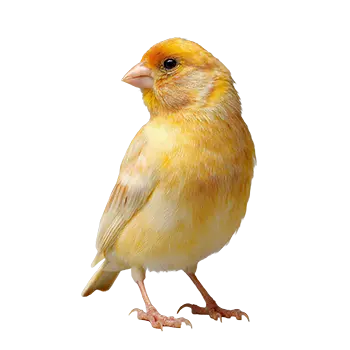

The Border Canary traces its ancestry to the domestic canary (Serinus canaria domestica), which itself descends from the wild Atlantic canary native to the Canary Islands, Madeira, and the Azores. Spanish and Portuguese sailors first brought wild canaries to mainland Europe in the late 15th and early 16th centuries, and by the 1600s selective breeding had already produced a variety of regional strains across the continent. The particular strain that would become the Border Canary took shape in the counties straddling the border between England and Scotland, an area encompassing Cumberland, Northumberland, Roxburghshire, and Berwickshire, where a long tradition of smallholder bird keeping provided the foundation for meticulous selective breeding.
The geography and social character of the Anglo-Scottish borderlands played a meaningful role in the breed's development. This was a rural, agrarian region where miners, weavers, and farm workers kept canaries both for companionship and as modest sources of supplemental income through breeding. Unlike the industrial cities further south, where roller canaries bred for song predominated, the border country fanciers placed increasing emphasis on the physical form of their birds. Over successive generations, breeders in the region selected for a compact, well-rounded body, clean head, and an upright, jaunty carriage that distinguished their local strain from other canary varieties.
By the mid-19th century, the border region's canaries had developed a recognizable and consistent type that set them apart from the Yorkshire, Norwich, and other established breeds. These birds were smaller and more refined than many of their contemporaries, with a smooth, tight plumage that accentuated the rounded contours of the body. Local agricultural shows and village competitions provided early venues for exhibiting these birds, and the informal judging standards that emerged at such events gradually coalesced into a shared understanding of what the ideal border-bred canary should look like.
The landscape itself, with its stone-walled fields and close-knit farming communities, fostered a culture of neighborly competition and knowledge sharing that accelerated the breed's refinement. Fanciers exchanged breeding stock across relatively short distances, concentrating desirable traits within a geographically defined population. This combination of isolation from other breeding traditions and intense local selection pressure produced a canary of distinctive character, well before the breed received formal recognition or an official name.