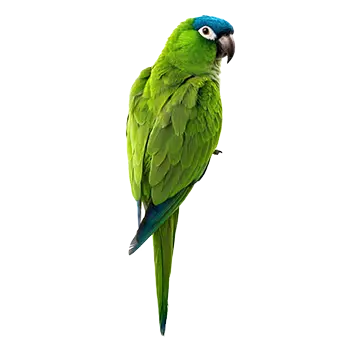

The 1998 DreamWorks film Paulie stands as the single most significant media event in the Blue-Crowned Conure's cultural history. Directed by John Roberts and starring Jay Mohr, Gena Rowlands, Tony Shalhoub, and Cheech Marin alongside a cast of trained birds, the film told the story of an exceptionally talkative Blue-Crowned Conure navigating a cross-country odyssey to reunite with his original owner. The movie placed the species at its narrative center in a way that few other parrot breeds have experienced in mainstream cinema, giving the Blue-Crowned Conure an outsized cultural profile relative to its standing in aviculture at the time.
The production utilized approximately fourteen individual Blue-Crowned Conures, each trained for specific behaviors ranging from flying on cue to manipulating small props. Animal trainers worked extensively with the birds over many months, capitalizing on the species' natural curiosity and food motivation to elicit the precise actions required for each scene. The voice acting, which gave Paulie a witty, emotionally complex personality, further cemented an image of the species as intelligent, loyal, and deeply communicative.
The film's release had measurable effects on the pet parrot market. Breeders and pet shops reported a notable uptick in inquiries about Blue-Crowned Conures in the months following the movie's theatrical run, a pattern that intensified when it reached home video. Avicultural organizations responded with a mix of gratitude for the heightened visibility and concern that impulse purchases driven by cinematic charm might lead to surrenders once the realities of parrot ownership became apparent. This tension between media-generated enthusiasm and responsible stewardship would become a recurring theme in discussions about parrots in popular culture.
Despite receiving mixed reviews from critics, Paulie has endured as a beloved film among parrot enthusiasts and family audiences. It remains a touchstone in online parrot communities, frequently referenced in discussions about species selection, and its legacy continues to shape how many people first encounter the Blue-Crowned Conure. For a species that might otherwise have remained relatively obscure outside dedicated avicultural circles, the film proved to be a transformative cultural moment.