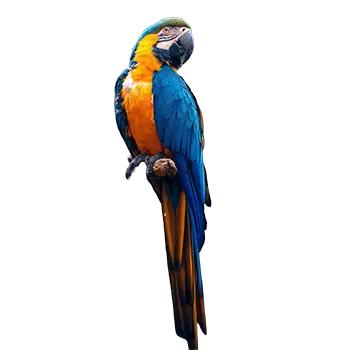

Preparing Your Macaw for Travel

Successful travel with a Blue and Gold Macaw begins well before the day of departure. These are large, intelligent, and routine-oriented birds, and exposing them to an unfamiliar carrier, vehicle, or environment without adequate preparation can trigger significant stress. The foundation of travel preparation is carrier training, a process that should ideally begin weeks or months before any planned trip. Introducing the carrier as a positive space, associated with treats, favorite toys, and calm interaction, allows the macaw to acclimate at its own pace and reduces the likelihood of panic or aggression when the carrier is used for actual transport.

The size of the Blue and Gold Macaw presents unique logistical challenges. With a body length of 30 to 36 inches and a wingspan that can exceed 40 inches, these birds require carriers that are substantially larger than those used for smaller parrot species. The carrier must provide enough room for the bird to stand upright, turn around, and spread its wings partially, while also being secure enough to prevent escape and sturdy enough to withstand the macaw's powerful beak. Airline-approved carriers designed for large parrots are available from specialty manufacturers, but availability and sizing should be confirmed well in advance of travel.

A pre-travel veterinary examination is strongly recommended for any trip of significant duration or distance. The veterinarian can assess the bird's overall health, identify any conditions that might be exacerbated by travel stress, and provide any required health certificates or documentation. For birds with known anxiety or behavioral issues, the veterinarian may recommend environmental modifications or, in some cases, mild sedation protocols, though pharmacological intervention should be approached with caution and only under professional guidance.

Packing for a macaw trip requires attention to the bird's nutritional, hydration, and enrichment needs. Fresh water should be available at all times, secured in a spill-resistant container. Familiar foods, including the bird's regular pellet mix and preferred fresh items, should be packed in sufficient quantity for the entire trip plus contingency supplies. Familiar toys and comfort items can help reduce stress by providing sensory continuity in an otherwise unfamiliar environment. A basic first aid kit tailored to avian needs, including styptic powder, a towel for restraint, and contact information for avian veterinarians at the destination, rounds out the essential travel supplies.

Air Travel with a Blue and Gold Macaw

Air travel with a Blue and Gold Macaw is among the most complex forms of companion animal transport, governed by a web of airline policies, federal regulations, and international agreements. Most major airlines accept birds in the cargo hold as checked or shipped animals, but very few allow large parrots in the passenger cabin, and those that do typically restrict cabin transport to birds in carriers that fit under the seat, a requirement that effectively excludes macaws. Owners planning air travel should contact their airline's live animal desk directly, as policies vary not only between airlines but between routes and aircraft types.

When a Blue and Gold Macaw travels in the cargo hold, the bird is placed in a pressurized and temperature-controlled compartment, but conditions can still be stressful. Temperature fluctuations during ground handling, noise from engines and cargo movement, and the absence of visual contact with the owner all contribute to anxiety. Owners can mitigate some of these stressors by choosing direct flights to minimize handling, avoiding travel during extreme weather, and lining the carrier with absorbent material to maintain hygiene during the journey. A note attached to the carrier with the bird's name, dietary needs, and the owner's contact information can help airline staff provide better care.

The regulatory requirements for air travel with parrots are substantial. Within the United States, the Animal Welfare Act and its implementing regulations set minimum standards for the containers, handling, and care of animals transported by air. The U.S. Department of Agriculture's Animal and Plant Health Inspection Service (APHIS) oversees compliance, and airlines are required to meet these standards as a condition of their operating authority. For international flights, CITES documentation, import permits from the destination country, and a veterinary health certificate issued within a specified window before departure are typically required. The specific documentation requirements vary by country and can change with little notice, so owners should begin researching and assembling paperwork well in advance.

Some macaw owners opt for specialized pet transport services rather than navigating the complexities of commercial airline travel independently. These services handle logistics including carrier procurement, documentation, route planning, and ground transportation at both ends of the journey. While the cost of professional pet transport can be significant, the expertise and peace of mind these services provide may be justified for owners who travel infrequently with their birds or who are moving internationally. Regardless of whether transport is self-managed or outsourced, the welfare of the macaw should be the primary consideration in every decision.

Road Travel & Ground Transport

For many Blue and Gold Macaw owners, road travel is the most practical and least stressful mode of transport. Car travel allows the owner to maintain visual and vocal contact with the bird, control the temperature and noise environment, and make stops as needed for feeding, watering, and stress relief. However, road trips with a macaw require careful planning to ensure the bird's safety and comfort throughout the journey.

The macaw should always travel in a secure carrier that is anchored to the vehicle with a seatbelt or cargo strap, positioned so that the bird is protected from direct sunlight and airflow from heating and cooling vents. The carrier should never be placed in the front passenger seat where it could be struck by an airbag deployment. Covering the carrier with a lightweight, breathable cloth can reduce visual overstimulation and help the bird rest during long drives, though some macaws prefer to see their surroundings and become more anxious when covered.

Temperature management is critical during road travel. Blue and Gold Macaws are tropical birds adapted to warm, stable climates, and they are sensitive to temperature extremes in both directions. The vehicle's interior should be maintained at a comfortable temperature, and the bird should never be left unattended in a parked car, where temperatures can reach dangerous levels within minutes even on moderately warm days. During winter travel in cold climates, prewarming the vehicle before bringing the bird outside and minimizing the time spent transitioning between indoor and outdoor environments helps prevent thermal stress.

Regular stops on long drives give the owner an opportunity to check on the bird, offer water and food, and assess the macaw's stress level. Signs of travel stress in macaws can include excessive vocalization, feather fluffing, panting, and attempts to escape the carrier. If the bird shows signs of severe distress, pulling over in a quiet location and allowing the bird time to calm down, with gentle verbal reassurance from the owner, is preferable to pushing forward. For trips exceeding a few hours, planning an overnight stop at a bird-friendly accommodation can make the experience more manageable for both the macaw and its owner.

Hotel and motel policies regarding exotic birds vary widely, and owners should confirm pet policies before booking. Some chains welcome birds with advance notice and a pet deposit, while others prohibit animals entirely or allow only dogs and cats. Vacation rentals and private accommodations may offer more flexibility, but the owner should verify that the space is safe for a macaw, with no exposed wiring, toxic plants, open windows, or ceiling fans that could pose hazards.

International Travel & Border Crossings

Crossing international borders with a Blue and Gold Macaw introduces a layer of regulatory complexity that demands thorough advance preparation. Every country has its own import requirements for live birds, and these requirements can include quarantine periods, specific veterinary tests, import permits, and CITES documentation. Some countries prohibit the import of parrots entirely, while others impose quarantine periods that can last weeks or months, during which the bird is held in a government-approved facility at the owner's expense. Researching the destination country's import regulations is the essential first step in planning any international move or trip with a macaw.

CITES documentation is required for international transport of Blue and Gold Macaws between signatory nations, which includes virtually every country in the world. For captive-bred birds, a CITES re-export certificate from the country of departure is typically needed, along with a corresponding import permit from the destination country. The process of obtaining these documents can take weeks or months, and applications should be submitted as early as possible. Errors or omissions in CITES paperwork can result in the bird being denied entry, confiscated, or quarantined indefinitely, making accuracy and completeness critical.

Health certificates issued by an accredited veterinarian are universally required for international travel and must typically be obtained within a narrow window before departure, often 10 to 30 days. The health certificate must confirm that the bird is free of clinical signs of disease and, depending on the destination, may need to include the results of specific laboratory tests such as those for avian influenza, psittacosis (chlamydiosis), or Newcastle disease. Some countries require that the health certificate be endorsed by the national veterinary authority of the exporting country, adding another administrative step to the process.

Returning to the United States with a Blue and Gold Macaw after international travel is subject to its own set of requirements. The USFWS requires proof that the bird was legally exported and that it is the same bird that left the country, typically demonstrated through band numbers, microchip identification, or photographic documentation. The Centers for Disease Control and Prevention (CDC) and APHIS may impose additional quarantine or testing requirements depending on the countries visited. Owners who travel internationally with their macaws on a regular basis often develop standardized documentation packages and establish relationships with veterinarians and CITES authorities in multiple countries to streamline the process.

Health Certificates & Documentation Essentials

The documentary requirements for traveling with a Blue and Gold Macaw are more extensive than many owners initially realize, and inadequate paperwork is one of the most common reasons for travel disruptions involving companion birds. At the most basic level, any macaw traveling by air within the United States requires an interstate health certificate (Certificate of Veterinary Inspection) issued by a USDA-accredited veterinarian, certifying that the bird has been examined and is free of visible signs of communicable disease. This certificate is typically valid for 30 days from the date of issuance, though individual airline policies may impose shorter windows.

Beyond the health certificate, owners should carry documentation establishing the bird's legal origin and ownership. This includes the bird's closed leg band number, any microchip identification records, a bill of sale or adoption agreement, and, for imported birds, copies of CITES permits and USFWS importation documentation. Having these records organized and readily accessible can expedite interactions with airline staff, law enforcement, and customs officials, and can prevent costly delays or confiscations.

For international travel, the documentation package expands significantly. In addition to the health certificate and proof of ownership, owners will need CITES export and import permits, destination-country import permits, and potentially the results of specific disease tests required by the receiving nation. Some countries require that documentation be presented in the official language of the destination or accompanied by certified translations. Owners should compile multiple copies of all documents, keeping originals in a secure but accessible location and distributing copies among carry-on bags, checked luggage, and digital storage.

Microchipping has become an increasingly important component of macaw identification and documentation. A microchip provides a permanent, tamper-proof identification that can be read by veterinarians, law enforcement, and border officials worldwide. While leg bands remain the traditional identification method for captive-bred parrots, they can be damaged, removed, or rendered unreadable over time. A microchip, typically implanted in the breast muscle by an avian veterinarian, complements the leg band and provides a backup identification method that is recognized internationally. Owners traveling with macaws are strongly encouraged to have their birds microchipped and to register the chip number with a recognized recovery database.

Managing Travel Stress & Post-Travel Recovery

Travel is inherently stressful for Blue and Gold Macaws, and even well-prepared birds may exhibit behavioral and physiological signs of stress during and after a trip. Understanding the species-specific indicators of travel stress and having strategies in place to mitigate them is essential for responsible macaw transport. Common stress indicators include excessive screaming, feather fluffing or shivering, refusal to eat or drink, regurgitation, loose droppings, and abnormal quietness or withdrawal. In severe cases, acute stress can trigger feather-destructive behavior, self-mutilation, or immune suppression that leaves the bird vulnerable to opportunistic infections.

Minimizing exposure to known stressors is the most effective preventive strategy. This means limiting the duration of travel as much as possible, maintaining a stable temperature environment, reducing exposure to loud noises and unfamiliar stimuli, and keeping the bird's routine as close to normal as feasible. Speaking to the macaw in a calm, reassuring voice during transport provides a familiar auditory anchor and can help prevent escalation of anxiety. Some owners find that playing recordings of the bird's home environment, such as household sounds or familiar music, can have a soothing effect.

Hydration and nutrition during travel require special attention. Stress and unfamiliar environments can suppress a macaw's appetite and water intake, increasing the risk of dehydration and nutritional deficit. Offering favorite treats and high-moisture foods such as grapes, cucumber, or watermelon can encourage eating and provide supplemental hydration. Water should be offered frequently and refreshed at every stop, using a familiar water dish or bottle to encourage drinking. Owners should monitor the bird's droppings during and after travel as an indicator of hydration status and digestive health.

Post-travel recovery should be treated as a deliberate phase of the travel process, not an afterthought. Upon arrival at the destination, the macaw should be placed in a quiet, secure, and temperature-stable environment and given time to acclimate before being exposed to new people, animals, or stimuli. Resuming the bird's normal feeding and interaction schedule as quickly as possible helps reestablish a sense of routine and security. If the bird shows persistent signs of stress, appetite loss, or behavioral changes lasting more than a few days after travel, a consultation with an avian veterinarian is warranted to rule out illness and to develop a recovery plan tailored to the individual bird's needs.

For macaws that travel regularly, gradual desensitization over time can reduce the cumulative impact of repeated trips. Short, positive travel experiences, such as brief car rides to a park or a friend's home, build the bird's tolerance and confidence in manageable increments. Over time, a well-socialized and travel-experienced Blue and Gold Macaw can become a remarkably adaptable traveler, accompanying its owner on trips that would overwhelm a less prepared bird.

Always consult a qualified professional before making any health-related decisions. This content is provided for informational reference only and should not replace professional guidance specific to your animal.