
Origins & Ancient History

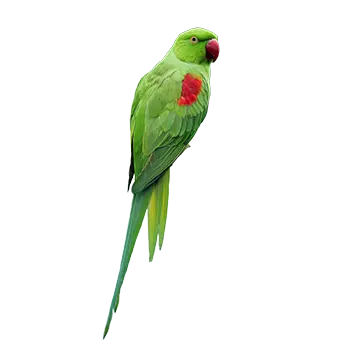
The Alexandrine Parakeet (Psittacula eupatria) is native to a broad swath of South and Southeast Asia, ranging from Afghanistan and Pakistan through India, Nepal, and Sri Lanka to parts of Thailand, Laos, and Cambodia. The species thrives in a variety of habitats including forests, woodlands, agricultural areas, and mangrove zones. Its large size, vivid green plumage, and distinctive maroon shoulder patches have made it one of the most recognizable parrots across its native range for thousands of years.

Archaeological and literary evidence suggests that Alexandrine Parakeets were among the first parrot species kept by humans. Ancient Indian texts describe green parrots fitting the description of the Alexandrine being maintained in royal courts as prized companions. In classical Sanskrit literature, parrots appear frequently as symbols of love, eloquence, and devotion, and the Alexandrine, as the largest and most prominent parakeet on the subcontinent, was very likely among the species referenced.

The bird's modern common name traces directly to Alexander the Great, who is credited with introducing the species to the Mediterranean world following his military campaigns in the Punjab region around 327 BCE. Greek historians recorded that Alexander's generals and soldiers brought these large, colorful parakeets back to Greece and the broader Hellenistic world, where they quickly became fashionable pets among the aristocracy.

The arrival of the Alexandrine Parakeet in Europe marked a pivotal moment in avicultural history. It was one of the first parrot species that Europeans encountered in any significant number, and its presence in Greek and later Roman households helped shape Western perceptions of parrots as exotic, intelligent, and desirable companion animals for centuries to come.

Historical Roles & Human Uses

In its native India, the Alexandrine Parakeet held a unique position at the intersection of companionship, spiritual practice, and courtly life. Mughal emperors and Indian maharajas kept aviaries filled with parrots, and the Alexandrine, owing to its impressive size and vocal abilities, was often the centerpiece of these collections. Miniature paintings from the Mughal period frequently depict noblewomen and courtiers with large green parrots perched on their hands or shoulders.

Beyond the courts, Alexandrine Parakeets played roles in folk traditions across South Asia. Street performers and traveling entertainers trained these birds to perform tricks, pick fortune-telling cards, and even retrieve small coins. This tradition of trained parakeet fortune-tellers persisted in parts of India well into the twentieth century, though animal welfare concerns and legal protections have significantly curtailed the practice in recent decades.

In ancient Rome, wealthy citizens kept Alexandrines and other parakeet species as status symbols. Roman writers including Pliny the Elder commented on the intelligence of Indian parrots and their capacity for speech. Ornate silver and ivory cages were crafted specifically for these birds, and enslaved individuals were sometimes tasked solely with the care and training of household parrots.

The species also played an indirect role in the history of trade and exploration. As European interest in exotic parrots grew through the medieval and early modern periods, the Alexandrine Parakeet was among the species that fueled demand along trade routes connecting Asia to the Middle East and Europe. This commerce in live birds contributed to the development of broader networks of animal trade that would eventually encompass species from every inhabited continent.

Cultural Symbolism & Spiritual Associations

Across Hindu mythology and Indian folk tradition, parrots carry deep symbolic weight, and the Alexandrine Parakeet, as one of the most prominent parrot species on the subcontinent, is closely associated with these cultural meanings. The parrot is the vahana, or sacred mount, of Kamadeva, the Hindu god of love and desire. This association links parrots to themes of romantic love, beauty, and emotional expression in art, poetry, and religious iconography spanning more than two millennia.

In Indian literary traditions, the parrot frequently serves as a messenger between separated lovers or as a wise, eloquent narrator. The medieval collection of tales known as the Shuka Saptati, or Seventy Tales of the Parrot, features a parrot who tells stories each night to prevent a woman from leaving her home while her husband is away. While the species in the text is not specified, scholars have noted that the Alexandrine and closely related species are the parrots most familiar to the authors and audiences of these works.

Buddhist Jataka tales also feature parrots in morally instructive stories about loyalty, sacrifice, and wisdom. In several of these tales, the Buddha himself appears in a previous life as a parrot, further elevating the spiritual significance of these birds in South Asian culture. Temples and monasteries across the region have historically maintained parrot populations, with the birds seen as auspicious presences.

In Southeast Asian cultures where the Alexandrine Parakeet is also native, the bird appears in traditional textiles, wood carvings, and ceremonial art. In parts of Thailand and Myanmar, green parakeets are associated with forest spirits and the vitality of the natural world. These cultural connections have contributed to ongoing conservation interest in the species, as communities recognize the Alexandrine as part of their shared heritage.

Avicultural Societies & Breed Standards

The modern avicultural community has developed a strong interest in the Alexandrine Parakeet, particularly as breeders have established captive populations of various color mutations. Organizations such as the Avicultural Society (founded in the United Kingdom in 1894) and the American Federation of Aviculture have long included the Alexandrine among the parrot species featured in their publications, conferences, and breeding programs.

Unlike dogs and cats, parrots do not have formalized breed standards in the traditional sense. However, avicultural societies and parrot clubs maintain guidelines for evaluating the health, plumage quality, and physical conformation of species like the Alexandrine Parakeet, particularly for exhibition purposes. Bird shows across Europe, North America, and Australia include classes for Asiatic parakeets, and the Alexandrine is among the most frequently exhibited species in these events.

Color mutation breeding has become a significant area of interest within the Alexandrine Parakeet community. While the wild-type bird displays the characteristic green plumage with maroon shoulder patches and a pink-and-black neck ring in males, captive breeding programs have produced lutino, blue, and albino mutations, among others. These mutations are carefully tracked by breeders and are the subject of ongoing discussion within avicultural forums and societies.

International studbook programs and cooperative breeding efforts have also been established to maintain genetically healthy captive populations. These programs are particularly important given the pressures facing wild Alexandrine populations from habitat loss and the historical legacy of trapping for the pet trade. Avicultural organizations increasingly emphasize the importance of responsible breeding practices and participation in conservation-aligned programs.

The Alexandrine Parakeet Today

In the contemporary pet bird community, the Alexandrine Parakeet occupies a respected niche as a large, personable, and relatively hardy parakeet suitable for experienced bird owners. Its popularity has grown steadily in North America, Europe, and Australia, where captive-bred birds are widely available from reputable breeders. The species is valued for its calm disposition relative to other large parrots, its capacity for clear speech, and its striking appearance.

Online communities have played a significant role in connecting Alexandrine Parakeet owners and enthusiasts around the world. Dedicated forums, social media groups, and YouTube channels provide platforms for sharing care advice, behavioral observations, and the joys and challenges of living with these birds. This digital community has helped raise the profile of the species and has contributed to a growing body of shared knowledge about their care in captivity.

In its native range, the Alexandrine Parakeet's status is more complex. While the species remains relatively widespread, populations have declined in some areas due to habitat destruction and historical trapping for the pet trade. The Alexandrine is listed on CITES Appendix II, which regulates international trade to ensure that it does not threaten wild populations. Several range countries have enacted domestic protections as well, reflecting growing awareness of the need to balance cultural traditions of parrot keeping with conservation imperatives.

Feral populations of Alexandrine Parakeets have also established themselves in parts of Europe, the Middle East, and Japan, adding a new dimension to the species' cultural and ecological story. These populations, descended from escaped or released captive birds, have sparked both fascination and concern among ornithologists and the public, as they navigate the complex dynamics of introduced species in urban and suburban environments.

Notable Alexandrine Parakeets

While individual Alexandrine Parakeets have not achieved the widespread celebrity status of some other parrot species, several notable birds have contributed to public awareness and scientific understanding of the species. Research institutions studying parrot cognition have included Alexandrines in studies examining problem-solving, tool use, and vocal learning, with individual birds demonstrating impressive cognitive flexibility.

In the world of aviculture, specific Alexandrine Parakeets have gained recognition for producing notable color mutations that have become established in captive breeding programs. Breeders who first produced stable lutino and blue mutations in Alexandrines are well known within the avicultural community, and the individual birds that founded these mutation lines are considered significant to the history of Alexandrine Parakeet breeding.

Several wildlife rehabilitation centers and sanctuaries across India have housed Alexandrine Parakeets that became ambassadors for their species, helping to educate the public about the importance of protecting wild populations and discouraging the illegal capture of wild birds. These ambassador animals have appeared in educational programs and media coverage, putting a face on conservation efforts for the species.

Historically, the Alexandrine Parakeets brought to Europe by Alexander the Great's armies represent perhaps the most culturally significant individual birds of this species, even though their individual identities are lost to history. These birds, carried thousands of miles from their native forests to the courts of the ancient Mediterranean world, set in motion a chain of cultural exchange and avicultural interest that continues to this day.

Always consult a qualified professional before making any health-related decisions. This content is provided for informational reference only and should not replace professional guidance specific to your animal.