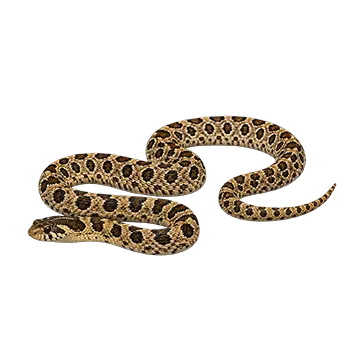

Understanding Enrichment for Hognose Snakes

Enrichment for captive reptiles is a concept that has gained substantial traction over the past two decades as keepers and researchers have moved beyond the outdated view that snakes are purely instinct-driven animals incapable of benefiting from environmental complexity. The Eastern Hognose Snake is an especially rewarding species for enrichment efforts because it is one of the most behaviorally active and expressive snakes commonly kept in captivity. Heterodon platirhinos engages in vigorous burrowing, investigates novel objects and scents with its sensitive tongue, exhibits dramatic defensive repertoires, and demonstrates clear individual preferences in hide selection, activity timing, and movement patterns. A keeper who provides opportunities for these natural behaviors will observe a snake that is more active, more visible during its waking hours, and more confident during handling than one maintained in a sterile, unchanging environment.

The goal of enrichment is not to entertain the keeper but to meet the behavioral and psychological needs of the animal by replicating the challenges and choices it would encounter in the wild. In nature, an Eastern Hognose Snake navigates diverse terrain, encounters varying scent signatures from prey and predators, selects between multiple microhabitats for thermoregulation and concealment, and exerts physical effort excavating burrow systems. A captive environment that offers none of these opportunities reduces the snake's daily experience to a cycle of hiding, eating, and defecating — a fraction of the behavioral repertoire the species is equipped for. While snakes are adaptable animals that can survive in minimalist setups, thriving and surviving are meaningfully different outcomes.

Enrichment does not need to be expensive, complicated, or time-consuming. Many of the most effective strategies involve rearranging existing furnishings, introducing novel scents, varying the substrate texture, or providing temporary exploration opportunities outside the primary enclosure. The key principle is controlled novelty — introducing changes that stimulate investigation and activity without creating stress. A sudden, dramatic alteration to the entire enclosure layout can frighten a snake and trigger defensive behavior, while a single new object or a subtle substrate change invites exploration. Reading the individual snake's response and adjusting accordingly is more important than following a rigid enrichment schedule.

Safety is the non-negotiable constraint on any enrichment activity. Every item introduced into the enclosure must be non-toxic, free of sharp edges, unable to trap or constrict the snake, and easy to clean or replace. Items small enough to be accidentally ingested during feeding — beads, small stones, loose decorative pieces — should never be placed in the enclosure. Natural materials collected from outdoors must be inspected for parasites, treated for insects, and thoroughly cleaned before use. The snake's enclosure is a controlled environment, and anything that enters it should be evaluated with the same care applied to food and water.

Burrowing and Digging Enrichment

Burrowing is the defining behavioral characteristic of the Eastern Hognose Snake and should be the primary focus of any enrichment program for this species. The upturned rostral scale that gives the hognose its common name is a specialized digging tool, reinforced with dense connective tissue and shaped to push through loose soil with remarkable efficiency. In captivity, providing a substrate bed deep enough to allow full submersion — four to six inches of aspen shavings, a sand-soil blend, or coconut fiber mixed with play sand — is the single most impactful enrichment investment a keeper can make. A hognose snake with adequate burrowing substrate will construct elaborate tunnel networks, create multiple entry and exit points, and frequently rearrange its underground architecture.

Varying substrate composition across different zones of the enclosure adds complexity to the burrowing experience. Placing a pocket of slightly damp sphagnum moss mixed with coconut fiber on the cool end creates a microhabitat with a different texture and moisture level than the dry aspen or sand blend on the warm end. The snake will investigate both zones and may preferentially burrow in one area for thermoregulation and another for the tactile novelty. This zoned approach also supports the humidity gradient that benefits shedding while keeping the warm basking area dry. Changing the relative proportions or positions of these zones every few months introduces low-level environmental novelty without disrupting the snake's sense of territorial familiarity.

Buried furnishings add a subterranean dimension to the enclosure that surface-level decorations cannot replicate. Half-buried sections of cork bark, ceramic pipes, or PVC elbows create underground chambers that the snake discovers while digging. These structures provide stable resting spots beneath the substrate surface and encourage the snake to extend its tunnel system to connect multiple buried features. The sense of discovery — encountering a chamber while excavating — mirrors the experience a wild hognose snake has when its burrow intersects a root cavity or an abandoned rodent tunnel. Rotating buried items periodically ensures the snake encounters new underground features without the keeper needing to purchase additional products.

Digging activity can also be stimulated by introducing scent trails beneath the substrate surface. Placing a small piece of used rodent bedding or a paper towel that has been in contact with feeder mice under a layer of substrate on the opposite side of the enclosure from the snake's current resting spot encourages investigative burrowing as the snake follows the scent gradient. This technique is particularly effective for snakes that have become sedentary in established burrow systems and need a behavioral nudge to explore new areas of their enclosure. The scent item should be removed after a day or two to prevent bacterial growth, and it should never be used on the day of or the day after feeding to avoid confusing feeding behavior with exploratory behavior.

Environmental Complexity and Habitat Features

Beyond substrate depth, the above-ground landscape of the enclosure contributes significantly to enrichment for the Eastern Hognose Snake. A well-designed enclosure surface offers a variety of textures, visual barriers, and movement paths that encourage the snake to explore rather than retreat to a single hide and remain there indefinitely. Cork bark flats, grapevine pieces, smooth river stones, and dried leaf litter all create surface-level terrain variation that the snake navigates during its active periods. Placing these items to create winding paths between hides rather than leaving open expanses of bare substrate mimics the cluttered forest floor and field margins this species inhabits in the wild.

Leaf litter is an underappreciated enrichment material that is highly effective for Eastern Hognose Snakes. A layer of dried, pesticide-free oak, magnolia, or beech leaves scattered over the substrate surface provides visual cover, creates rustling auditory feedback as the snake moves, and introduces organic scent complexity. Leaf litter also supports the snake's instinct to nose through surface debris in search of amphibian prey — a behavior that captive hognose snakes frequently exhibit even when fed exclusively on rodents. The leaves should be collected from areas free of pesticide treatment, dried thoroughly to eliminate moisture and associated mold risk, and replaced every few weeks as they break down.

Textural contrasts within the enclosure stimulate the snake's highly developed tactile sense. Smooth slate tiles placed on the warm side offer a firm, cool surface that contrasts with the loose substrate surrounding it. A section of rough cork bark provides a natural abrasive surface that assists with shedding initiation. A mound of rounded river stones large enough that the snake cannot ingest them creates a climbable feature with a completely different tactile profile than any other enclosure element. The snake's ventral scales are sensitive to substrate texture, and providing multiple textures encourages movement between zones and increases overall activity levels.

Visual barriers serve a dual purpose: they reduce the snake's perceived exposure, increasing confidence and activity, and they create distinct micro-territories within the enclosure that the snake patrols and investigates. Tall artificial plants, standing pieces of cork bark, and resin decorations positioned to break direct sight lines between the warm and cool ends of the enclosure mean the snake cannot see the entire habitat from any single position. This spatial uncertainty encourages exploration — the snake moves around barriers to investigate what is on the other side rather than surveying the entire space from one hide entrance. For a species that spends considerable time underground, the moments spent above the surface are more behaviorally rich when the surface environment rewards investigation.

Sensory Stimulation and Exploration

The Eastern Hognose Snake interacts with its environment primarily through chemical senses — tongue-flicking collects airborne and surface-deposited chemical particles and delivers them to the vomeronasal organ in the roof of the mouth for analysis. This chemosensory system is the snake's primary tool for locating prey, identifying territorial boundaries, detecting potential threats, and recognizing familiar versus novel environments. Enrichment strategies that engage this sensory channel are among the most effective for eliciting active, investigative behavior from a species that might otherwise remain buried and inactive for extended periods.

Scent introduction is the simplest and most immediately effective form of sensory enrichment. Placing a small amount of substrate from another reptile's enclosure — a different snake species, a lizard, or even a turtle — onto a paper towel or piece of fabric and positioning it inside the hognose snake's enclosure will provoke intense tongue-flicking, head elevation, and systematic investigation as the snake works to identify the unfamiliar chemical signature. Shed skins from other snakes, a small wad of cotton rubbed against a non-venomous wild snake encountered during fieldwork, or even herb sprigs such as basil or rosemary that introduce novel but harmless botanical scents can all serve as scent enrichment items. Each scent session should last no more than a few hours, and the scented item should be removed before it begins to decompose or lose the snake's interest.

Supervised exploration outside the enclosure provides sensory enrichment on a scale that no in-cage modification can match. Allowing the Eastern Hognose Snake to explore a snake-proofed room or a large, enclosed play area under direct supervision exposes it to a vastly expanded range of textures, scents, temperatures, and visual stimuli. The snake should never be left unattended during out-of-enclosure exploration, as hognose snakes are adept at finding and entering small gaps. A bathroom with the drain and toilet sealed, or a large bathtub lined with towels and furnished with a few novel objects, provides a controlled space that is easy to supervise and recover the snake from. These sessions need not be lengthy — fifteen to thirty minutes of active exploration provides substantial stimulation and can be offered once or twice per week.

Feeding enrichment adds a cognitive dimension to mealtime by requiring the snake to work slightly for its food. Rather than placing the prey item directly in front of the snake or offering it on tongs in the open, the prey can be positioned inside a hide, beneath a layer of leaf litter, or at the end of a scent trail created by dragging the thawed prey item across the substrate surface. These strategies engage the snake's foraging instincts and extend the duration of feeding behavior beyond the brief strike-and-swallow event that occurs with direct presentation. Feeding enrichment is especially valuable for hognose snakes that have become sedentary and show little activity between meals, as it re-engages the hunting and tracking behaviors the species is adapted to perform.

Rotation Strategies and Scheduling

Enrichment effectiveness depends on novelty, and novelty inherently diminishes with repetition. A piece of cork bark that provokes twenty minutes of intense investigation on the day it is introduced becomes part of the background within a week. Rotating enrichment items on a structured schedule prevents habituation and maintains the behavioral benefits of environmental complexity over the long term. A practical approach is to maintain a collection of eight to twelve enrichment items — hides of different shapes and materials, textural elements, scent objects, buried tunnel inserts — and cycle three or four of them into the enclosure at any given time, swapping two items out every two to three weeks.

The rotation schedule should account for the snake's feeding cycle and shedding periods. Introducing new enrichment items on the day of feeding or within 48 hours of a meal risks triggering regurgitation if the snake becomes stressed by the change. Similarly, a snake in the opaque-eye phase of shedding is visually impaired and more defensive than usual — this is not the time to rearrange the enclosure or introduce unfamiliar objects. The ideal window for enrichment changes is two to four days after a successful feeding, when the prey has been fully digested and the snake is in its most active and exploratory state. Many keepers find that combining enrichment rotation with routine spot-cleaning creates an efficient workflow that minimizes the number of times the enclosure is opened.

Documenting enrichment changes and the snake's responses helps refine the program over time. A simple log noting the date, the item introduced or removed, and a brief observation of the snake's behavior — active investigation, brief inspection followed by retreat, avoidance, defensive display — builds a behavioral profile that guides future decisions. Over months, patterns emerge: some individual hognose snakes respond most strongly to novel scents, while others are more stimulated by textural changes or new buried structures. Tailoring the rotation to the individual's demonstrated preferences maximizes engagement while avoiding items or changes that consistently provoke stress.

Avoiding over-enrichment is as important as avoiding under-enrichment. A cluttered enclosure with too many objects, excessive substrate variation, and frequent changes can overwhelm a snake whose natural response to sensory overload is to burrow, hide, and become defensively reactive. The enclosure should always retain familiar anchor points — the primary warm hide, the cool hide, and the water dish should remain constant in position and type — while the secondary and tertiary elements rotate. This approach provides a stable home base from which the snake ventures out to investigate new additions, returning to the security of familiar territory when it has finished exploring.

DIY Enrichment Ideas

Many of the most effective enrichment items for Eastern Hognose Snakes can be constructed or sourced at minimal cost from household materials and hardware stores. PVC pipe elbows and tee fittings in one-inch to two-inch diameter make excellent buried tunnel inserts and above-ground climbing arches. A four-way tee fitting buried at substrate level with the openings just visible creates an intersection that the snake discovers and uses as an underground resting chamber. These fittings are inexpensive, waterproof, easy to disinfect with a dilute bleach solution and thorough rinsing, and available in any hardware store. Sanding the cut edges smooth eliminates any sharp spots that could abrade the snake's scales during passage.

Cardboard tubes from paper towel or wrapping paper rolls serve as temporary tunnels and hides that can be discarded and replaced after each use. The snake will push through, coil inside, and investigate the papery interior with its tongue. Because cardboard absorbs moisture and cannot be adequately sanitized, these items should be treated as single-use enrichment and replaced weekly or whenever soiled. Toilet paper tubes are typically too narrow for an adult Eastern Hognose Snake but work well for hatchlings and small juveniles. Wrapping paper tubes, being longer and slightly wider, provide a more engaging tunnel experience for larger animals.

Natural materials collected from safe outdoor environments expand the enrichment repertoire without cost. Clean, dried sections of hardwood branches — oak, maple, or fruit woods — provide climbing surfaces and textural variety. Smooth river stones collected from unpolluted waterways and boiled for ten minutes offer thermal mass and tactile contrast. Seed pods, dried gourds, and hollowed-out sections of non-toxic wood create natural hides and investigation objects. The critical requirement for all field-collected materials is thorough cleaning and inspection: boiling kills surface bacteria and parasites, visual inspection identifies insect infestations or mold, and a brief quarantine period in a sealed bag reveals any hitchhiking invertebrates before the item enters the snake's enclosure.

A dedicated enrichment bin or box stored near the snake's enclosure keeps rotational items organized and accessible. Labeling items with the date of last use ensures proper rotation intervals and prevents the same items from being reintroduced too frequently. Over time, the keeper develops an expanding library of enrichment options that can be mixed and matched to create fresh environmental configurations with minimal effort. The investment in building this library is front-loaded — most items last for months or years — and the ongoing behavioral benefits for the snake far outweigh the modest time commitment required to maintain the rotation system.

Always consult a qualified professional before making any health-related decisions. This content is provided for informational reference only and should not replace professional guidance specific to your animal.