
Enclosure Size and Type

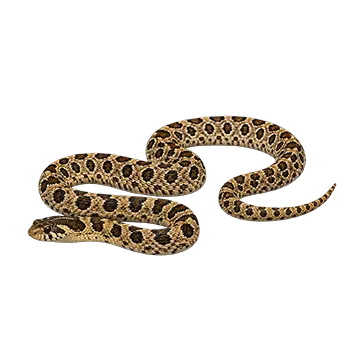
The Eastern Hognose Snake is a modestly sized, ground-dwelling colubrid that does not demand the towering vertical space required by arboreal species, but it does require sufficient horizontal floor area to thermoregulate, burrow, and move freely. An adult female Eastern Hognose Snake, which can reach 28 to 33 inches, should be housed in an enclosure providing a minimum of four square feet of floor space — a 36-inch by 18-inch footprint meets this requirement and is widely considered the standard for this species. Adult males, being smaller at 20 to 24 inches, can be maintained in slightly smaller enclosures with a 30-inch by 12-inch footprint, though the larger size is preferable when space allows. Hatchlings and juveniles should start in smaller enclosures — a six- to ten-quart tub or a ten-gallon equivalent — to prevent the stress and feeding reluctance that young hognose snakes frequently exhibit when placed in excessively large spaces.

Glass terrariums with screen tops remain one of the most popular enclosure choices for Eastern Hognose Snakes, offering excellent visibility and a wide range of available sizes. The primary drawback of screen-top terrariums for this species is humidity management. Eastern Hognose Snakes require moderate ambient humidity of 40 to 60 percent, and screen tops allow rapid moisture loss, particularly in dry indoor environments during winter months. Partially covering the screen with foil tape, acrylic panels, or damp towels mitigates this issue, though it adds maintenance complexity. Front-opening glass terrariums with solid tops and ventilation strips provide better humidity retention while maintaining the visual appeal of a glass enclosure, and their front-access design reduces the overhead approach that can startle a snake into a defensive display.

PVC and polyethylene enclosures have gained considerable popularity among hognose snake keepers for their superior insulation, humidity retention, and light weight relative to glass. These enclosures typically feature sliding or hinged front panels, integrated ventilation, and pre-drilled holes for heating equipment and probe access. The opaque walls provide a sense of security that glass enclosures cannot replicate on all sides, and the material's resistance to moisture makes cleaning straightforward. Many dedicated reptile enclosure manufacturers produce PVC models in the exact dimensions suited to adult hognose snakes, eliminating the need for modification.

Plastic storage tubs used within rack systems are the housing standard for breeders maintaining multiple Eastern Hognose Snakes, and they also serve individual keepers well. A 32-quart tub with ventilation holes drilled or melted into the sides provides adequate space for an adult male, while a 41-quart or larger tub accommodates adult females. Tub systems excel at maintaining consistent temperature and humidity, are inexpensive to replace, and simplify cleaning. The primary limitation is aesthetic — tub housing lacks the display quality of a furnished terrarium — but for keepers who prioritize function and the snake's comfort over visual presentation, tubs are an excellent choice.

Substrate Selection

Substrate is arguably the single most important furnishing decision for an Eastern Hognose Snake enclosure, because this species is strongly fossorial and engages in extensive burrowing behavior. In the wild, Heterodon platirhinos inhabits sandy prairies, dry woodland edges, floodplains, and agricultural fields with loose, well-drained soils that the snake excavates using its characteristic upturned rostral scale. Denying a captive hognose snake the ability to burrow eliminates one of its primary behavioral outlets and contributes to stress that can manifest as feeding refusal, defensive displays during routine maintenance, and general restlessness.

Aspen shavings are the most widely used substrate for Eastern Hognose Snakes and offer an excellent balance of burrowing support, absorbency, dust control, and availability. Kiln-dried aspen bedding holds its shape well enough for the snake to create stable tunnels without collapsing, absorbs waste and moisture effectively, and is easy to spot-clean between full substrate changes. The depth of aspen substrate should be generous — a minimum of three inches, and ideally four to six inches — to allow the snake to fully submerge and create the tunnel networks that characterize its natural behavior. Shallow substrate layers that only cover the enclosure floor defeat the purpose of using a burrowing-friendly material.

Coconut fiber and coconut husk blends offer an alternative for keepers who want to maintain slightly higher humidity levels within the enclosure. These substrates retain moisture better than aspen and can help buffer humidity in dry environments. However, coconut-based substrates are less structurally stable for tunneling, tend to collapse around the snake rather than maintaining open burrow channels, and can become overly damp if not managed carefully. Excessively moist substrate promotes bacterial and fungal growth and creates conditions favorable to respiratory infection, which is one of the more common health concerns in captive hognose snakes. If coconut fiber is used, mixing it with play sand at a ratio of roughly 60 percent fiber to 40 percent sand improves structural integrity and drainage.

Cedar and pine shavings must be avoided entirely for Eastern Hognose Snakes and all reptile species. The aromatic phenols in these softwoods — the same compounds responsible for their distinctive scent — are toxic to reptiles and cause respiratory irritation, neurological damage, and organ failure with prolonged exposure. Treated play sand, calcium sand marketed for reptiles, and any substrate containing artificial dyes or fragrances are similarly inappropriate. Pure, washed play sand without additives can be used as a standalone substrate or mixed with other materials, though sand alone compacts over time and does not hold burrow structure as effectively as aspen or fiber-sand blends.

Temperature and Heating

Establishing a proper thermal gradient is fundamental to the health of any ectothermic reptile, and the Eastern Hognose Snake requires a warm basking zone and a cooler retreat area within its enclosure. The warm end of the enclosure should reach 88 to 92 degrees Fahrenheit at the substrate surface, providing a basking spot where the snake can elevate its body temperature for digestion and immune function. The cool end should remain between 72 and 78 degrees Fahrenheit, giving the snake the ability to thermoregulate by moving between temperature zones according to its physiological needs. Nighttime temperatures can drop to the low 70s across the entire enclosure without concern, as this mirrors the natural diurnal temperature cycling this species experiences throughout much of its range.

Under-tank heat pads are the most commonly used primary heat source for Eastern Hognose Snake enclosures. These adhesive heating mats attach to the exterior bottom of glass terrariums and radiate gentle warmth upward through the glass and substrate. For a species that spends significant time buried in substrate, belly heat delivered from below is physiologically appropriate and mimics the warmth the snake would absorb from sun-heated soil in its natural habitat. The heat pad should cover approximately one-third of the enclosure's floor area, positioned entirely on one end to maintain the temperature differential. Every under-tank heater must be connected to a thermostat — operating a heat pad without thermostatic control risks dangerously high surface temperatures that can cause thermal burns, particularly when the snake is in direct contact with the glass beneath a thin substrate layer.

Overhead heating options including ceramic heat emitters, deep heat projectors, and radiant heat panels provide an alternative or supplemental heat source. Ceramic heat emitters produce infrared heat without visible light and can be run continuously without disrupting the snake's photoperiod. Deep heat projectors penetrate substrate more effectively than traditional ceramic elements and can warm the burrowed snake rather than only the surface layer. For PVC and tub enclosures where under-tank heating is impractical due to the enclosure's construction, radiant heat panels mounted to the ceiling of the enclosure deliver even, gentle warmth across a controlled area. Regardless of the heat source chosen, a quality thermostat with probe placement at the warmest point of the substrate surface is non-negotiable.

Overheating is a more immediate danger than underheating for Eastern Hognose Snakes. Ambient room temperatures in most homes already provide an adequate cool-end temperature, meaning the heating system only needs to elevate one end of the enclosure. A heat source that raises the entire enclosure above 85 degrees eliminates the snake's ability to cool down and creates chronic thermal stress that suppresses appetite, immune function, and reproductive health. Monitoring temperatures at both ends of the enclosure with digital thermometers — not adhesive strip thermometers, which are notoriously inaccurate — ensures the gradient remains within safe parameters at all times.

Humidity and Ventilation

The Eastern Hognose Snake occupies a moderate humidity range that reflects its distribution across the eastern and central United States, from the sandy coastal plains of the Southeast to the prairies and open woodlands of the Midwest. Ambient enclosure humidity should be maintained between 40 and 60 percent under normal conditions, with the lower end of that range being generally safer than the upper end for day-to-day maintenance. This species is adapted to relatively dry terrestrial environments and does not tolerate persistently damp conditions well. Sustained humidity above 70 percent, especially when combined with poor airflow, creates an environment conducive to respiratory infections, scale rot, and blister disease — conditions that require veterinary intervention and are far easier to prevent than to treat.

Achieving appropriate humidity depends on the interaction between enclosure type, substrate moisture content, ventilation, and ambient room conditions. Glass terrariums with screen tops in heated winter homes may require supplemental moisture — periodic misting of the substrate on the cool end, or placement of a shallow water dish over or near the heat source to increase localized evaporation. PVC and tub enclosures retain moisture much more efficiently and may require less intervention, though they can tip toward excessive humidity if substrate is too wet or ventilation is restricted. Monitoring humidity with a digital hygrometer placed at substrate level on the cool side of the enclosure gives the most representative reading of the conditions the snake experiences within its burrows.

A humid microclimate — commonly called a humidity box or shed box — addresses the snake's periodic need for elevated moisture without raising ambient enclosure humidity to risky levels. This is a small enclosed container with a single entry hole, filled with dampened sphagnum moss, and placed on the cool or mid-zone of the enclosure. Eastern Hognose Snakes entering a shed cycle will often seek out this humid retreat to loosen the old skin layer, reducing the incidence of incomplete sheds that leave retained eye caps or tail tips. The humidity box should be checked every two to three days and re-moistened or replaced as the moss dries, and it should be removed or refreshed promptly if mold growth appears.

Ventilation is the counterpart to humidity management and should never be sacrificed in the pursuit of higher moisture levels. Stagnant air promotes mold growth on substrate and organic waste, elevates ammonia concentrations from decomposing urates, and creates conditions favorable to respiratory pathogens. Enclosures should have passive ventilation — screen panels, drilled ventilation holes, or slotted vents — positioned to allow gentle air exchange without creating drafts directly across the snake's resting areas. The goal is a slow, continuous turnover of air that prevents moisture and waste gas accumulation while maintaining the thermal gradient and humidity level the snake requires.

Lighting Requirements

The Eastern Hognose Snake is a diurnal species that is active during daylight hours in the wild, basking in dappled sunlight along woodland edges, foraging across open fields, and retreating to burrows during the heat of midday and overnight. Captive lighting should replicate a natural photoperiod of approximately 12 hours of light and 12 hours of darkness, adjustable seasonally if the keeper intends to cycle the snake for breeding. Consistent light-dark cycling supports circadian rhythms, hormonal regulation, appetite, and behavioral normalcy. An enclosure placed in a room with ambient natural light from windows may receive adequate photoperiod cues without supplemental lighting, provided the room is not artificially lit around the clock.

The role of ultraviolet-B lighting for snake species is a subject of evolving understanding in herpetological husbandry. For many years, the consensus held that snakes do not require UVB exposure because they obtain vitamin D3 through whole-prey consumption. More recent research suggests that some snake species, including colubrids like the Eastern Hognose Snake, engage in voluntary UVB exposure when given the opportunity and may derive physiological benefits from low-level ultraviolet radiation. Providing a low-output UVB lamp — a 5.0 or 6 percent tube or compact bulb — positioned over the basking zone and shielded by a reflector does not appear to cause harm and may support calcium metabolism, immune function, and overall vitality. The UVB source should be replaced according to the manufacturer's schedule, typically every six to twelve months, as ultraviolet output decays well before the visible light output diminishes.

Incandescent basking bulbs can serve a dual purpose by providing both visible light and localized heat during the daytime portion of the photoperiod. A low-wattage incandescent or halogen bulb positioned over the warm end of the enclosure creates a defined basking spot and delivers full-spectrum visible light that enhances the keeper's ability to observe the snake's coloration and behavior. The wattage should be selected so that the basking surface beneath the lamp reaches the target temperature of 88 to 92 degrees when regulated by a dimming thermostat. Using an overhead light source as the primary daytime heat source and switching to a non-light-emitting ceramic heat emitter or under-tank heater for nighttime maintains the thermal gradient without disrupting the dark period.

Colored or tinted bulbs — red, blue, or purple heat lamps marketed for nocturnal viewing — should be avoided. Research on reptile vision demonstrates that many species, including colubrids, perceive light across a broader spectrum than humans and are disturbed by colored light sources that their keepers assume are invisible to the snake. Nighttime heat should be provided by non-light-emitting sources exclusively. If nocturnal observation is desired, infrared security cameras or very low-power red LED strips positioned outside the enclosure and shielded from direct line of sight offer alternatives that minimize disturbance.

Hides and Interior Layout

The interior layout of an Eastern Hognose Snake enclosure should prioritize function over decoration, providing the thermal choices, security, and behavioral outlets this species needs to thrive. At minimum, the enclosure must contain two hides — one on the warm end and one on the cool end — so the snake can thermoregulate without sacrificing the security of concealment. A snake that must choose between feeling hidden and achieving its preferred body temperature will often prioritize hiding, leading to chronic thermoregulatory compromise that suppresses digestion, immune response, and overall vigor. Each hide should be sized so that the snake fits snugly inside with its body in contact with the walls and ceiling, as loose, oversized hides provide less perceived security.

Hide materials range from commercially produced resin and plastic reptile caves to repurposed household items. Cork bark halves, inverted ceramic plant saucers with entry holes cut into the rim, and opaque plastic containers with snake-sized doorways all serve effectively. The key criteria are opacity, stability, and ease of cleaning. Hides that tip over when the snake enters, transparent hides that do not provide genuine visual concealment, and hides with rough or sharp edges that could abrade the snake's scales during entry and exit should be avoided. For Eastern Hognose Snakes, which spend significant time burrowed beneath substrate, the hides function as surface-level retreats that complement the underground refuge the substrate provides.

Beyond the required warm and cool hides, additional furnishings enhance the enclosure environment without cluttering it. A shallow water dish large enough for the snake to soak if it chooses but not so deep that a burrowing snake could submerge and struggle should be placed on the cool side. Artificial or live plants provide visual barriers and additional cover, making the snake feel less exposed as it moves between hides. Branches or low climbing structures, while not essential for this primarily terrestrial species, are sometimes used by hognose snakes for light exploration and can add visual interest to the enclosure. Any climbing structures should be sturdy and positioned low to the ground, as falls from even modest heights can injure a heavy-bodied snake that is not adapted to arboreal movement.

Cleanliness of the enclosure interior directly affects the snake's health. Spot-cleaning waste and soiled substrate every two to three days prevents ammonia buildup and bacterial proliferation. A full substrate change and enclosure disinfection should occur every four to six weeks, or more frequently if odor or visible contamination warrants it. During full cleanings, all hides, water dishes, and furnishings should be removed, scrubbed with a reptile-safe disinfectant, rinsed thoroughly, and dried before being returned to the enclosure. Establishing a cleaning routine and sticking to it is one of the simplest and most effective measures a keeper can take to prevent health problems in a captive Eastern Hognose Snake.

Always consult a qualified professional before making any health-related decisions. This content is provided for informational reference only and should not replace professional guidance specific to your animal.