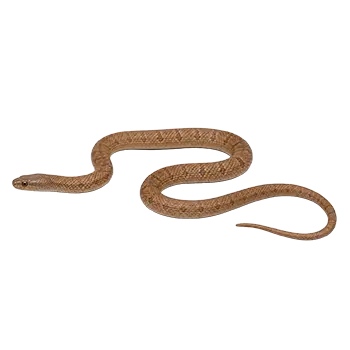

Enrichment for captive snakes has historically received less attention than enrichment for mammals and birds, partly because of the widespread misconception that snakes are simple animals with limited cognitive capacity and no need for environmental stimulation beyond the basics of food, water, heat, and shelter. Research in reptile cognition and welfare over the past two decades has decisively challenged this view, demonstrating that snakes actively explore novel environments, exhibit preferences for complex habitats over barren ones, and display measurable stress indicators when confined to featureless enclosures. The Eastern Egg-Eater, as an active forager that in the wild must locate bird nests hidden across diverse terrain, is particularly well suited to benefit from a thoughtfully enriched captive environment.
In its natural habitat, Dasypeltis scabra navigates a three-dimensional landscape of grasses, shrubs, rocky outcrops, leaf litter, and tree canopy edges in search of the bird nests that contain its only food source. This foraging behavior requires the snake to climb, explore, investigate scent trails, and make decisions about which routes to follow and which microhabitats to investigate. Captive enrichment aims to approximate this behavioral complexity by providing opportunities for physical activity, sensory stimulation, problem-solving, and voluntary choice-making within the confines of the enclosure. An enriched enclosure does not need to replicate the wild environment in literal detail — it needs to provide the snake with reasons to move, investigate, and engage with its surroundings.
The benefits of enrichment for the Eastern Egg-Eater manifest in several observable ways. Enriched snakes tend to be more active during their crepuscular and nocturnal hours, display more varied movement patterns, accept food more readily, and shed more cleanly and consistently than snakes in barren enclosures. Over time, keepers of enriched egg-eaters frequently report that their animals become calmer and more tolerant of handling, likely because the reduced baseline stress of a stimulating environment translates into a lower overall arousal state. Conversely, Eastern Egg-Eaters in minimalist setups often develop stereotypic behaviors such as repetitive glass-surfing, excessive hiding, and refusal to feed — all indicators of chronic stress.
Enrichment should be viewed as an ongoing process rather than a one-time setup. The novelty of any environmental element fades over time as the snake habituates to its presence, so periodic rearrangement of décor, introduction of new objects, and variation in environmental features are necessary to maintain the enrichment's effectiveness. A keeper who rearranges the enclosure layout every two to four weeks — moving hides, repositioning branches, adding or rotating climbing structures — creates a perpetually novel environment that sustains the snake's exploratory drive without requiring constant investment in new products.