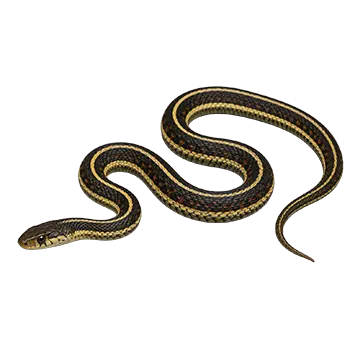

Understanding Enrichment for Garter Snakes

The concept of enrichment for snakes has evolved dramatically over the past two decades, moving from a fringe idea to a recognized pillar of responsible reptile husbandry. Common Garter Snakes are among the most responsive snake species to environmental enrichment, which is no surprise given their natural history. In the wild, Thamnophis sirtalis navigates complex microhabitats along stream banks, meadow edges, forest clearings, and rocky outcrops, encountering a continuously changing landscape of scent trails, temperature gradients, prey opportunities, and potential threats. A captive garter snake housed in a minimally furnished enclosure is deprived of the sensory input and behavioral opportunities that define its daily existence in nature.

Enrichment for snakes does not take the form of conventional toys in the way that a dog owner might understand the term. Snakes do not fetch, chew, or play with objects for amusement. Instead, snake enrichment focuses on environmental complexity, sensory stimulation, and opportunities for the animal to express natural behaviors such as exploring, hunting, climbing, burrowing, and thermoregulating across varied microenvironments. The goal is to provide an environment that is cognitively and physically engaging — one that requires the snake to make decisions, solve problems, and use its full behavioral repertoire rather than simply existing in a static, predictable space.

Research into reptile cognition has demonstrated that snakes, including garter snakes specifically, are capable of spatial learning, habituation, and even rudimentary problem-solving. Studies on Thamnophis sirtalis have shown that individuals can learn to navigate simple mazes, remember the locations of shelters and food sources, and distinguish between familiar and novel objects in their environment. These findings underscore the importance of providing captive garter snakes with environments that challenge and engage their cognitive abilities rather than merely meeting their survival requirements of heat, water, and food.

The practical benefits of enrichment extend beyond animal welfare. Well-enriched garter snakes tend to feed more reliably, shed more cleanly, and display calmer behavior during handling. Snakes in impoverished environments are more likely to develop repetitive behaviors such as persistent glass-surfing — rubbing the nose along enclosure walls — which can cause rostral abrasions and is widely interpreted as a stress behavior indicating that the animal's environmental needs are not being met.

Habitat Complexity and Structural Enrichment

Structural enrichment is the foundation of any enrichment program for a Common Garter Snake and involves increasing the physical complexity of the enclosure so that the snake has multiple pathways, surfaces, and microenvironments to explore. The simplest and most effective form of structural enrichment is adding more cover objects and varying their arrangement periodically. Cork bark tubes, half-round logs, rock formations, and commercially available reptile caves placed throughout the enclosure create a network of pathways and hiding spots that the snake must navigate, transforming a simple tank into a miniature landscape.

Vertical enrichment is particularly valuable for garter snakes because of their semi-arboreal tendencies. Sturdy branches positioned at various angles, cork bark flats mounted against the back wall of the enclosure, and tiered rock shelves create three-dimensional space that the snake will readily use. Garter snakes are lighter and more agile than many commonly kept species, and they will climb surprisingly high and navigate narrow branches with confidence. Ensuring that vertical structures offer multiple routes to the top — rather than a single straight path — encourages more complex locomotion and exploration.

Periodic rearrangement of enclosure furnishings is one of the most underutilized enrichment strategies in reptile keeping. Moving hides, repositioning branches, and introducing new objects at intervals of two to four weeks provides novel stimuli that reignite exploratory behavior. A garter snake that has fully mapped its enclosure and settled into predictable movement patterns will show renewed interest and activity when the layout changes. The rearrangement does not need to be dramatic — shifting a hide from one corner to another or adding a single new branch can produce a measurable increase in tongue-flicking, exploration, and active movement.

Natural materials gathered from outdoors — stones, branches, leaf litter, and bark — can supplement commercial products and add textural and olfactory variety to the enclosure. All natural materials must be sanitized before use by baking in an oven at two hundred degrees Fahrenheit for thirty to sixty minutes or soaking in a dilute bleach solution, rinsing thoroughly, and drying completely. Avoid resinous softwoods like pine and cedar, which release volatile compounds harmful to reptiles. Hardwood branches from oak, maple, and fruit trees are safe and durable choices that provide excellent climbing and basking surfaces.

Sensory and Olfactory Enrichment

Garter snakes are among the most scent-oriented snake species in North America, relying heavily on their vomeronasal organ to interpret their environment, locate prey, identify conspecifics, and detect potential threats. Olfactory enrichment leverages this sensory strength by introducing novel scents into the enclosure that stimulate investigation and tongue-flicking behavior. The simplest method is placing a small amount of substrate or bedding from another reptile enclosure — a different snake species, a lizard, or a turtle — into the garter snake's habitat. The unfamiliar scent triggers intense investigative behavior as the snake works to identify and categorize the novel chemical signal.

Prey-scented enrichment items create foraging motivation without the caloric impact of an actual feeding event. Rubbing a clean piece of cork bark or a smooth stone with a thawed silverside or nightcrawler and placing it in the enclosure gives the snake a scent trail to follow and a target to investigate. The snake will tongue-flick intensely, track the scent to its source, and may attempt to consume the scented object before recognizing it as inedible. This activity mimics the sensory component of natural foraging and provides cognitive engagement that a predictable tong-feeding routine does not.

Natural plant materials can introduce complex, multi-layered scent profiles into the enclosure environment. Fresh, non-toxic herbs such as basil, rosemary, and thyme placed briefly in the enclosure introduce botanical scent compounds that are entirely novel to the snake's experience and provoke sustained exploratory behavior. Dried leaves from outdoor deciduous trees — collected from pesticide-free areas and briefly heated to sanitize — carry a complex blend of organic scents including decomposition byproducts, fungal spores, and insect pheromones that a garter snake's vomeronasal system is exquisitely tuned to detect. These items should be removed after several hours to prevent mold growth and replaced with fresh materials at intervals.

Water-based sensory enrichment is uniquely appropriate for garter snakes because of their strong ecological association with aquatic habitats. Adding a small amount of water from a dechlorinated, pesticide-free outdoor source — a clean pond or stream — to the snake's water dish introduces trace organic compounds and microorganism scents that differ from the sterile profile of treated tap water. The snake will investigate the altered water with heightened interest, and this simple intervention mimics the sensory experience of encountering a natural water source. Keepers should ensure that any outdoor water used is genuinely clean and sourced from areas free of agricultural runoff or industrial contamination.

Foraging and Feeding Enrichment

Feeding enrichment transforms the delivery of food from a routine, predictable event into a cognitively engaging activity that requires the snake to search, track, and capture its prey. For Common Garter Snakes, which are active foragers rather than ambush predators, feeding enrichment aligns closely with natural behavior and provides some of the most impactful enrichment opportunities available. The most straightforward feeding enrichment strategy is varying the location where food is offered within the enclosure. Rather than always presenting prey at the same spot with tongs, placing a thawed silverside or a nightcrawler in a shallow dish at a different location each feeding session forces the snake to locate the food by scent, engaging its foraging instincts.

Scatter feeding is particularly effective with earthworms, which are a natural prey item that garter snakes locate by scent and vibration detection in the wild. Placing several earthworm segments at different locations throughout the enclosure — under a piece of bark, beside the water dish, partially hidden beneath leaf litter — creates a multi-point foraging challenge that can keep a garter snake actively hunting for an extended period. This approach mimics the patchy distribution of prey that a wild garter snake encounters and prevents the learned passivity that develops when food always arrives from the same direction at the same time.

Puzzle feeders designed for reptiles are a relatively new product category that has direct application for garter snakes. These devices typically consist of a container with small openings through which the snake must navigate to access a food item placed inside. A simple version can be constructed from a small plastic container with holes drilled in the sides, baited with a piece of fish or earthworm. The snake must locate the scent source, navigate around the container, and find an opening large enough to enter — a sequence that engages spatial reasoning and persistence. Commercial versions with adjustable difficulty levels are available from specialty reptile enrichment suppliers.

Timing variability is an often-overlooked dimension of feeding enrichment. Wild garter snakes do not eat on a fixed schedule — prey availability fluctuates based on weather, season, and local ecology. Introducing controlled variability into the feeding schedule — feeding twice in one week and once the following week, or occasionally skipping a feeding day — prevents the snake from settling into a rigid anticipatory pattern and maintains the feeding event as a novel stimulus rather than a predictable routine. This approach should only be used with healthy, well-established adults and not with growing juveniles or underweight animals that require consistent caloric intake.

Handling as Enrichment

Regular, gentle handling constitutes a form of enrichment for Common Garter Snakes by exposing them to novel tactile sensations, scent environments, temperature variations, and visual stimuli that differ from their enclosure. Garter snakes are among the most handling-tolerant snake species, and well-socialized individuals will actively explore the keeper's hands, arms, and clothing with visible curiosity rather than displaying the defensive immobility or frantic escape behavior seen in poorly socialized animals. Handling sessions of ten to fifteen minutes, conducted several times per week, provide meaningful environmental variation without causing undue stress.

Outdoor handling in a controlled, secure setting amplifies the enrichment value of a handling session enormously. The sensory environment outdoors — wind carrying complex scent profiles, natural sunlight with its full UV spectrum, varied ground textures, ambient sounds, and temperature gradients — is incomparably richer than anything achievable inside a home. Supervised outdoor sessions should be conducted in a confined area such as a fenced yard or on a blanket in a secure location where escape risk is minimized. The snake should never be placed directly on chemically treated grass or near areas where pesticides, herbicides, or fertilizers have been applied. Outdoor handling is weather-dependent and should only occur when ambient temperatures are within the snake's comfortable range, roughly sixty-five to eighty-five degrees Fahrenheit.

Exploration enclosures — temporary, heavily supervised setups designed specifically for enrichment rather than permanent housing — offer a middle ground between routine handling and the full sensory complexity of the outdoors. A large plastic storage bin filled with clean, sanitized natural materials such as leaf litter, small branches, smooth stones, and moss creates a miniature exploration landscape where the snake can investigate novel textures and scents in a secure, contained environment. The keeper monitors the snake continuously during these sessions, which typically last fifteen to thirty minutes, then returns the animal to its permanent enclosure.

Social exposure to other garter snakes can function as enrichment for a species that is notably communal in the wild. Common Garter Snakes aggregate in large numbers at overwintering den sites and are frequently found basking in loose groups during the active season. Housing compatible garter snakes together — provided the enclosure is large enough to offer adequate space and multiple resources for each animal — allows for social behaviors including communal basking, mutual tongue-flicking, and shared hide use. Communal housing is not appropriate for all individuals, and any signs of aggression, persistent avoidance, or competitive exclusion from resources indicate that the animals should be separated.

Signs of Adequate and Inadequate Enrichment

Recognizing whether a garter snake is adequately stimulated requires observing the animal's behavior over time and comparing it against the species-typical behavioral repertoire. A well-enriched Common Garter Snake displays a diverse set of active behaviors throughout the day: systematic exploration of the enclosure using tongue-flicking to sample surfaces, voluntary use of multiple hide locations and basking spots, climbing and navigating vertical structures, alert head tracking in response to movement outside the enclosure, and calm, investigative behavior when the enclosure is opened for maintenance or feeding. These behaviors indicate an animal that is cognitively engaged with its environment and exercising its full range of natural responses.

Glass-surfing — the repetitive rubbing of the snout against the enclosure walls — is the single most common behavioral indicator of inadequate enrichment in captive garter snakes. While occasional wall patrol is normal exploratory behavior, persistent glass-surfing that occurs daily and results in visible rostral wear indicates that the snake is either attempting to escape an environment it perceives as inadequate or is engaging in stereotypic behavior driven by insufficient stimulation. Increasing habitat complexity, adding novel objects, and varying the enclosure layout typically reduce or eliminate glass-surfing behavior within days to weeks.

Excessive hiding — spending virtually all time within a single hide and emerging only to drink or defecate — can indicate either stress or environmental inadequacy, though it must be distinguished from normal behavior in newly acquired animals or those in pre-shed condition. A garter snake that has been in its enclosure for more than a month and still spends nearly all of its time hidden is likely either in an environment that feels insecure (too exposed, too much vibration, too much overhead movement) or in one that offers no reason to emerge because there is nothing of interest outside the hide. Addressing the security concern first — adding more visual barriers and reducing disturbance — and then gradually increasing environmental complexity often draws the snake into more active patterns.

Feeding response can serve as an indirect but valuable indicator of enrichment status. Common Garter Snakes are naturally enthusiastic, aggressive feeders that strike at prey with speed and precision. A garter snake that was previously a reliable feeder and begins showing disinterest in food — assuming health issues have been ruled out — may be experiencing chronic stress or environmental monotony. Introducing feeding enrichment strategies, varying prey types, and refreshing the enclosure layout often restore feeding vigor. Conversely, a snake that feeds eagerly, sheds completely and on schedule, and moves through its enclosure with purpose and confidence is displaying the behavioral hallmarks of an animal whose physical and psychological needs are being met.

Always consult a qualified professional before making any health-related decisions. This content is provided for informational reference only and should not replace professional guidance specific to your animal.