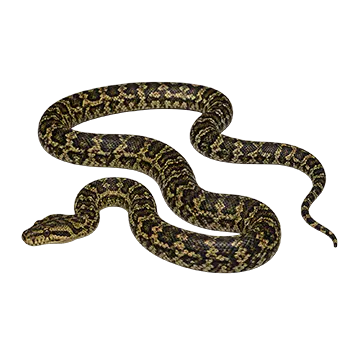

Enrichment for snakes is a fundamentally different concept than enrichment for mammals or birds. Snakes do not play with toys in the conventional sense — they do not fetch, chase balls, or interact with puzzle feeders the way a dog or parrot would. Instead, enrichment for a Carpet Python is about creating an environment that encourages the expression of natural behaviors such as climbing, exploring, hunting, thermoregulating, and hiding. A well-enriched enclosure promotes physical activity, reduces stress, and supports overall health.
The concept of environmental enrichment for reptiles has gained significant traction in the herpetological community over the past decade. Research and keeper experience have consistently shown that snakes housed in complex, stimulating environments exhibit fewer stress behaviors, feed more reliably, and display more natural movement patterns than those kept in barren, minimalist setups. For a semi-arboreal species like the Carpet Python, this is especially relevant because the animal's behavioral repertoire includes vertical movement, perching, and navigating complex three-dimensional spaces.
Enrichment is not a one-time setup. The most effective approach involves periodically changing elements of the enclosure — rearranging branches, introducing new hides, or altering the layout — to provide novelty and encourage exploration. A static environment, no matter how elaborately furnished, eventually becomes routine. Thoughtful rotation of enrichment elements keeps the enclosure engaging without requiring constant investment in new materials.
It is worth noting that enrichment should never compromise the snake's safety or core husbandry parameters. Any item introduced into the enclosure must be non-toxic, free of sharp edges, structurally sound, and appropriately sized. Enrichment that disrupts thermal gradients, blocks access to water, or creates entrapment hazards does more harm than good.