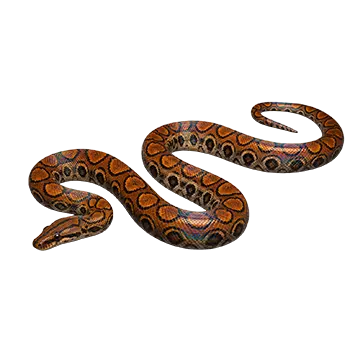

Enrichment for captive snakes is a concept that has gained significant traction in herpetological husbandry over the past two decades, driven by accumulating evidence that even species once considered purely instinct-driven benefit measurably from environmental complexity and novelty. The Brazilian Rainbow Boa is an excellent candidate for enrichment programming because it is an active, curious species that engages extensively with its surroundings during its crepuscular and nocturnal activity periods. In the wild, Epicrates cenchria navigates a complex three-dimensional habitat that includes forest floor leaf litter, low shrubs, tree branches, fallen logs, rocky outcrops, and the margins of waterways. Replicating even a fraction of this environmental richness in captivity produces observable improvements in behavior, feeding response, and apparent stress levels.
The term enrichment in the context of snake husbandry does not mean toys in the way a dog or cat owner would understand the word. Snakes do not play with objects in a goal-directed or social manner. Instead, enrichment for snakes focuses on providing opportunities to express natural behaviors — exploring, climbing, burrowing, hiding, hunting, thermoregulating, and navigating textured and complex environments. When these opportunities are present, snakes display a broader behavioral repertoire, spend more time in active movement rather than static hiding, and show fewer signs of chronic stress such as repetitive glass-surfing, excessive hiding, and defensive posturing during routine interaction.
The Brazilian Rainbow Boa's semi-arboreal tendencies make it particularly responsive to vertical enrichment. Wild individuals are frequently found draped over low branches, coiled in vine tangles, or resting on elevated surfaces where they ambush prey from above. Captive animals that are provided with climbing structures use them consistently, and keepers report that animals with access to elevated retreats display calmer temperaments and stronger feeding responses than those housed in flat, featureless enclosures. This behavioral evidence aligns with the broader enrichment literature suggesting that allowing animals to express species-typical behaviors reduces the physiological stress markers associated with captive environments.
A well-designed enrichment program for a Brazilian Rainbow Boa does not require expensive commercial products or elaborate installations. Many of the most effective enrichment strategies involve rearranging existing furnishings, introducing natural materials gathered from safe outdoor sources, and varying the sensory environment through subtle changes in light, humidity gradients, and the introduction of novel scents. The key principle is change — even small modifications to the enclosure environment stimulate exploratory behavior and cognitive engagement, while a static, unchanging habitat promotes lethargy and behavioral stagnation.