
Enrichment is a concept borrowed from zoo management that has become increasingly central to responsible private reptile keeping over the past two decades. At its core, enrichment refers to any modification of the captive environment or husbandry routine that encourages an animal to express natural behaviors, engage cognitively with its surroundings, and exercise physical capabilities that would be used routinely in the wild but are often underutilized in the confines of a standard enclosure. For snakes, which were long dismissed as purely instinct-driven animals incapable of benefiting from environmental complexity, the enrichment conversation has been particularly transformative.
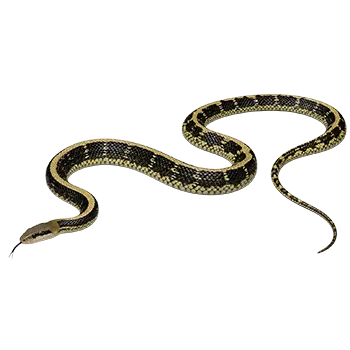
The Beauty Snake is an exceptionally strong candidate for enrichment investment because of its natural behavioral profile. In the wild, Elaphe taeniura is an active, wide-ranging predator that navigates complex three-dimensional environments including rocky hillsides, forest canopies, cave systems, and agricultural structures. It hunts by actively patrolling its territory, relies heavily on visual and chemosensory input to locate prey, and demonstrates problem-solving behavior when navigating obstacles. A Beauty Snake housed in a barren enclosure with two hides and a water bowl is surviving, but it is not engaging the cognitive and physical capacities it evolved to use daily.
Recent behavioral research on colubrid snakes, including studies on spatial memory, exploratory drive, and novelty response, has demonstrated that these animals are far more cognitively capable than traditional herpetology assumed. Snakes can learn spatial layouts, remember the locations of resources, and respond to novel stimuli with investigation rather than pure avoidance. Beauty Snakes in enriched environments tend to display more varied activity patterns, more confident handling behavior, better feeding responses, and fewer stress-related health issues compared to individuals housed in minimalist setups. While the evidence base is still growing, the practical observations from experienced keepers are consistent and compelling.
Enrichment for snakes differs fundamentally from enrichment for mammals or birds because snakes lack limbs, do not manipulate objects with appendages, and interact with their environment primarily through locomotion, tongue-flicking, and body contact. This means that traditional toy concepts — balls, puzzles with moving parts, chew objects — do not translate to snake keeping. Instead, snake enrichment focuses on environmental complexity, spatial novelty, sensory stimulation, and opportunities for natural locomotor behaviors such as climbing, burrowing, swimming, and exploring. Thinking of enrichment as habitat design rather than toy selection is the most productive framework for the Beauty Snake keeper.