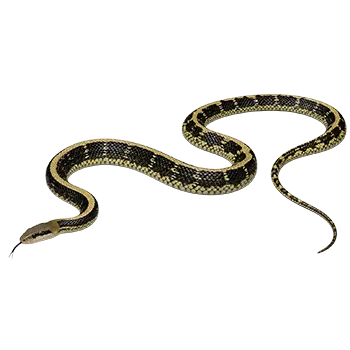

The Beauty Snake is an active, semi-arboreal colubrid that requires substantially more enclosure space than its body length alone might suggest. While many snake species spend the majority of their time coiled in a hide, the Beauty Snake is a patroller — it moves through its environment regularly, climbs when given the opportunity, and uses every dimension of its enclosure throughout the day and night. An adult Beauty Snake in the five-to-seven-foot range requires a minimum enclosure footprint of four feet long by two feet deep by two feet tall, but a larger setup of six feet by two feet by three feet is strongly preferred and allows the keeper to create the kind of complex, multi-level environment in which this species truly thrives.
Hatchlings and small juveniles should not be placed directly into an adult-sized enclosure. A large, open space with distant hides and limited cover is stressful for a young Beauty Snake and often leads to food refusal, chronic hiding, and failure to thrive. A small plastic tub or a ten-to-twenty-gallon glass terrarium with tight-fitting lid provides the security a hatchling needs while still allowing adequate ventilation and easy access for the keeper. As the snake grows, enclosure size should be increased in stages — typically at the six-month, twelve-month, and eighteen-to-twenty-four-month marks — until the animal is large enough to occupy its permanent adult enclosure with confidence.
Enclosure material is a matter of practical consideration more than aesthetic preference. Glass terrariums with front-opening doors are popular because they provide excellent visibility, are easy to clean, and retain humidity reasonably well when equipped with a solid or partially solid top. PVC and melamine enclosures offer superior insulation, lighter weight per unit volume, and better humidity retention than glass, making them the preferred choice for keepers in dry climates or those housing multiple animals in a rack or shelf system. Wooden vivaria with sealed interiors are another option, particularly for custom-built enclosures designed to specific dimensions, though they require thorough waterproofing to prevent moisture damage over time.
Security is a non-negotiable consideration when housing Beauty Snakes. This species is an accomplished escape artist with a particular talent for exploiting gaps around doors, lids, and cable ports. Every enclosure must have a locking mechanism — sliding glass doors with pin locks, front-opening doors with key or latch closures, or tub lids with clip fasteners — and every opening for cords, tubing, or ventilation must be sized or screened to prevent passage. A Beauty Snake that escapes into a home can be extremely difficult to locate and may injure itself on sharp surfaces, become dehydrated, or encounter household hazards such as adhesive traps.