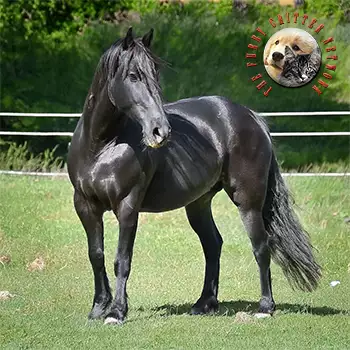

The Selle Français is an intelligent, curious breed that was developed to think through complex physical challenges like navigating a show jumping course at speed. That mental acuity does not switch off when the saddle comes off. A bored Selle Français is a destructive Selle Français — stall vices like cribbing, weaving, wood chewing, and pawing often develop not from physical discomfort but from sheer understimulation in a confined environment.
Enrichment is not a luxury for this breed; it is a management necessity. Horses that spend 20 or more hours per day in a stall with nothing but walls to look at are living in conditions fundamentally at odds with their evolved behavior. Wild and feral horses spend the majority of their time foraging, socializing, and moving. Enrichment products aim to fill some of that behavioral void, giving the stalled horse outlets for investigation, manipulation, and problem-solving.
The Selle Français's responsiveness to training also means it engages well with enrichment that rewards effort. Treat-dispensing toys, puzzle feeders, and novel objects placed in the stall or paddock give the horse something to work on rather than simply endure the hours between training sessions. Rotating enrichment items regularly prevents habituation — a toy that captivated attention for a week will be ignored furniture by week three unless it disappears and reappears with fresh novelty.
Social enrichment deserves equal emphasis. The Selle Français is a herd animal, and visual or physical contact with other horses is one of the most powerful stress-reduction tools available. Stall designs with open grilles or mesh between neighbors allow social interaction without the risk of biting or striking. Mirrors placed in stalls have been shown to reduce stress behaviors in isolated horses, though they are a supplement to — not a replacement for — real social contact.