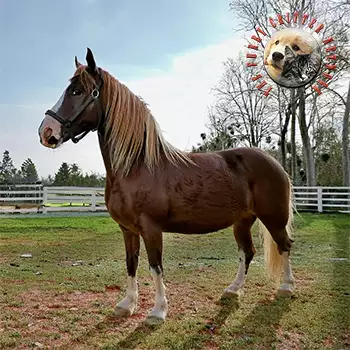

Saddle fit is one of the most consequential equipment decisions for the Peruvian Paso because an ill-fitting saddle can suppress the breed's signature lateral gait. The Peruvian Paso has a shorter back, pronounced withers, and a uniquely mobile shoulder that must swing freely for the paso llano to express correctly. Saddles designed specifically for gaited horses — with a flared tree that accommodates shoulder rotation and a shorter skirt that avoids contact with the hip — are the ideal starting point, though any saddle should be evaluated through a professional fitting.
Traditional Peruvian tack includes a distinctive saddle style with a deep seat, high cantle, and ornate leather tooling, often paired with a wide breast collar and crupper. While these traditional saddles are beautifully crafted and culturally significant, modern lightweight trail and endurance saddles also work well for the breed when properly fitted. The key is ensuring the tree width matches the horse's back profile and that the panels distribute the rider's weight evenly without bridging or creating pressure points.
Bridle selection for the Peruvian Paso should account for the breed's typically refined head and medium-sized muzzle. A standard horse-sized bridle may be too large, while a cob size may be too snug through the browband. Adjustable bridles with multiple buckle points at the cheek, throat, and crown allow fine-tuning for a precise fit. Bit selection is a separate conversation, but the bridle itself should sit comfortably without pinching the ears, pressing on the eyes, or creating rub marks behind the jaw.
Pad selection works in concert with the saddle to protect the horse's back. A contoured pad that follows the shape of the withers and spine prevents the pad from collapsing into the gullet channel and pressing on the spinous processes. Breathable materials — wool felt, closed-cell foam, or moisture-wicking synthetic fabrics — reduce heat buildup during long rides. Avoid excessively thick pads as a compensation for poor saddle fit; a thick pad under a poorly fitted tree creates more problems than it solves by destabilizing the saddle and increasing pressure concentration.