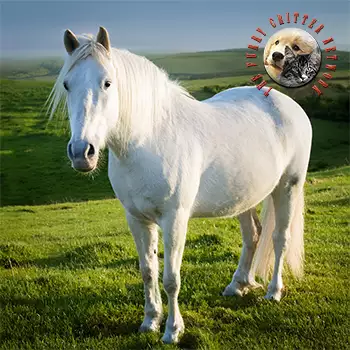

Play Style & Temperament

The Connemara Pony is one of the more intelligent and curious pony breeds, traits that make enrichment both especially important and especially rewarding. These ponies are natural problem-solvers with an independent streak born from centuries of semi-feral living on the Connemara coast. A bored Connemara will create its own entertainment — often in ways that involve unlatching gates, dismantling fencing, or developing stable vices like cribbing and weaving. Providing appropriate outlets for mental energy is not merely a nicety but a genuine management necessity.

Their play style tends toward investigation and manipulation rather than pure physical exertion. While Connemaras enjoy running and playing with herd mates, they are equally engaged by objects they can push, roll, pick up, or otherwise interact with. This makes them excellent candidates for puzzle-type enrichment that rewards curiosity with a treat or simply provides a novel sensory experience. The key is matching the difficulty level to the individual — too easy and the pony loses interest within minutes, too difficult and frustration replaces engagement.

Social play is another important dimension of Connemara enrichment. These ponies form strong bonds with herd mates and engage in mutual grooming, play-fighting, and chase games that provide both physical exercise and emotional satisfaction. No manufactured toy can fully replace the enrichment value of a compatible companion, and housing arrangements that allow for social interaction should be considered the foundation of any enrichment program.

Age and workload also influence enrichment needs. Young Connemaras and those with limited riding or driving schedules have the most unstructured time to fill and benefit most from a rotating selection of toys and activities. Performance ponies in regular training may get sufficient mental stimulation from their work, but even these individuals benefit from stall toys during periods of rest or confinement due to injury.

Treat-Dispensing & Puzzle Toys

Treat-dispensing toys are among the most effective enrichment tools for Connemara Ponies because they combine mental challenge with food motivation. The basic concept is simple — a container that releases small amounts of feed or low-sugar treats when the pony manipulates it in the correct way — but the range of designs available varies considerably in difficulty, durability, and suitability for metabolically sensitive breeds.

Slow-feed balls and rolling dispensers are popular entry-level options. These are typically large, hard plastic spheres with adjustable openings that release pellets or hay cubes as the pony pushes the ball around with its nose. For Connemaras, choose models with small openings that limit the rate of treat delivery and fill them with the pony's regular ration balancer pellets or small hay cubes rather than high-sugar commercial treats. This turns a portion of the daily feed ration into an enrichment activity rather than adding extra calories.

More advanced puzzle feeders present the pony with a problem to solve — lifting a lid, sliding a panel, or navigating a maze — before the food reward is accessible. These products provide the longest engagement times and are particularly well-suited to the Connemara's problem-solving aptitude. Start with simpler configurations and increase difficulty as the pony masters each level, keeping in mind that most horses can learn the mechanics of a new puzzle within a few sessions.

Durability is a practical concern with any treat-dispensing toy. Connemaras are strong for their size and can be rough on equipment, particularly once they understand that food is inside. Look for products made from thick-walled polyethylene or rubber compounds rated for equine use, with no small parts, hinges, or metal components that could break off and be ingested. Inspect toys regularly for cracks, sharp edges, or loose pieces and retire any product that shows structural compromise.

Stall & Paddock Toys

Stall toys serve a critical function for Connemaras that spend any portion of their day confined — they provide an outlet for natural investigative and play behavior that might otherwise manifest as stereotypic behaviors. Hanging toys that dangle from the ceiling or a stall wall at chest height are a classic option, giving the pony something to nudge, bite, and bat without the risk of stepping on a ground-level object in a confined space.

Scented and flavored lick toys offer a different type of engagement, appealing to the pony's sense of taste and smell rather than its desire to manipulate objects. These products come in various flavors and can keep a pony occupied for extended periods. For Connemaras, choose options that are low in sugar and molasses — some lick products are essentially candy blocks and can contribute significant calories if consumed rapidly. Salt-based licks with embedded flavoring provide hydration benefits alongside entertainment.

Paddock toys can be larger and more robust than stall toys because the pony has room to engage with them at speed. Large equine play balls — typically 25 to 40 inches in diameter and made from durable, puncture-resistant materials — are a favorite of many horses and ponies. Connemaras often develop elaborate games involving pushing, chasing, and even standing on these balls. Ensure the ball is properly inflated and sized large enough that the pony cannot bite down on it or get a hoof lodged underneath.

Traffic cones, plastic barrels, and other simple objects can serve as effective low-cost enrichment in paddock settings. Many horse owners find that their ponies are just as entertained by a collection of inexpensive, novel objects as they are by purpose-built equine toys. The key is rotation — introduce new items periodically and remove familiar ones to maintain novelty. A pony that has ignored a toy for weeks may rediscover it with enthusiasm after a week's absence.

Foraging & Slow-Feed Enrichment

Converting the act of eating from a passive event into an active foraging challenge is one of the most natural and effective forms of enrichment for any equine, and it aligns perfectly with the Connemara's need for calorie management. Slow-feed hay nets with small mesh openings transform a flake of hay from a 30-minute meal into a two-hour activity, extending eating time while reducing overall consumption. Position these nets at a comfortable height that allows a natural head-down eating posture to avoid neck and back strain.

Hay balls and hay feeders that require the pony to pull forage through openings or roll a container to access hay add physical activity to the foraging process. These are particularly valuable for ponies on dry lots or in stalls where natural grazing is unavailable. Some designs hang from overhead structures, encouraging the pony to work at the hay from different angles, while ground-level models are pushed and rolled across the floor.

Scatter feeding is a simple but underutilized enrichment strategy. Rather than placing hay in a single pile or net, distribute multiple small piles or nets throughout the stall or paddock. This encourages the pony to move between feeding stations, simulating the natural pattern of walking and grazing that occupies much of a wild or feral pony's day. In a paddock setting, you can scatter chopped hay or forage cubes across a wide area, turning mealtime into a scavenger hunt.

Track systems — sometimes called Paddock Paradise layouts — represent an advanced approach to foraging enrichment that integrates housing design with feeding strategy. By arranging fencing to create a narrow looping track around the perimeter of a property, with hay stations, water, and shelter distributed at intervals along the track, owners encourage continuous movement and grazing behavior throughout the day. This system is especially beneficial for metabolically sensitive breeds like the Connemara, as it combines calorie management with physical and mental stimulation.

Social & Sensory Enrichment

Beyond physical toys, Connemara Ponies benefit from enrichment that engages their senses and social instincts. Mirrors installed in stalls have been shown in research to reduce stress-related behaviors in horses housed individually, likely because the pony perceives its reflection as a companion. Stall mirrors should be made from acrylic or polished metal rather than glass to prevent injury, and mounted securely at a height where the pony can see its own head and neck.

Novel sensory experiences — new textures, sounds, and scents — provide mental stimulation without requiring any special equipment. Hanging different materials from a fence line or stall door, such as strips of cloth, pool noodles, or rubber matting, gives the pony something to investigate and desensitize to. This type of enrichment has the added benefit of building confidence and reducing spookiness, which translates directly to safer handling and riding.

Music and sound enrichment is a growing area of interest in equine welfare. Research suggests that classical music and certain low-tempo genres have a calming effect on stabled horses, reducing heart rate and stress indicators. A weather-resistant radio in the barn aisle, set to a moderate volume, can provide background stimulation during stall time. Avoid sudden loud broadcasts, talk radio with unpredictable volume changes, or high-tempo music that may increase arousal.

Grooming and tactile interaction with humans is itself a form of enrichment that strengthens the bond between pony and handler. Connemaras are generally affectionate and responsive to attention, and a daily grooming session provides sensory stimulation, social interaction, and an opportunity for the handler to monitor the pony's physical condition. Scratching the withers, which mimics mutual grooming between horses, is particularly appreciated and has been shown to lower equine heart rates.

DIY & Budget Enrichment

Effective enrichment for Connemara Ponies does not require expensive specialty products. Many of the most engaging toys and activities can be assembled from materials found around the farm or purchased inexpensively at hardware stores. A plastic jug with a few holes cut in the sides, filled with hay cubes, creates a functional treat dispenser at essentially zero cost. Empty feed bags tied in knots make satisfying objects to toss and shake. A sturdy branch from a non-toxic tree species provides chewing enrichment.

Obstacle courses assembled from ground poles, cones, barrels, and tarps serve double duty as enrichment and desensitization training. Setting up a simple course in the arena or paddock and leading the pony through it provides mental challenge, physical coordination work, and trust-building between horse and handler. Change the configuration regularly to maintain novelty, and allow the pony time to investigate new obstacles at its own pace before asking it to navigate them.

Water play is another inexpensive enrichment option that many ponies enjoy, particularly in warm weather. A shallow kiddie pool filled with a few inches of water, with floating treats or toys, can keep a curious Connemara occupied for extended periods. Not all ponies take to water play immediately, so introduce it gradually and never force interaction. A gentle stream from a hose on a hot day can also provide sensory enrichment and cooling simultaneously.

The single most important principle in DIY enrichment is safety. Every homemade toy or activity should be evaluated for entrapment hazards, sharp edges, toxic materials, and choking risks before being offered to the pony. Rope that could wrap around a leg, containers small enough to get a hoof stuck in, and materials that splinter or shatter under force should all be avoided. Supervise the introduction of any new enrichment item, and remove it if the pony interacts with it in an unsafe way.

Always consult a qualified professional before making any health-related decisions. This content is provided for informational reference only and should not replace professional guidance specific to your animal.