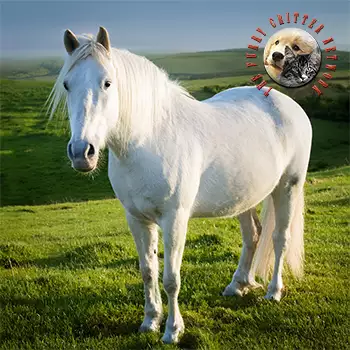

The Connemara Pony's size places it in an awkward gap between standard pony and small horse tack, which makes proper fit a recurring challenge across nearly every accessory category. Halters are the most frequently used piece of equipment and should fit snugly without pinching, with the noseband sitting approximately two fingers' width below the cheekbone and loose enough to admit two flat fingers between the noseband and the nose. An overly loose halter can catch on objects and become an entrapment hazard, while one that is too tight causes rub marks and discomfort.
Flat nylon halters are the standard for daily turnout and handling, but they should always be breakaway models or fitted with a leather crown piece that will snap under pressure if the pony catches the halter on a fence post, feeder, or branch. Rope halters are popular for groundwork and training because they apply more precise pressure, but they should never be left on an unattended horse as they do not break away. Leather halters offer a traditional aesthetic and will break under extreme pressure, making them a reasonable turnout option, though they require more maintenance than nylon.
Lead ropes should be at least 8 to 10 feet long for standard handling, with a sturdy snap that operates smoothly with one hand. Bull snaps are more secure than bolt snaps and are worth the modest additional cost. For groundwork and liberty training, a longer line of 12 to 22 feet provides the distance needed for lunging and directional exercises. Cotton and yacht braid are the most comfortable lead rope materials for human hands, while nylon and polyester are more durable and weather-resistant.
Saddle fit deserves particular attention for Connemaras because their build — compact, well-muscled, and often wider through the shoulder than their height might suggest — does not always conform to standard pony or horse saddle trees. A professional saddle fitting is a worthwhile investment that prevents back pain, behavioral issues under saddle, and long-term musculoskeletal damage. Adjustable-tree and wool-flocked saddles offer the most flexibility for accommodating changes in the pony's condition throughout the year.