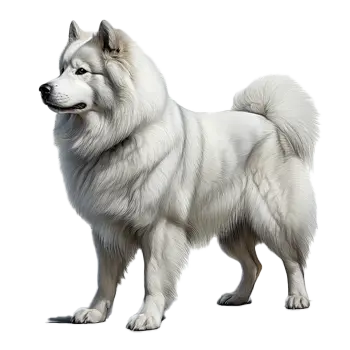

Play Style & Drive

Samoyeds are playful, social dogs with a working heritage that influences how they interact with toys. Their historical roles as sled dogs, herders, and companions mean they bring a combination of physical endurance, moderate prey drive, and strong social orientation to playtime. Unlike some terrier breeds that are intensely toy-possessive, Samoyeds tend to view play as a collaborative activity and often prefer games that involve interaction with their owners.

The breed's intelligence is a defining factor in toy selection. Samoyeds are quick learners who become bored with repetitive, unstimulating toys within minutes. A toy that offers no challenge or variation will be ignored after the first session, while one that requires problem-solving or rewards persistence will hold a Samoyed's attention significantly longer. Mental stimulation is just as important as physical exercise for this breed.

Samoyeds have a moderate chewing drive that typically falls between gentle-mouthed retrievers and the heavy-duty jaw power of bully breeds. Most standard-quality toys will hold up reasonably well, though very cheap or poorly constructed toys can be shredded quickly and may pose choking hazards. Understanding your individual dog's chew intensity helps narrow down which toy categories will provide lasting value.

Social play is central to the Samoyed temperament. They enjoy tug-of-war, chase games, and interactive toys that require a human partner. Solo play is possible with the right enrichment tools, but Samoyeds left alone with toys for extended periods are more likely to lose interest and redirect their energy toward destructive alternatives like furniture or shoes.

Interactive & Puzzle Toys

Puzzle toys are among the best investments for Samoyed enrichment. These toys require the dog to manipulate levers, sliders, or compartments to access hidden treats, engaging the problem-solving skills that Samoyeds possess in abundance. Start with beginner-level puzzles and progress to more complex designs as your dog masters each level — most Samoyeds will work through introductory puzzles within a few attempts.

Treat-dispensing toys that release food as the dog rolls, nudges, or paws at them are excellent for extending mealtimes and providing mental engagement. Instead of pouring kibble into a bowl, loading a portion of the daily food allotment into a dispensing toy turns a routine meal into a 15-to-30-minute enrichment session. This approach is particularly useful for Samoyeds that eat too quickly or need additional stimulation during times when their owners are occupied.

Snuffle mats and lick mats offer lower-intensity mental engagement that can help calm an overstimulated Samoyed. Snuffle mats encourage the dog to use its nose to forage through fabric strips for hidden treats, mimicking natural scavenging behavior. Lick mats spread with a thin layer of dog-safe peanut butter or yogurt promote slow, repetitive licking that has been shown to reduce anxiety and cortisol levels in dogs.

Rotating puzzle toys on a weekly basis prevents habituation and keeps each session fresh. If your Samoyed has three or four different puzzle toys, put two away while two are in use, then swap them out the following week. The novelty factor extends the useful life of each toy and maintains the cognitive challenge that makes puzzle toys effective.

Chew Toys & Durability

Chew toys satisfy a natural behavioral need and provide stress relief, jaw exercise, and dental benefits for Samoyeds. Durable rubber toys in medium-to-large sizes are the most versatile option — they can be filled with treats, frozen for extended chewing sessions, and withstand the moderate jaw pressure that most Samoyeds apply. Look for toys rated for medium to heavy chewers rather than gentle or light chewer categories.

Natural chews like bully sticks, yak cheese chews, and dehydrated tendons offer an alternative to synthetic toys and tend to hold a Samoyed's interest for longer periods. These consumable chews should always be offered under supervision, as they can become small enough to pose a choking hazard once chewed down to a short stub. Remove any chew that has been reduced to a piece small enough to be swallowed whole.

Avoid chew toys that are too hard for the dog's teeth. A good rule of thumb is that if you cannot make a dent in the toy with your thumbnail, it is too hard and risks cracking a tooth. Antlers, weight-bearing bones, and extremely dense nylon chews fall into this category and can cause painful dental fractures that require veterinary intervention.

Rope toys serve double duty as chew toys and tug toys, and many Samoyeds enjoy them. However, rope toys should be inspected regularly and discarded once they begin to fray, as ingested rope fibers can accumulate in the digestive tract and cause dangerous linear foreign body obstructions. Supervise rope toy play and replace worn toys promptly.

Fetch & Outdoor Toys

Fetch is a natural fit for many Samoyeds, though the breed's independent streak means some individuals will retrieve enthusiastically while others lose interest after a few throws. Standard tennis balls work well for casual backyard fetch, but consider using balls specifically designed for dogs — standard tennis balls have an abrasive felt covering that can wear down tooth enamel over time with heavy use.

Flying discs designed for dogs offer a more athletic alternative to ball fetch. Soft rubber or fabric discs are safer than hard plastic models, which can injure a dog's mouth or teeth on a hard catch. Samoyeds that enjoy disc play benefit from the combination of running, jumping, and tracking that the activity provides, making it one of the most efficient forms of outdoor exercise.

Water toys are a worthwhile consideration for Samoyeds that enjoy swimming or wading. While not all Samoyeds are natural swimmers — their dense coat becomes very heavy when waterlogged — many enjoy splashing in shallow water and retrieving floating toys. Brightly colored, buoyant toys that are easy to spot on the water surface work best for water play sessions.

Ball launchers, both manual and automatic, extend throwing distance and save wear on the owner's arm during extended fetch sessions. Automatic launchers can provide independent play for Samoyeds that have learned to reload the device, but should be used with moderation to prevent repetitive strain injuries from high-impact running and sudden stops. Limit sessions to 15 or 20 minutes and allow rest periods between rounds.

Comfort & Companion Toys

Plush toys hold a special appeal for many Samoyeds, who are gentler with soft toys than many breeds of comparable size. Some Samoyeds develop attachments to specific stuffed toys and will carry them around, sleep with them, or present them to guests. Choosing plush toys with reinforced stitching and minimal small parts reduces the risk of the dog disemboweling the toy and ingesting stuffing or squeaker components.

Squeaker toys tap into the Samoyed's moderate prey drive and provide auditory stimulation that many dogs find highly motivating. Multi-squeaker toys that continue to squeak even after one chamber is punctured extend the toy's functional life. For dogs that are determined squeaker removers, consider toys with squeakers that are sewn into reinforced internal pockets rather than simply stuffed inside.

Comfort toys can be particularly valuable for Samoyed puppies during crate training or for adult dogs dealing with separation anxiety. Toys that can be warmed in the microwave or that include a compartment for a heartbeat simulator mimic the warmth and rhythm of littermates, helping young puppies settle more easily in their new homes during the first few weeks.

Not all Samoyeds treat plush toys gently, and it is important to assess your individual dog's behavior before leaving soft toys available unsupervised. If your Samoyed tends to rip open plush toys and consume the stuffing, switch to stuffing-free plush toys or flat, floppy toys that offer the soft texture without the ingestible filling.

DIY & Budget Options

Enrichment does not require expensive commercial products to be effective. Many of the most engaging activities for Samoyeds can be created from household items at minimal cost. A muffin tin with tennis balls covering treats placed in each cup creates a simple puzzle that requires the dog to remove each ball to access the reward. A cardboard box filled with crumpled paper and hidden kibble provides a satisfying foraging experience that most Samoyeds find irresistible.

Frozen enrichment is one of the most cost-effective and time-efficient boredom busters available. Filling a durable rubber toy with a mixture of kibble, plain yogurt, and a smear of peanut butter, then freezing it overnight, creates a long-lasting chew session that provides both mental engagement and a cooling treat during warm weather. You can also freeze low-sodium broth in ice cube trays with small treats suspended inside for a quick summer enrichment option.

Old towels and t-shirts can be repurposed into braided tug toys, snuffle mats, or wrapping material for treat bundles. Roll treats inside a towel and tie it loosely, then let your Samoyed work out how to unroll it to access the food inside. This engages the dog's nose and problem-solving instincts while giving new life to textiles that would otherwise be discarded.

Rotating homemade enrichment activities daily prevents the predictability that leads to disengagement. Create a weekly schedule that alternates between foraging activities, frozen treats, puzzle games, and scent work to keep your Samoyed's mind active without repeating the same challenge two days in a row. The novelty of each day's activity is what drives engagement, not the complexity or cost of the materials.

Always consult a qualified professional before making any health-related decisions. This content is provided for informational reference only and should not replace professional guidance specific to your animal.