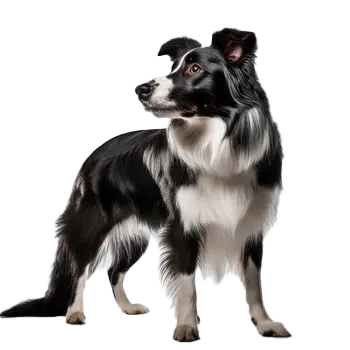

Play Style & Drive

Border Collies play with purpose. Unlike breeds that are content to casually gnaw on a toy or toss it around independently, Border Collies approach play as a job. They want to chase, retrieve, solve, and master whatever is in front of them. This work-oriented play style means that toys serving as passive entertainment — things the dog is expected to enjoy on its own with no challenge — tend to be ignored or destroyed out of frustration within minutes.

Understanding your individual dog's drive profile helps enormously when selecting toys. Some Border Collies are ball-obsessed, fixating on fetch to the exclusion of nearly everything else. Others are motivated by tug, by problem-solving, or by toys that mimic prey movement. Observing what captures your dog's attention most intensely — a rolling ball, a squeaking toy, a toy that requires manipulation to release a treat — tells you which categories to invest in.

It is worth noting that Border Collies can develop obsessive behaviors around certain toys, particularly balls and laser pointers. A dog that cannot disengage from a ball, that whines and paces when the ball is put away, or that stares fixedly at the spot where a laser dot disappeared is showing signs of compulsive behavior that should be managed. Rotating toys, setting firm play session boundaries, and ensuring a variety of enrichment types all help prevent fixation from developing.

The intensity of a Border Collie's play also means durability matters. Flimsy plush toys will be disemboweled in a single session, and toys with small detachable parts pose choking hazards. Always match the toy's construction quality to the level of force your dog applies during play.

Interactive & Puzzle Toys

Puzzle toys are arguably the most important category for Border Collies. This breed's intelligence demands mental stimulation, and puzzle toys provide it in a structured, self-directed format. Basic treat-dispensing balls are a good starting point, but most Border Collies will master them within a few uses and need progression to more complex designs.

Multi-step puzzle boards that require the dog to slide panels, lift covers, and turn knobs in sequence are excellent for Border Collies. These toys engage problem-solving skills and can occupy the dog for extended periods, especially when the difficulty is increased gradually. Start with the easier configuration and add complexity as the dog learns the mechanics. Resetting the puzzle with different treat placements keeps it novel even after the dog understands the mechanism.

Snuffle mats — fabric mats with deep folds and pockets where kibble or treats are hidden — tap into the dog's natural foraging instinct. They slow down eating, provide sensory engagement, and offer a calming activity that works well as a wind-down exercise after vigorous physical play. Snuffle mats are particularly useful for Border Collies that eat too quickly or that need a low-intensity enrichment option during rest periods.

Interactive toys that respond to the dog's actions — rolling erratically, dispensing treats at intervals, or making unpredictable sounds — hold a Border Collie's attention longer than static toys. Battery-operated or motion-activated options can provide stimulation when you are not available for direct interaction, though they should supplement rather than replace hands-on play with the owner.

Chew Toys & Durability

Border Collies are moderate to heavy chewers, and they need appropriate outlets for this behavior. Chewing serves multiple functions: it relieves stress, exercises jaw muscles, supports dental health, and occupies the dog during downtime. Without suitable chew toys, Border Collies will redirect this drive toward furniture, shoes, and household items — and their intelligence means they will seek out increasingly creative targets.

Rubber chew toys rated for aggressive chewers are the most reliable option for this breed. Look for solid rubber construction rather than hollow designs with thin walls, which can be bitten through and fragmented. The best rubber toys are virtually indestructible under normal chewing pressure and can be stuffed with food or frozen with a paste filling to add a puzzle element. Freezing extends the chewing session and provides a soothing option for teething puppies or dogs that chew more intensely when anxious.

Nylon and hard plastic chew toys are another option, though they require more careful supervision. These materials can develop sharp edges or small fragments as they wear down, so inspect them regularly and replace any toy that shows significant surface damage. Hard chews also carry a higher risk of tooth fractures, particularly for dogs that chew aggressively on the same spot repeatedly.

Natural chews such as bully sticks, tendons, and dried fish skins are popular supplemental options. They are fully digestible, highly palatable, and provide a satisfying chewing experience. However, they are consumed rather than reused, making them a recurring expense. Always supervise natural chew sessions to prevent choking on the final small piece, and select size-appropriate options that the dog cannot swallow whole.

Fetch & Outdoor Toys

Fetch is the signature activity for many Border Collies, and the right fetch toys can make sessions safer, more engaging, and more physically productive. Standard tennis balls work but have drawbacks: the abrasive felt covering wears down tooth enamel over time, and the balls are small enough to pose a choking risk for dogs that compress them in their mouths. Rubber fetch balls designed specifically for dogs are a better long-term choice — they are more durable, easier to clean, and available in sizes appropriate for Border Collie jaws.

Ball launchers, both manual and automatic, extend your throwing range and save your arm during lengthy sessions. Manual launchers use leverage to amplify your throw, sending the ball significantly farther than a hand throw with much less effort. Automatic launchers allow the dog to play fetch independently by dropping the ball into a chute, which then launches it at a preset distance. These can be useful for supplemental exercise but should not replace interactive play with the owner.

Flying discs are an outstanding fetch alternative for Border Collies. Disc play incorporates jumping, tracking, and timing skills that match the breed's athletic ability. Use discs made from soft, flexible rubber or fabric rather than hard plastic, which can injure teeth and gums on catch impact. Start with low throws and build up to aerial catches as the dog develops confidence and coordination.

Tug toys with long handles or ropes are excellent for interactive outdoor play and provide a full-body workout that engages the dog's core, neck, and jaw muscles. Look for tug toys made from durable woven fibers or rubber with reinforced stitching. Establish clear rules for tug play — a release command, no teeth on hands, and defined start and stop signals — to keep the game structured and safe.

Comfort & Companion Toys

While Border Collies are known for their intensity, they also have a softer side that comfort toys can address. Many Border Collies bond with a specific plush toy, carrying it around, sleeping with it, and grooming it. This attachment is normal and can serve as a self-soothing behavior, particularly for dogs that experience mild separation anxiety or stress during environmental changes.

If your Border Collie is gentle with plush toys rather than destructive, standard stuffed toys with squeakers can provide comfort and low-key entertainment. For dogs that tend to unstuff plush toys, look for flat or minimal-stuffing designs that reduce the ingestion risk. Some manufacturers offer plush toys with reinforced seams and no small detachable parts, which extend the life of the toy while maintaining the soft texture dogs enjoy.

Heartbeat simulator toys, which contain a battery-operated pulsing mechanism inside a plush animal, are particularly effective for puppies adjusting to life away from their littermates. The rhythmic vibration mimics the sensation of sleeping beside another dog and can significantly reduce nighttime whining and restlessness during the first few weeks in a new home.

Comfort toys also play a role in crate training. Placing a familiar, well-loved toy inside the crate creates a positive association and gives the dog something to engage with during confinement. Rotate comfort toys periodically to maintain novelty, but always keep the dog's primary attachment toy available — removing a bonded toy can cause unnecessary stress.

DIY & Budget Options

Enrichment for a Border Collie does not require a large budget. Many of the most effective mental stimulation activities use household items and a bit of creativity. A muffin tin with tennis balls placed over treats in each cup creates an instant puzzle toy. A cardboard box filled with crumpled newspaper and scattered kibble becomes a foraging activity. An old towel with treats rolled inside and knotted provides both a sniffing challenge and a light tug toy.

Frozen enrichment is inexpensive and highly effective. Fill a rubber toy or a silicone mold with a mixture of plain yogurt, mashed banana, and kibble, then freeze it overnight. The resulting frozen block can occupy a Border Collie for 20 to 40 minutes and provides a cooling activity during hot weather. You can also freeze a rope toy soaked in low-sodium broth for a chew-and-lick combination that most dogs find irresistible.

Rotation is the key principle behind budget-friendly enrichment. Rather than buying new toys constantly, divide your dog's existing toy collection into groups of three or four and rotate them every few days. Toys that have been out of circulation for a week feel novel again, extending the useful life of your inventory without additional expense.

Outdoor enrichment can be as simple as varying your walk routes, visiting new parks, or setting up a backyard obstacle course using household objects. PVC pipes, old tires, wooden planks, and traffic cones can be arranged into jumps, tunnels, and weave poles that challenge your Border Collie's agility and responsiveness. These DIY courses can be reconfigured regularly to prevent the dog from memorizing the pattern and losing interest.

Always consult a qualified professional before making any health-related decisions. This content is provided for informational reference only and should not replace professional guidance specific to your animal.