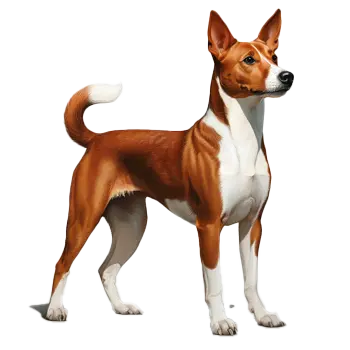

Play Style & Drive

Understanding how a Basenji plays is essential before investing in toys, because this breed does not engage with the world the way most dogs do. Basenjis are sighthounds with a strong prey drive, which means they are intensely attracted to movement, chase, and capture. A toy that squeaks, darts, or bounces unpredictably will hold their attention far longer than a stationary object.

Their play style tends to be quick, intense, and relatively short-lived. A Basenji may engage furiously with a toy for ten minutes, then lose interest entirely. This is not a deficiency — it reflects the breed's hunting heritage, where short bursts of explosive activity are followed by rest. Plan for multiple short play sessions throughout the day rather than one long marathon, and rotate toys regularly to maintain novelty.

Basenjis are also problem-solvers by nature. They approach toys with the same investigative intelligence they apply to everything else in their environment, which means simple toys are quickly mastered and abandoned. A plush squeaker toy may be entertaining for exactly as long as it takes the Basenji to locate and extract the squeaker — sometimes just minutes. This breed rewards owners who invest in toys that challenge their cognitive abilities rather than just their jaw strength.

Social play varies considerably among individual Basenjis. Some enjoy tug-of-war and interactive games with their owners, while others prefer independent play or parallel activity. Observe your dog's natural tendencies and select toys that complement their individual play personality rather than trying to force a play style that does not come naturally.

Interactive & Puzzle Toys

Puzzle toys are arguably the single most important toy category for Basenji owners. This breed's intelligence demands mental stimulation, and puzzle feeders, treat-dispensing toys, and multi-step challenge toys provide exactly that. Start with beginner-level puzzles and progress to more complex designs as your dog masters each level — a Basenji that finds a puzzle too easy will ignore it, while one that is appropriately challenged will work at it with focused determination.

Slider puzzles, where the dog must move compartment covers to reveal hidden treats, are a strong starting point. These come in various difficulty levels and teach the foundational concept of manipulating components to access a reward. Once your Basenji masters flat slider puzzles, move to three-dimensional designs that require lifting, spinning, or sequential steps.

Treat-dispensing balls and wobble toys serve double duty as both mental enrichment and slow feeders. Filling a dispensing toy with a portion of your Basenji's daily kibble turns a routine meal into a fifteen-minute problem-solving session. This is particularly useful for dogs that eat too quickly or that need occupation during periods when the owner cannot provide direct interaction.

Snuffle mats and foraging toys tap into the Basenji's natural scenting abilities and hunting instincts. Hiding treats within fabric folds or textured surfaces encourages nose work and provides a calming, focused activity. These are excellent choices for winding down after physical exercise or as an evening enrichment routine before bedtime.

Chew Toys & Durability

Basenjis are moderate chewers compared to power-chewing breeds like pit bulls or Labrador Retrievers, but they are highly skilled at finding and exploiting weak points in toy construction. A Basenji will systematically probe seams, corners, and attachment points until something gives way. For this reason, durability matters less in terms of raw bite force resistance and more in terms of construction quality and the absence of easily detachable small parts.

Rubber chew toys made from natural or heavy-duty synthetic rubber hold up well for most Basenjis. Look for solid or semi-solid designs rather than hollow toys with thin walls, which a persistent Basenji can puncture and tear apart. The right firmness level should give slightly under pressure without being so soft that pieces can be bitten off and swallowed.

Nylon and hard plastic chew toys are durable but should be selected with care. Choose options that are designed to be gnawed gradually rather than cracked or splintered. Inspect these toys regularly for sharp edges or fragments, and replace any toy that shows signs of breaking apart. The Basenji's smaller jaw size means you should select appropriately scaled toys — oversized chews designed for large breeds are unwieldy and may discourage use.

Edible chew options like bully sticks, tendons, and dried fish skins provide both chewing satisfaction and a nutritional treat. Always supervise your Basenji with edible chews, as this breed can be possessive about high-value items and may attempt to swallow large pieces to prevent them from being taken away. Remove any chew that has been gnawed down to a size that presents a choking hazard.

Fetch & Outdoor Toys

Fetch is not a guaranteed hit with Basenjis. Unlike retrieving breeds that will chase and return a ball endlessly, many Basenjis view fetch as a one-directional game — they are happy to chase but see no compelling reason to bring the object back. If your Basenji enjoys the chase component, lean into that with toys designed for erratic, unpredictable movement rather than traditional tennis balls.

Irregularly shaped rubber balls that bounce in unexpected directions are more engaging for a sighthound than a standard round ball with a predictable trajectory. The unpredictability triggers the Basenji's prey drive and keeps the chase interesting across multiple throws. Lightweight flying discs designed for dogs can also work well, as they mimic the darting flight of small prey animals.

Flirt poles are perhaps the single most effective outdoor toy for Basenjis. These long poles with a lure attached to a line allow you to simulate prey movement along the ground, triggering an intense chase-and-capture response. A five-minute session with a flirt pole can provide more physical and mental stimulation than a thirty-minute walk. Use flirt poles on soft surfaces like grass to protect your dog's joints during sharp turns and sudden stops.

For water-loving Basenjis — which are admittedly uncommon, as many Basenjis dislike water — floating toys in bright, visible colors can extend play to pool, lake, or beach environments. However, never assume your Basenji will take to water willingly. Introduce any water play gradually and always supervise, as the breed's lean build and low body fat make them less naturally buoyant than many other dogs.

Comfort & Companion Toys

Despite their independent reputation, many Basenjis form attachments to specific comfort objects. A soft toy that a Basenji carries around, sleeps with, or grooms is serving an emotional rather than play function, and these items should be treated differently from toys intended for active chewing or play. If your Basenji adopts a comfort toy, keep a backup on hand in case the original is lost or damaged beyond repair.

Plush toys for Basenjis should be selected with reinforced stitching and minimal small attachments like button eyes or ribbon tags that can be chewed off and swallowed. Flat, unstuffed plush toys are a good option for dogs that enjoy carrying and cuddling but tend to disembowel traditional stuffed animals. Some Basenjis prefer toys with a particular texture — fleece, corduroy, or faux fur — so note what your dog gravitates toward.

Heartbeat-simulating toys can be valuable for puppies transitioning to a new home or for adult dogs that experience separation anxiety. These battery-operated inserts produce a rhythmic pulse that mimics the presence of a littermate or companion, and many Basenjis find them genuinely soothing. Place the heartbeat toy in your dog's crate or bed during rest periods.

Comfort toys also play a role in managing the Basenji's tendency toward resource guarding. If your dog is possessive about a beloved toy, work on structured trade exercises — offering a high-value treat in exchange for voluntarily releasing the toy — to build positive associations with sharing. This is easier to establish during puppyhood but can be developed at any age with patience and consistency.

DIY & Budget Options

Some of the most effective enrichment tools for Basenjis cost little or nothing to make. A muffin tin with tennis balls placed over treats in each cup creates an instant puzzle feeder that requires the dog to lift or nudge each ball to access the reward. An empty cardboard box filled with crumpled paper and scattered kibble becomes a foraging challenge that engages the nose and paws simultaneously.

Frozen enrichment is another budget-friendly strategy that works exceptionally well for this breed. Stuff a durable rubber toy with a mixture of wet food, banana, and kibble, then freeze it overnight. The resulting frozen treat provides twenty to thirty minutes of focused licking and chewing activity that is both mentally engaging and calorically controlled. You can vary the filling ingredients to keep the experience novel across multiple sessions.

Braided fleece tug toys are simple to make from old fabric strips and provide a durable, washable toy for interactive play. Cut three strips of fleece approximately two inches wide and thirty inches long, knot them together at one end, braid tightly, and knot the other end. These homemade tugs are often more durable than their commercial counterparts and can be replaced without cost when they wear out.

Rotation is the key to maximizing value from any toy collection, whether purchased or homemade. Keep two-thirds of your Basenji's toys stored away and rotate a fresh selection into availability every few days. This simple management strategy transforms a modest collection into a constantly refreshed source of novelty, which matters enormously for a breed that loses interest in familiar objects quickly. Pair rotation with varied hiding spots around the home to add a scavenger-hunt element to each new toy introduction.

Always consult a qualified professional before making any health-related decisions. This content is provided for informational reference only and should not replace professional guidance specific to your animal.