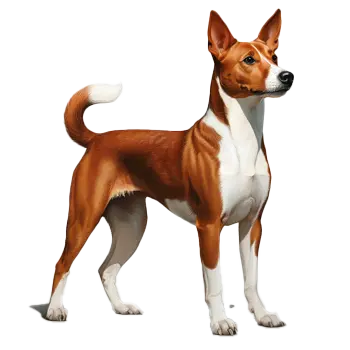

The Basenji's neck is slender and their head is narrow, which creates a common problem with standard flat collars: a determined Basenji can back out of most collars with alarming ease. Martingale collars — also called limited-slip collars — are widely considered the best collar style for this breed. They tighten gently when the dog pulls or tries to reverse out, preventing escape without the choking risk of a full slip collar. The martingale should be fitted so that it cannot tighten beyond the circumference of the dog's neck.
Harnesses offer another layer of security for leash walking, particularly for Basenjis that pull or lunge toward moving objects triggered by their prey drive. Front-clip harnesses redirect the dog's forward momentum by steering them to the side when they pull, which is more effective for training purposes than back-clip designs that can actually encourage pulling. Ensure the harness fits snugly around the chest without chafing under the front legs — the Basenji's short coat means there is no fur cushion between the harness and skin.
Leash selection should prioritize strength and reliability in a manageable length. A standard six-foot leash made from nylon webbing, biothane, or leather gives enough freedom for comfortable walking while maintaining control. Retractable leashes are generally not recommended for Basenjis, as the mechanism can fail or the extended line can allow the dog to build dangerous speed before the brake engages — particularly problematic with a sighthound that may bolt after a squirrel or rabbit.
For added security during walks in open areas, some Basenji owners use a dual-attachment system: a martingale collar connected to a harness via a short coupler leash, so that if the dog slips one connection point, the other still holds. This belt-and-suspenders approach reflects a practical reality of owning a breed that views every walk as an opportunity to explore on its own terms.