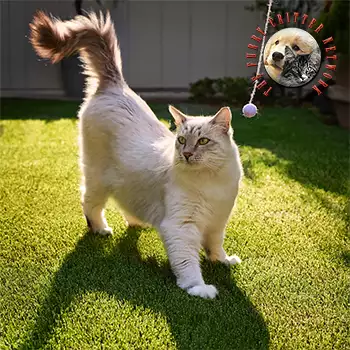

Play Style & Drive

Turkish Vans are among the most playful and energetic domestic cat breeds, retaining kitten-like enthusiasm for games well into their senior years. Their play style tends to be vigorous, physical, and goal-oriented — they want to chase, catch, and carry rather than simply bat at objects passively. Understanding this drive is key to selecting toys that will hold their interest, because a Turkish Van that finds its toys boring will invent its own entertainment, often at the expense of household items.

The breed's strong prey drive means they respond best to toys that mimic the movement of real prey. Erratic, unpredictable motion triggers the stalk-chase-pounce sequence that satisfies a cat's hunting instinct. Toys that move in straight, predictable lines or sit motionless lose their appeal quickly. When shopping for toys, think about the motion profile each toy offers and whether it replicates the darting, fluttering, or scurrying patterns that activate your cat's predatory focus.

Turkish Vans are also notable for their fascination with water, which opens up a category of play that most cat owners never consider. Many Turkish Vans will happily splash in shallow dishes, chase ice cubes across the kitchen floor, or play with dripping faucets. Incorporating water-based play into your enrichment routine taps into a breed-specific instinct that provides both mental stimulation and physical activity.

Social play is another important dimension. While Turkish Vans can be independent, they often enjoy interactive games with their owners — particularly fetch, which this breed learns readily compared to most cats. Daily interactive play sessions of at least 15 to 20 minutes help burn excess energy, strengthen the bond between cat and owner, and prevent the behavioral issues that arise when an intelligent, active cat is left to its own devices for extended periods.

Interactive & Puzzle Toys

Interactive toys that require the cat to solve a problem to earn a reward are ideal for the Turkish Van's sharp mind. Food-dispensing puzzle toys — where kibble or treats are released when the cat manipulates sliding panels, rotating discs, or tilting compartments — provide both mental challenge and a controlled way to slow down eating. Start with simpler puzzles and progress to more complex designs as your cat masters each level, because a puzzle that is too easy offers no stimulation while one that is too difficult leads to frustration and disengagement.

Track-style toys with enclosed balls that the cat can bat but not remove provide extended independent play. For Turkish Vans, look for track toys with multiple levels or switchback designs that keep the ball moving unpredictably. Some models include a central scratch pad or textured surface, adding a secondary use that extends the toy's value. The key limitation of track toys is that they are static in difficulty — once a cat has figured out the motion pattern, the toy becomes background furniture.

Robotic and battery-powered toys that move autonomously can fill the gap when you are unable to play directly. Models that change direction randomly, feature erratic movement patterns, or retreat under furniture mimic prey behavior effectively. However, no automated toy fully replaces interactive play with a human. Think of robotic toys as a supplement to hands-on play sessions rather than a substitute, and supervise initial use to ensure the toy does not frighten or frustrate your cat.

App-controlled laser dots and moving light patterns projected on walls or floors are popular for high-energy cats. Turkish Vans will often chase these enthusiastically, but laser play has an important limitation: there is nothing physical to catch at the end of the chase. Always conclude a laser session by directing the dot toward a physical toy or treat that the cat can catch and "capture," completing the predatory cycle and preventing the frustration that comes from endlessly chasing something that cannot be caught.

Chew Toys & Durability

Turkish Vans are powerful chewers for their species, particularly during teething as kittens and during play as adults. Toys made from thin fabric, lightweight plastic, or loosely woven materials will be destroyed quickly and may pose ingestion hazards. Prioritize toys constructed from durable rubber, heavy canvas, or reinforced stitching that can withstand the force of a large cat's jaw without breaking apart into swallowable pieces.

Catnip-infused chew toys serve a dual purpose — they satisfy the urge to gnaw while providing the euphoric stimulation that catnip delivers to receptive cats. Not all cats respond to catnip — sensitivity is genetic, and roughly 30 to 40 percent of cats lack the receptor — so test your Turkish Van's response before investing heavily in catnip products. For cats that do respond, alternating catnip toys with silvervine or valerian root alternatives prevents desensitization and keeps the stimulation fresh.

Dental health chew toys with textured surfaces can help reduce plaque and tartar accumulation, though they should not be considered a replacement for professional dental care. Mesh and rope textures create a flossing action against teeth during chewing, and some toys incorporate flavoring agents that encourage sustained chewing sessions. Inspect these toys regularly for fraying, as loose fibers can become linear foreign bodies if swallowed — a serious and sometimes life-threatening gastrointestinal issue.

Rotate chew toys frequently to maintain novelty. Turkish Vans are intelligent enough to lose interest in toys that are always available. Keeping a selection of chew toys in rotation — three or four available at any time, with others stored away — ensures that "new" toys can be reintroduced every week or two, refreshing your cat's interest without additional purchases.

Fetch & Active Toys

The Turkish Van is one of the few cat breeds that consistently enjoys fetch, making retrieval toys a valuable category for this breed. Small, lightweight objects that are easy to carry in the mouth — crinkle balls, soft foam balls, and small stuffed mice — work well as fetch items. Some Turkish Vans develop a preference for a specific fetch toy and will bring it to their owner to initiate a game, which is a charming behavior that should be encouraged through consistent response.

Wand toys and fishing-rod-style teasers are the cornerstone of active play for nearly all cats, and Turkish Vans are no exception. These toys excel because they allow the owner to control speed, direction, height, and erratic movement, keeping the play session dynamic and unpredictable. Feather attachments, ribbon streamers, and small fabric lures each produce different movement profiles — experiment with several to discover which trigger your Turkish Van's strongest predatory response.

Kicker toys — elongated, pillow-shaped toys designed for cats to grab with their front paws and kick with their hind legs — satisfy the wrestling and bunny-kicking instinct that Turkish Vans display during intense play. Look for kicker toys large enough for your cat's body — at least 10 to 12 inches long for an adult Turkish Van — and stuffed firmly enough to withstand vigorous kicking without going flat after a few sessions.

Ball launchers and spring-loaded toys that send small balls across the room at high speed can trigger explosive chase responses from Turkish Vans. These toys work particularly well in homes with hard flooring, where balls slide and spin unpredictably. On carpeted floors, the same balls tend to stop short, reducing the chase element. Match the toy to your home's flooring and layout for the best results.

Comfort & Companion Toys

Not all play is high-energy. Turkish Vans, despite their active reputation, also enjoy quiet time with comfort objects. Soft plush toys that a cat can knead, groom, or curl up next to serve an important role in emotional regulation, particularly for single-cat households where the cat lacks a feline companion. Some Turkish Vans become attached to a specific comfort toy and carry it to their sleeping area, which indicates it provides genuine reassurance.

Heated comfort toys are especially useful for kittens transitioning to a new home, senior cats with joint stiffness, or any Turkish Van recovering from surgery or illness. Microwaveable inserts that emit gentle warmth mimic the body heat of a companion animal and can reduce anxiety during stressful periods. Ensure the toy's outer covering is durable and washable, and always check the temperature of heated inserts before offering them to your cat.

Crinkle-filled toys that produce a subtle rustling sound when touched appeal to cats that enjoy auditory stimulation during solo play. Turkish Vans, with their alert and curious nature, often find the sound of crinkling material irresistible and will carry, pounce on, and bat these toys for extended sessions. The auditory feedback provides a self-reinforcing play loop that does not require owner participation, making crinkle toys good options for times when you need your cat to entertain itself.

Avoid comfort toys with small, detachable parts — button eyes, ribbon tails, bell attachments — that a cat could chew off and swallow. The safest comfort toys have embroidered features rather than glued or sewn-on components, and are constructed from a single material without hidden internal parts beyond stuffing. Inspect comfort toys regularly for wear, and retire any toy that develops holes or exposes its internal filling.

DIY & Budget Options

Some of the most effective Turkish Van toys cost nothing at all. A crumpled ball of paper tossed across a hard floor creates an unpredictable bouncing, skittering target that many cats find more compelling than any commercial toy. Cardboard boxes and paper bags — with handles removed for safety — become instant forts, tunnels, and ambush points. The Turkish Van's intelligence and curiosity mean it does not need expensive gadgets to stay entertained, just variety and novelty.

Homemade puzzle feeders can be constructed from common household items. A muffin tin with kibble hidden under tennis balls or crumpled paper creates a simple foraging challenge. A cardboard tube with holes cut in the sides and sealed at both ends becomes a rolling food dispenser. Plastic bottles with small openings that release treats when batted across the floor work on the same principle. These DIY solutions cost almost nothing and can be recycled or replaced when they wear out.

Water play setups for Turkish Vans are easy to create at home. A shallow plastic bin with an inch or two of water and a few floating ping-pong balls provides a fishing game that most Turkish Vans find irresistible. Ice cubes on a tile or linoleum floor create sliding targets that melt and disappear, adding a time element to the game. Always supervise water play and dry the area afterward to prevent slipping hazards.

The most important element of any enrichment program — whether built from premium products or household scraps — is rotation. Cats habituate to constant stimuli, meaning a toy that is always available eventually becomes invisible. Store most toys out of sight and rotate a fresh selection into play every few days. This simple practice multiplies the effective value of your toy inventory and keeps your Turkish Van engaged without requiring a continuously expanding collection.

Always consult a qualified professional before making any health-related decisions. This content is provided for informational reference only and should not replace professional guidance specific to your animal.