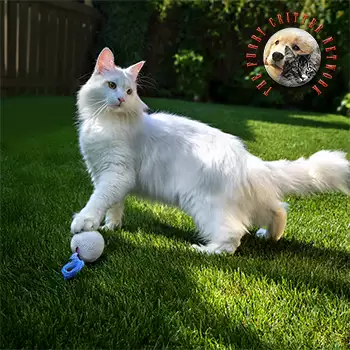

Activity & Health Monitors

Wearable activity monitors designed for cats attach to the collar and track movement patterns, rest cycles, and overall activity levels throughout the day. For a Turkish Angora — a breed whose high energy can mask gradual health declines — these devices provide an objective baseline that makes subtle changes visible. A sudden drop in daily activity or a shift in sleep patterns can indicate illness, pain, or stress well before obvious symptoms appear.

The most useful monitors go beyond simple step counting to analyze behavioral patterns over time. Devices that track scratching frequency, eating visits, and active versus rest periods provide a richer picture of the cat's daily routine. Some platforms generate weekly or monthly reports that highlight trends, making it easier to spot gradual changes that would be invisible on a day-to-day basis. This longitudinal data can also be valuable during veterinary consultations, offering concrete information rather than subjective impressions.

Weight monitoring is a critical health metric for cats, as even small weight changes can signal developing conditions. Smart scales designed for pets — or platform scales that the cat walks across during daily routines — track weight over time without the stress of manual weighing. Some litter box systems integrate weight tracking, capturing data automatically each time the cat enters. For a breed prone to cardiac issues, maintaining awareness of weight trends is particularly important.

Battery life and device weight are practical considerations for any wearable. A monitor that is too heavy will bother the cat and may affect natural movement, while one that requires daily charging quickly becomes inconvenient. Look for devices under 10 grams that offer at least a week of battery life. Water resistance is important for cats who play with water or wear the device during outdoor enclosure time.

GPS & Location Tracking

GPS trackers for cats serve as a critical safety net for owners whose Turkish Angoras have any outdoor access — whether supervised catio time, harness walks, or the unfortunate event of an escape. These devices attach to the collar and transmit location data to a smartphone app, allowing real-time tracking. For a breed as quick and agile as the Turkish Angora, knowing the cat's location immediately after an escape dramatically improves the chances of recovery.

Cellular-based GPS trackers provide the widest coverage and work anywhere there is cell signal, but they require a monthly subscription for data service. Bluetooth-based trackers have no ongoing fees but are limited to short range — typically under 30 feet for direct detection, though some networks extend range by leveraging other users' devices. For true location tracking beyond the immediate vicinity, cellular GPS is the more reliable option despite the recurring cost.

Geofencing — the ability to define a virtual boundary and receive an alert when the cat crosses it — is one of the most practical GPS features for indoor cat owners. Setting a geofence around your property means you receive an immediate notification if the cat leaves the expected area, whether through a door left ajar or a damaged window screen. The speed of notification can make the difference between a quick recovery and a prolonged search.

Device durability and attachment security deserve careful evaluation. Cats navigate tight spaces, climb through brush, and groom aggressively — any attachment point is subject to constant stress. Trackers that clip directly to the collar via a secure mount are generally more reliable than those that dangle from the D-ring. The tracker itself should be impact-resistant and waterproof, as cats do not respect the limitations of consumer electronics.

Smart Feeders & Water Devices

Smart feeders bring precision and automation to mealtime management. Programmable feeders that dispense measured portions at set times ensure consistent nutrition even when the owner's schedule is unpredictable. For Turkish Angoras, whose lean physique benefits from controlled portions rather than free-feeding, automated portion management prevents both overeating and meal-skipping. The best smart feeders connect to smartphone apps that log feeding times and amounts, creating a record that supports dietary tracking.

Microchip-activated feeders are essential technology for multi-cat households. These devices read the cat's implanted microchip or a compatible collar tag and open only for the registered cat. This prevents food theft between pets with different dietary needs — a common problem when one cat is on a prescription diet, a weight management program, or simply eats faster than the others. The sealed bowl also keeps food fresher between meals and discourages insects.

Smart water fountains with filtration systems encourage hydration by providing constantly circulating, filtered water. Some models include sensors that track water consumption and send alerts when the water level drops or the filter needs replacement. For a breed where urinary and kidney health are ongoing considerations, ensuring adequate water intake is a meaningful preventive measure. Stainless steel smart fountains combine the hygiene advantages of steel with the monitoring capabilities of connected devices.

Integration between feeding devices and health monitoring platforms is an emerging capability worth considering. Systems where the feeder, water fountain, and activity monitor share data through a single app provide a unified view of intake and activity. Correlating food consumption with activity levels and weight trends over time gives owners and veterinarians a comprehensive picture that individual devices cannot provide alone.

Cameras & Home Monitoring

Pet cameras allow owners to observe their Turkish Angora's behavior during absences, providing both peace of mind and practical behavioral data. Beyond simple surveillance, modern pet cameras offer two-way audio, allowing the owner to speak to the cat remotely. Turkish Angoras are a vocal breed that often responds to their owner's voice, and two-way communication can provide comfort to a cat that experiences mild separation anxiety.

Camera placement should cover the areas where the cat spends the most time — typically near favorite perches, feeding stations, and windows. Wide-angle lenses reduce the number of cameras needed to cover a room, and night vision capability ensures monitoring continues after dark, when many cats are most active. Motion-activated recording conserves storage space by capturing only periods of activity rather than hours of an empty room.

Some pet cameras include interactive features such as built-in laser pointers or treat dispensers that can be activated remotely through the app. These features transform a passive monitoring device into an interactive enrichment tool, allowing the owner to engage with the cat from work or while traveling. The treat dispenser function is particularly useful for reinforcing positive behaviors like using a scratching post or returning to a resting area.

Privacy and network security are relevant considerations with any connected camera. Ensure the device uses encrypted connections and supports two-factor authentication on its associated app. Regular firmware updates address security vulnerabilities. Cameras should be purchased from established manufacturers with track records of supporting their products with ongoing security patches rather than from unknown brands offering steep discounts.

Training Technology

Clicker training is highly effective with Turkish Angoras, whose intelligence and food motivation make them exceptionally responsive to positive reinforcement. While a traditional mechanical clicker is simple and reliable, app-based clickers on a smartphone offer the convenience of always being available and can be paired with training guides and progress tracking. Some apps include pre-built training programs for common behaviors like sit, come, high-five, and using a cat door.

Automated deterrent devices help manage unwanted behaviors without negative human-cat interactions. Motion-activated air puffs or ultrasonic emitters placed near countertops, restricted rooms, or other off-limits areas deliver a consistent consequence that the cat associates with the location rather than with the owner. This distinction is important because punishment perceived as coming from the owner damages trust, while environmental deterrents are interpreted as a property of the space itself.

Smart litter boxes with monitoring capabilities track usage frequency, duration, and sometimes even weight and waste analysis. Changes in litter box habits are among the earliest indicators of urinary tract issues, digestive problems, or stress — conditions that are easier and less expensive to treat when caught early. Alerts for unusual patterns prompt timely veterinary consultation rather than waiting until symptoms become obvious.

App-controlled interactive toys that can be operated remotely extend training and enrichment beyond the owner's physical presence. Scheduling automated play sessions during typical low-activity periods can help maintain a consistent activity level throughout the day and reduce boredom-driven destructive behavior. For owners who work long hours, the ability to initiate a play session remotely transforms dead time into engagement time.

Veterinary Telehealth

Veterinary telehealth platforms connect cat owners with licensed veterinarians through video calls, text chat, or phone consultations. These services are particularly valuable for assessing whether a symptom warrants an in-person visit or can be monitored at home. For Turkish Angora owners, having professional guidance available without the stress of transporting a cat to a clinic can lead to earlier consultation on minor concerns that might otherwise be dismissed or delayed.

Telehealth is well suited for behavioral questions, nutritional guidance, medication follow-ups, and post-surgical check-ins. It is less appropriate for conditions requiring physical examination, diagnostic imaging, or laboratory work. Understanding the boundary between what telehealth can and cannot address prevents both overreliance on remote consultation and unnecessary clinic visits for issues that can be resolved virtually.

Some telehealth platforms offer subscription models that include unlimited consultations for a monthly fee, while others charge per visit. For owners of breeds with known predispositions — the Turkish Angora's association with hypertrophic cardiomyopathy and deafness in white-coated individuals, for instance — a subscription model may provide better value, as it removes the cost barrier to seeking guidance on early or ambiguous symptoms.

The quality of a telehealth consultation depends significantly on the information the owner can provide. Clear, well-lit photographs or video of the concerning symptom, a history of recent behavior changes, and data from health monitoring devices all improve the veterinarian's ability to assess remotely. Maintaining an organized health record — whether digital or physical — that includes vaccination history, past diagnoses, current medications, and weight trends ensures that relevant information is immediately available when a consultation is needed.

Always consult a qualified professional before making any health-related decisions. This content is provided for informational reference only and should not replace professional guidance specific to your animal.