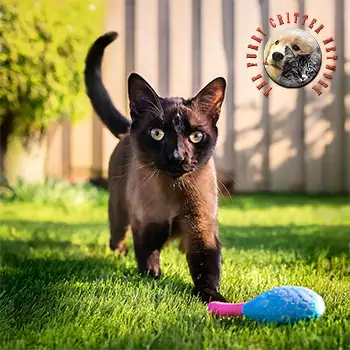

Wearable activity monitors designed for cats attach to the collar and track movement patterns, sleep duration, and calorie expenditure throughout the day. For Tonkinese cats, these devices can provide valuable baseline data on activity levels and help detect early changes that might indicate illness, pain, or behavioral issues. A sudden drop in daily activity or a significant shift in sleep patterns often precedes visible symptoms of health problems.
Most cat activity monitors sync with a smartphone app that displays trends over days, weeks, and months. This longitudinal view is more useful than any single day's data — it helps you recognize gradual changes that might not be obvious from daily observation. For a breed as consistently active as the Tonkinese, a decline from an established baseline is a meaningful signal worth discussing with your veterinarian.
Some monitors include additional metrics such as scratching frequency, grooming duration, and eating patterns. These secondary data points can be helpful for identifying stress-related behaviors or compulsive grooming, both of which can occur in Tonkinese cats that are under-stimulated or experiencing environmental changes. However, no consumer device replaces veterinary assessment — treat the data as a screening tool, not a diagnostic one.
When selecting a monitor, prioritize battery life, weight, and durability. The device should be light enough that the cat ignores it — ideally under half an ounce — and the attachment mechanism should be secure enough to survive the rough-and-tumble play style of a Tonkinese. Devices that require weekly charging are impractical for most owners; look for models with battery life measured in months rather than days.