
Play Style & Drive

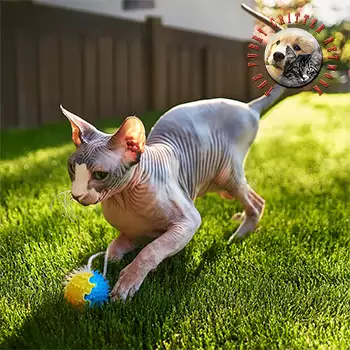
Sphynx cats are among the most playful and energetic of all domestic cat breeds, maintaining kitten-like enthusiasm well into adulthood. Their play style tends to be vigorous, acrobatic, and highly social — they prefer interactive sessions with their owners over solitary play. Understanding this drive is essential before investing in toys, because a Sphynx that does not receive adequate stimulation will find its own entertainment, often at the expense of furniture, curtains, or household objects.

Their intelligence sets them apart from many other breeds when it comes to toy engagement. Sphynx cats quickly figure out simple toys and lose interest if there is no challenge involved. They respond well to novelty and variety, so rotating toys on a weekly basis keeps them mentally engaged. A toy that was ignored yesterday may become fascinating again after a week out of circulation.

Physically, Sphynx cats are surprisingly strong and agile for their medium frame. They enjoy leaping, pouncing, and batting at moving targets, and their lack of fur means they can sometimes grip toys and surfaces differently than coated cats. Toys with varied textures — crinkle material, fleece, rubber — tend to hold their attention because the tactile feedback is more pronounced against bare skin.

Social play is a defining trait of the breed. Sphynx cats genuinely want to play with you, not just near you. Wand toys, fetch games, and chase sequences where the owner is an active participant will always outperform automated or passive toys for this breed. Budget your time accordingly — fifteen to twenty minutes of active play twice daily is a reasonable baseline.

Interactive & Puzzle Toys

Puzzle feeders are arguably the best single toy category for a Sphynx cat. These devices require the cat to manipulate levers, slide compartments, or paw treats out of channels, combining mental challenge with food motivation. Start with beginner-level puzzles and increase complexity as your cat masters each one. Many Sphynx cats progress to advanced puzzles faster than owners expect.

Treat-dispensing balls that release kibble as the cat bats them around serve double duty — they provide physical exercise and mental stimulation while slowing down cats that tend to eat too quickly. For a breed with a high metabolism that eats frequently, distributing a portion of daily food through a puzzle ball turns routine feeding into enrichment time.

Electronic interactive toys — motorized mice, unpredictable rolling balls, and laser-dot projectors — can supplement human-led play sessions when you are unavailable. However, these should not be the primary source of stimulation for a Sphynx. The breed craves social connection, and electronic toys lack the responsiveness and variability of a human play partner. Use them as a bridge, not a replacement.

Multi-stage puzzle boards with varying difficulty levels across a single surface are excellent for keeping a Sphynx engaged over longer periods. These boards typically feature sliding covers, pegged compartments, and open wells that challenge different problem-solving skills simultaneously. Place them on a stable, non-slip surface so your cat can focus on the puzzle rather than chasing a sliding board across the floor.

Wand Toys & Chase Play

Wand toys with feathered, ribboned, or fur-like attachments are the gold standard for interactive play with a Sphynx cat. The combination of movement, sound, and unpredictable direction triggers their hunting instincts and allows for the kind of high-energy engagement this breed thrives on. Vary your technique — drag the toy along the floor, flick it through the air, hide it behind furniture — to simulate real prey behavior.

Durability is a practical concern because Sphynx cats play hard. Cheap wand toys with thin strings and loosely attached lures will be destroyed quickly, and small detached parts can become choking hazards. Invest in wand toys with reinforced cords and securely fastened attachments, and replace worn lures promptly rather than letting frayed components accumulate.

Fetch is a surprisingly viable game for many Sphynx cats. Small, lightweight toys — crinkle balls, soft foam balls, or even balled-up paper — can be tossed across a room, and a well-socialized Sphynx will often retrieve and return them. This is an easy way to add physical exercise to your play routine without specialized equipment.

Always end wand and chase sessions with a cooldown sequence. Gradually slow the toy's movement, let your cat "catch" it definitively, and follow with a small treat or meal. This mimics the natural hunt-catch-eat cycle and prevents the frustration and overstimulation that can occur when play ends abruptly at peak excitement.

Chew Toys & Durability

While cats are not typically associated with chewing the way dogs are, Sphynx cats do engage in more oral exploration than many breeds. Providing appropriate chew toys prevents them from targeting household items like charging cables, shoelaces, or fabric. Look for cat-specific chew toys made from durable rubber, woven rope, or dental-grade materials designed to withstand repeated gnawing.

Dental health chew toys serve a functional purpose beyond entertainment. Textured surfaces help remove plaque buildup as the cat chews, which is especially valuable for a breed that can be prone to dental issues. Choose toys sized appropriately for a cat's mouth — dog chew toys are almost always too large and too hard for feline jaws.

Silvervine and catnip-infused chew toys provide an added layer of attraction. Silvervine tends to elicit a stronger response than catnip in many cats and is a useful alternative if your Sphynx does not react to traditional catnip. These infused toys encourage chewing and batting behavior that channels energy into a safe outlet.

Inspect chew toys regularly for signs of wear. Once a toy begins to break apart, shed fibers, or lose structural integrity, remove it immediately. Ingested fragments of foam, fabric, or rubber can cause gastrointestinal blockages, and Sphynx cats are persistent enough chewers to dismantle toys that seem sturdy at first glance.

Comfort & Companion Toys

Sphynx cats form strong attachments to specific comfort objects, and a well-chosen companion toy can provide security during times when their owner is away. Soft plush toys in a size similar to the cat itself are frequently adopted as surrogate cuddle partners. Some Sphynx cats will carry, groom, and sleep with a favored plush for years, so choose one with durable stitching and washable fabric.

Heated plush toys are particularly appealing to this breed. Products designed to be microwaved and then placed in the cat's bed provide soothing warmth that mimics the body heat of a companion animal. For single-cat households where the Sphynx does not have a feline companion to snuggle with, a heated toy can reduce separation anxiety and promote restful sleep.

Kickable toys — elongated, pillow-shaped toys designed for the cat to grab with front paws and kick with hind legs — satisfy a specific physical instinct and provide an outlet for excess energy. Fill them with catnip or silvervine for added appeal. The bunny-kick behavior these toys encourage is a natural hunting reflex and a healthy way for your Sphynx to self-exercise.

Rotate comfort toys less frequently than active play toys. If your Sphynx has bonded with a specific plush or kickable toy, removing it for rotation can cause visible distress. Instead, keep bonded comfort items permanently available and rotate only the secondary toys that have not become emotional anchors.

DIY & Budget Options

Some of the most effective Sphynx toys cost nothing at all. A crumpled ball of packing paper, a cardboard box with holes cut in the sides, or a paper bag with the handles removed can provide surprisingly long entertainment sessions. The crinkle sound and unpredictable movement of paper are inherently stimulating, and the novelty factor keeps interest high because you can simply recycle and replace these items.

Cardboard box mazes are an outstanding DIY enrichment project. Connect several boxes with cat-sized openings cut between them, and scatter treats or small toys inside. Your Sphynx will spend extended periods exploring, hunting for hidden rewards, and ambushing imaginary prey from the doorways. Replace the boxes when they become flattened or soiled, which typically happens within a week or two of enthusiastic use.

Homemade puzzle feeders can be constructed from muffin tins, egg cartons, or plastic containers with holes cut in the lids. Place kibble or treats inside and let your cat figure out how to extract them. These DIY solutions are functionally equivalent to commercial puzzle toys and allow you to continuously increase difficulty by modifying the container design.

Safety should guide all DIY toy decisions. Avoid string, yarn, rubber bands, and tinsel — all of which are linear foreign bodies that can cause life-threatening intestinal damage if swallowed. Never use toilet paper or paper towel rolls with adhesive residue. Remove staples from cardboard boxes. A few minutes of safety inspection before playtime prevents emergencies that no amount of savings would justify.

Always consult a qualified professional before making any health-related decisions. This content is provided for informational reference only and should not replace professional guidance specific to your animal.