
Play Style & Drive

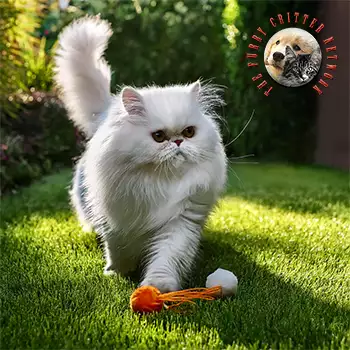
Persians are not high-energy hunters. Their play style is best described as curious but measured — they'll bat at a dangling feather, investigate a rolling ball, and watch a laser dot with interest, but they're unlikely to sustain intense chase sequences or acrobatic leaps. Understanding this temperament is key to selecting toys that your Persian will actually use rather than ignore after the first five minutes.

Most Persians prefer toys that come to them rather than toys they need to chase. Slow-moving objects, gently waving wands, and items that can be batted while lying down tend to generate more engagement than fast-moving or unpredictable toys. This doesn't mean Persians are lazy — they're simply deliberate. They observe, consider, and then act, often with surprising precision when they do decide to swat.

Play sessions for Persians are typically shorter than for more active breeds. Ten to fifteen minutes of interactive play twice a day is usually sufficient to provide mental stimulation and a modest amount of exercise. Pushing beyond this can lead to disinterest or even mild stress, as Persians prefer to disengage on their own terms. Let your cat set the pace, and end the session while they're still mildly interested rather than waiting for them to walk away.

Age affects play drive significantly in Persians. Kittens and young adults show noticeably more energy and willingness to chase, while cats over five or six years old may shift almost entirely to stationary play and observation-based enrichment. Adjust your toy selection as your cat matures, gradually introducing more puzzle-based options that reward thinking over physical effort.

Interactive & Puzzle Toys

Interactive toys that involve owner participation are the most effective way to engage a Persian. Wand toys with feather, ribbon, or fabric attachments allow you to control the speed and movement pattern, which means you can match the toy's behavior to your cat's low-key play style. Move the wand slowly along the ground, pause frequently, and let the Persian stalk and ambush rather than forcing a high-speed chase. This mimics natural hunting behavior at a pace the breed finds satisfying.

Puzzle feeders and treat-dispensing toys add mental stimulation to your Persian's daily routine. Start with simple designs — a ball with a single hole that releases kibble when rolled, or a flat puzzle board with shallow wells that treats can be nudged out of. Persians tend to be methodical problem-solvers, and overly complex puzzles can be frustrating for a cat that approaches challenges with patience rather than brute force.

Slow-moving electronic toys can provide stimulation when you're not available for interactive play. Look for battery-operated toys that move in gentle, irregular patterns rather than fast circles or erratic darting motions. Toys that peek out from under a cover or rotate slowly tend to hold a Persian's attention better than those designed for high-prey-drive breeds. Always supervise electronic toys during the first few uses to make sure your cat isn't stressed by the motion or sound.

Rotation is important for maintaining interest. Persians, like most cats, habituate to familiar toys quickly. Keep three or four toys in active rotation and swap them out every few days. Storing unused toys in a sealed bag with a pinch of catnip can refresh their appeal when they come back into the lineup.

Chew Toys & Dental Play

Persians are not aggressive chewers, but dental health is a legitimate concern for the breed due to their brachycephalic jaw structure, which can lead to crowded teeth and increased tartar buildup. Soft chew toys made from rubber, silicone, or woven fabric give your cat something safe to gnaw on and can provide modest dental benefit by mechanically working the tooth surface during play.

Catnip-infused chew toys are often the easiest way to encourage a Persian to engage with a chewing-oriented toy. Not all cats respond to catnip — sensitivity is genetic and roughly 50 to 70 percent of cats are affected — but those that do will often grab, bunny-kick, and gnaw on a catnip toy with more enthusiasm than they show for any other play object. Silver vine is an alternative attractant that affects a broader percentage of cats and can be found in similar toy formats.

Avoid toys with small, detachable parts that could be swallowed. Persians tend to be gentle with their toys, but any cat can eventually pull a button eye off a plush mouse or shred a feather into ingestible fragments. Inspect chew toys regularly for signs of wear and replace them before they become a choking or ingestion hazard. One-piece molded toys without seams or attachments are the safest option for unsupervised play.

Dental treats can complement chew toys but shouldn't replace them entirely. The mechanical action of chewing on a textured toy works different tooth surfaces than a treat does, and toys don't add calories. For Persians — a breed prone to weight gain — non-food dental enrichment is a practical way to support oral health without contributing to obesity.

Batting & Floor Toys

Floor-level toys are where Persians shine. Small, lightweight balls, crinkle toys, and spring-style coils that can be batted across a smooth floor are ideal for a breed that prefers to play from a lying or crouching position. The key is choosing toys that move easily with minimal effort — a light tap should send the toy sliding or bouncing far enough to be interesting without requiring the cat to get up and sprint after it.

Crinkle balls and mylar toys appeal to Persians because they provide auditory and visual feedback with minimal physical investment. The sound of crinkling material triggers curiosity, and the reflective surface of mylar catches light in ways that hold a cat's attention. These toys are inexpensive and easy to replace, which is helpful since they tend to end up under furniture with remarkable efficiency.

Track toys — enclosed circular tracks with a ball that the cat can bat around the channel — are well suited to the Persian play style. The ball stays contained, so the cat doesn't have to retrieve it, and the spinning motion provides continuous visual stimulation. Some models include a scratch pad in the center, which adds another layer of interaction. Choose a model with a low-profile design that your cat can reach comfortably without straining.

Avoid toys that make loud, sudden noises. Persians are sensitive to startling sounds, and a toy that shrieks, pops, or activates unexpectedly can create a negative association that makes the cat avoid not just that toy but the area where it was used. Gentle sounds — soft bells, quiet crinkles, low rattles — are much more appropriate for this breed's sensory preferences.

Comfort & Companion Toys

Persians form strong attachments to comfort objects, and many will adopt a specific plush toy as a constant companion. These aren't play toys in the traditional sense — they serve an emotional function, providing security and familiarity. If your Persian gravitates toward a particular stuffed animal or soft toy, consider buying a backup in case the original is lost or destroyed. Some cats become genuinely distressed when a beloved comfort toy disappears.

Heated plush toys designed for cats can be especially comforting for Persians, particularly during cold weather or for cats that experience separation anxiety. These typically contain a removable microwave-safe insert that provides gentle warmth for several hours. The warmth mimics the presence of another warm body and can help a Persian settle down when left alone. Make sure the toy's outer fabric is durable enough to withstand kneading and bunny-kicking without tearing.

Some comfort toys include a simulated heartbeat mechanism powered by a small battery. These are marketed primarily for kittens transitioning away from their mother and littermates, but adult Persians sometimes respond positively to them as well, especially during stressful events like thunderstorms, fireworks, or changes in household routine. The rhythmic pulse can have a genuinely calming effect on an anxious cat.

Keep comfort toys clean. Persians spend a lot of time in close contact with these objects, and fur, saliva, and skin oils accumulate quickly. Choose toys with removable, washable covers, or select materials that can be surface-cleaned with a damp cloth and pet-safe cleanser. Washing a comfort toy too aggressively or with strongly scented detergent can strip away the familiar scent that makes it comforting in the first place, so use unscented, gentle products.

DIY & Budget Options

Some of the most engaging toys for Persians cost nothing at all. A crumpled ball of paper, a cardboard box with holes cut in the sides, or a paper bag with the handles removed can provide surprising amounts of entertainment. Persians are curious about textures and enclosed spaces, and a simple box becomes a hiding spot, observation post, and batting station all in one. Just make sure any DIY option is free of staples, tape, sharp edges, or small pieces that could be ingested.

Toilet paper and paper towel tubes make excellent no-cost batting toys. They're lightweight, roll unpredictably on hard floors, and can be crinkled by paw pressure for added sensory feedback. You can fold the ends closed and drop a few pieces of kibble inside to create a rudimentary puzzle toy. These are disposable by nature, so there's no concern about wear and replacement — when it gets shredded, recycle it and make another.

Fleece strips tied into simple knots create soft, washable toys that Persians enjoy carrying and kneading. If you have leftover fleece from a craft project, cut it into strips about one inch wide and ten inches long, then braid or knot three strips together. These can be scented with a small amount of dried catnip rubbed into the fabric for additional appeal. The cost is effectively zero, and they're easy to toss in the washing machine.

A ping pong ball in an empty bathtub is a classic enrichment setup that works remarkably well for Persians. The ball bounces unpredictably off the tub walls, and the enclosed space prevents it from rolling away under furniture. The smooth tub surface is easy on paws, and many Persians find the contained chaos genuinely entertaining. Supervise the first few sessions to make sure your cat can get in and out of the tub comfortably, and place a towel or mat at the edge to prevent slipping.

Always consult a qualified professional before making any health-related decisions. This content is provided for informational reference only and should not replace professional guidance specific to your animal.