
Play Style & Drive

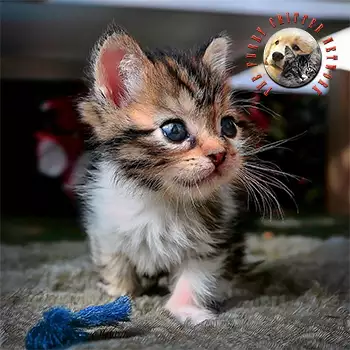
Munchkins are famously playful cats with a high prey drive and an insatiable curiosity that persists well into adulthood. Their play style tends to emphasize ground-level stalking, batting, and short sprints rather than the aerial acrobatics favored by longer-legged breeds. Understanding this distinction is key to selecting toys that match how a Munchkin naturally engages with its environment rather than forcing play patterns that work against its physical build.

Despite their short legs, Munchkins are surprisingly fast in short bursts and remarkably agile when navigating tight spaces. They excel at cornering, weaving around furniture, and pouncing on targets at floor level. This makes them excellent candidates for toys that emphasize ground-based chase sequences, hide-and-seek dynamics, and low-trajectory movement rather than toys designed to be batted high into the air.

Munchkins are also known for their habit of sitting up on their hind legs — a posture sometimes called the "meerkat" pose — to get a better look at their surroundings. This behavior reveals strong core engagement and suggests the breed enjoys toys that encourage reaching, stretching, and batting at objects from an upright position. Dangling toys positioned at moderate height capitalize on this natural inclination.

Regular play sessions are essential for Munchkins, not just for mental stimulation but for maintaining joint health and preventing obesity. Two to three dedicated play sessions of ten to fifteen minutes each day keep the breed physically conditioned and behaviorally satisfied. Rotate toys frequently to prevent habituation — a toy that was irresistible last week may be ignored this week if it has been continuously available.

Interactive & Puzzle Toys

Interactive puzzle toys are an ideal enrichment category for Munchkins because they engage the brain without demanding extreme physical output. Treat-dispensing puzzles that require the cat to manipulate sliders, lift covers, or paw objects through channels provide slow-feeding benefits alongside cognitive stimulation. Start with simpler puzzles and progress to more complex designs as your Munchkin masters each level.

Floor-level puzzle boards with multiple compartments and mechanisms suit Munchkins better than wall-mounted or elevated puzzles. The cat should be able to sit or stand comfortably while working the puzzle without straining to reach components placed above its natural sight line. Many puzzle boards are designed with adjustable difficulty, allowing you to keep the challenge calibrated to your cat's skill.

Ball-track toys — enclosed circuits with balls that the cat can bat through a channel but never fully remove — hold particular appeal for Munchkins. The horizontal tracking motion aligns with their ground-level play preference, and the perpetual motion of the ball sustains interest across multiple sessions. Multi-level track toys with gentle inclines work well; steeply angled tracks that require forceful upward swatting are less suitable.

App-controlled and motion-activated toys that move unpredictably across the floor simulate prey behavior and trigger strong chase responses. These are especially valuable for owners who cannot always be present for interactive play. Choose devices with a low profile and smooth movement patterns that work on both hard floors and low-pile carpet, and supervise initial sessions to ensure the toy does not startle or frustrate your Munchkin.

Wand & Teaser Toys

Wand toys are among the most effective interactive toys for Munchkins because the owner controls the movement pattern, speed, and height of the lure. By keeping the lure at ground level or just slightly above it, you create chase scenarios perfectly suited to the Munchkin's strengths. Dragging the lure across the floor in quick, erratic bursts mimics the behavior of fleeing prey and engages the cat's predatory instincts at full intensity.

The lure attachment matters as much as the wand itself. Feathered lures produce fluttering movement and subtle sound that appeal to visual and auditory tracking. Fabric and ribbon lures create sweeping ground motion that triggers pouncing. Avoid lures with small detachable parts — beads, bells, or button eyes — that could be swallowed during aggressive play. Replace worn lures before they shed components.

Wand play sessions should follow a natural hunt cycle: stalk, chase, catch, consume. Allow your Munchkin to successfully capture the lure periodically rather than keeping it perpetually out of reach. A play session that ends in frustration rather than satisfaction can increase anxiety and reduce willingness to engage in future sessions. After the final catch, offer a small treat to simulate the consumption phase and provide closure.

Store wand toys out of reach between sessions. Unsupervised access to wand toys poses entanglement and strangulation risks from the string or elastic cord. Retractable wand designs that lock the cord inside the handle reduce this risk but should still be stored safely. Dedicated play sessions with wand toys also preserve their novelty value — a toy that is always available loses its ability to excite.

Chew & Kick Toys

Kick toys — elongated plush toys designed to be gripped with the front paws and raked with the hind legs — are a natural fit for Munchkins. This play pattern is instinctive and allows the cat to engage in vigorous physical activity while lying on its side, which reduces joint strain compared to jumping or climbing. Kick toys stuffed with catnip or silvervine add an olfactory dimension that intensifies engagement.

Size the kick toy appropriately for your Munchkin's body. It should be long enough for the cat to wrap its front paws around while simultaneously kicking with its hind feet — roughly eight to twelve inches for most Munchkins. Toys that are too small will be batted rather than bunny-kicked, and oversized toys may be ignored entirely. Reinforced stitching along the seams extends the life of kick toys, which endure significant abuse.

Catnip response varies between individual cats, and roughly thirty to fifty percent of cats lack the genetic sensitivity to nepetalactone, the active compound in catnip. If your Munchkin seems indifferent to catnip, try silvervine or Tatarian honeysuckle as alternatives — these plants trigger similar euphoric responses through different chemical pathways and often appeal to cats that are catnip-nonresponders.

Dental chew toys designed for cats serve a dual purpose of play and oral health. Textured surfaces help reduce mild tartar buildup during chewing, though they are not a substitute for professional dental care. Choose chew toys made from durable, non-toxic materials that can withstand sustained gnawing without breaking into swallowable fragments.

Comfort & Companion Toys

Munchkins are sociable cats that can develop separation anxiety when left alone for extended periods. Companion toys — soft plush animals with heartbeat simulators or warmth elements — can provide comfort during absences. These are particularly helpful for single-cat households where the Munchkin does not have a feline companion. The rhythmic heartbeat mimics the presence of another warm body and has a documented calming effect on many cats.

Self-warming pads and microwaveable insert toys appeal to the Munchkin's love of warmth. Because their low-slung bodies are closer to cold floor surfaces than those of standard-legged cats, Munchkins often seek out warm spots instinctively. A plush toy with a removable, microwaveable heat pack combines comfort and warmth in a single item. Always follow heating instructions carefully to prevent burns.

Small plush toys that a Munchkin can carry in its mouth serve as security objects for some individuals. Munchkins are known to adopt favorite toys and transport them from room to room, sleep with them, and present them to their owners. Providing a few soft, lightweight toys in different textures gives the cat options for self-soothing. Replace these toys when they become excessively worn or when stuffing begins to emerge from compromised seams.

Crinkle toys and rustling fabric toys offer sensory stimulation through sound and texture. The crinkling noise triggers investigatory behavior — batting, nosing, and pouncing — and the lightweight construction makes these toys easy for Munchkins to toss and chase independently. Ensure the crinkle material is fully enclosed within the toy and cannot be accessed or ingested by a persistent cat.

DIY & Budget Options

Some of the most engaging toys for Munchkins cost nothing at all. A crumpled ball of paper tossed across a hard floor provides an unpredictable rolling and sliding target that triggers strong chase behavior. Cardboard boxes with entry holes cut at Munchkin-appropriate heights become instant hideouts, ambush stations, and scratching surfaces. Paper bags with handles removed offer crinkling texture and an enclosed space to explore.

DIY puzzle feeders can be constructed from muffin tins, egg cartons, or small cardboard boxes with holes cut in the lid. Place treats or kibble inside and let the Munchkin figure out how to extract the food. Increase difficulty gradually by adding obstacles like ping pong balls placed over the muffin tin wells. These homemade puzzles provide the same cognitive benefits as commercial products at a fraction of the cost.

Toilet paper rolls and paper towel tubes can be repurposed into treat-dispensing toys by folding the ends closed with a few kibble pieces inside, or strung together to create tunnel-style puzzle walls. Fabric scraps tied to a wooden dowel make serviceable wand toys, though homemade wand lures should be used only during supervised sessions and stored away afterward to prevent ingestion of fabric or string.

Rotation is the most cost-effective enrichment strategy available. Rather than buying new toys constantly, divide your Munchkin's toy collection into three or four groups and rotate a new group into circulation every few days. Toys that have been out of sight for a week regain their novelty and re-engage the cat's interest as effectively as a brand-new purchase. Store inactive toy groups in a sealed container with a pinch of dried catnip to refresh their scent appeal.

Always consult a qualified professional before making any health-related decisions. This content is provided for informational reference only and should not replace professional guidance specific to your animal.