
Play Style & Drive

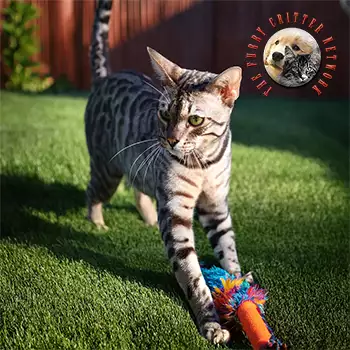
The Egyptian Mau possesses one of the strongest prey drives of any domestic cat breed, and understanding this instinct is essential to selecting toys that will actually hold the cat's attention. This is not a breed that bats lazily at a dangling feather and walks away. The Mau stalks, ambushes, chases, catches, and delivers a kill bite — and toys that allow this full predatory sequence to play out are the ones that earn repeat engagement.

Speed is a defining characteristic of the Mau's play style. This breed is built for explosive sprints and rapid directional changes, and toys that move fast, unpredictably, and close to the ground tend to trigger the most intense play responses. Slow-moving or stationary toys rarely sustain interest for more than a few seconds.

The Mau is also an unusually intelligent breed that learns toy patterns quickly. A wand toy moved in the same arc every session will be dismissed once the cat has mapped the pattern. Varying the speed, direction, and pausing rhythm of interactive toys keeps the Mau mentally engaged and prevents the boredom that leads to disinterest.

Play sessions should mimic a natural hunt cycle: stalk, chase, catch, rest. Ending a session abruptly while the cat is still in high arousal can lead to redirected aggression or frustration behaviors. Wind the play down gradually, allowing the Mau to make a final catch, and follow the session with a small treat or meal to complete the hunt-catch-eat-groom-sleep cycle that mirrors wild feline behavior.

Interactive & Puzzle Toys

Interactive toys that require human participation are the gold standard for Egyptian Mau enrichment. Wand toys with feather, fur, or insect-like attachments allow you to simulate prey movement with the nuance and unpredictability that battery-operated toys cannot match. The best wand toys have a flexible shaft and a long string that allows the attachment to move independently of the handle, creating lifelike motion that triggers the Mau's hunting instincts.

Puzzle feeders address the cognitive side of enrichment, turning mealtime into a problem-solving exercise. The Egyptian Mau takes well to puzzle feeders because the breed is food-motivated and intelligent enough to work through escalating difficulty levels. Start with simple designs that require the cat to paw kibble out of openings, then progress to multi-step puzzles that demand sliding panels or lifting covers.

Rotate puzzle feeders weekly to prevent mastery from reducing the challenge to a mindless routine. Keeping three or four different designs in rotation ensures the Mau encounters genuine problem-solving rather than rote repetition. If you notice the cat completing a puzzle in under a minute, it has been solved and needs to be swapped for a more complex alternative.

Track-style toys with enclosed balls appeal to many Maus because they combine visual stimulation with tactile interaction. The cat can see and hear the ball moving but cannot remove it, which creates an engaging frustration loop. Multi-level track toys with switchbacks and elevation changes hold attention longer than simple circular tracks.

Chew Toys & Durability

While cats are not typically classified as heavy chewers the way dogs are, the Egyptian Mau does engage in more chewing behavior than many breeds, particularly during play. Toys made from thin fabric, soft rubber, or loosely constructed materials will be shredded quickly, and the resulting small parts pose an ingestion hazard.

Look for toys constructed from reinforced fabrics, heavy-duty stitching, and non-toxic materials rated for aggressive play. Kicker toys — elongated plush toys designed for the cat to grab with its front paws and rake with its hind claws — should be solidly constructed with double or triple seams. The Mau's powerful hind legs can disembowel a poorly made kicker in a single session.

Catnip-filled toys are popular with this breed, as most Maus respond strongly to nepetalactone. However, the catnip pouch should be fully enclosed and inaccessible to the cat's teeth and claws. If the cat manages to tear open the toy and consume large amounts of dried catnip, it is generally harmless but can cause temporary digestive upset. Silver vine is an alternative stimulant that some Maus prefer, particularly those that show a muted response to catnip.

Inspect toys regularly for signs of wear. Loose threads, exposed stuffing, detached bells, and cracked plastic components should be removed from circulation immediately. The Egyptian Mau is persistent enough to continue working on a damaged toy until it breaks apart completely, making regular toy audits an essential safety practice.

Chase & Sprint Toys

Given the Egyptian Mau's reputation as the fastest domestic cat, toys that encourage sprinting and chasing deserve a dedicated place in the enrichment rotation. Laser pointers are the most commonly used chase toy, and the Mau will pursue the dot with astonishing speed and agility. However, laser play must always end with a tangible catch — redirect the dot onto a physical toy or treat so the cat completes the hunt cycle. Endless chasing without a catch can create frustration and compulsive behaviors.

Motorized floor toys that skitter across hard surfaces at unpredictable speeds are excellent for this breed. The best designs change direction randomly and include a fur or feather attachment that adds visual interest. Battery life and noise level are practical considerations — a loud motor may startle a sensitive Mau on first exposure, and toys that die after ten minutes of use are not worth the investment.

Ball toys designed for cats should be lightweight and responsive. Ping-pong balls on hard floors provide satisfying speed and unpredictable bounces. Crinkle balls add an auditory dimension that many Maus find irresistible. Avoid balls small enough to be swallowed — the Mau's enthusiasm for chase play can override the caution it might normally exercise with smaller objects.

Fetch is genuinely achievable with many Egyptian Maus. This breed can be trained to retrieve small toys, and once the behavior is established, fetch becomes one of the most efficient ways to provide high-intensity exercise in a limited space. Start with a favorite lightweight toy, reward the return, and build the behavior gradually rather than expecting the cat to understand the game immediately.

Comfort & Companion Toys

The Egyptian Mau's strong bonding instinct extends to certain inanimate objects, and many individuals develop attachments to specific toys that serve a comfort function rather than a play function. Plush toys that the cat carries around, kneads, or sleeps with should be treated as permanent fixtures rather than rotating stock. Removing a bonded comfort toy can cause genuine distress in this breed.

Self-soothing toys that incorporate textures for kneading — soft fleece, chenille, or sherpa fabric — appeal to the Mau's tendency to knead when relaxed or preparing to sleep. These toys do not need to be complex in design. A simple rectangular pillow made from a texture the cat enjoys can become a cherished possession.

For Maus that experience separation anxiety — which is not uncommon in a breed this bonded to its humans — comfort toys can serve as transitional objects that ease the stress of being alone. Leaving a worn, unwashed T-shirt near the cat's sleeping area provides a familiar scent anchor, and a comfort toy placed on top of the shirt creates a reassuring nest.

Avoid toys with small detachable components like plastic eyes, ribbon whiskers, or sewn-on accessories when selecting comfort toys. Because these items are often held close to the face and kneaded repeatedly, any component that can be pulled free poses a higher ingestion risk than it would in a toy used only for active play.

DIY & Budget Options

Some of the most effective Egyptian Mau toys cost nothing at all. Cardboard boxes remain one of the most universally beloved cat toys across all breeds, and the Mau is no exception. A large box with entry and exit holes cut into the sides becomes a hide-and-ambush station that can occupy the cat for hours. Stack multiple boxes into a tunnel system or fort for added complexity.

Paper bags — with handles removed to prevent entanglement — provide crinkle stimulation and hiding opportunities. The rustling sound triggers the Mau's prey investigation instinct, and many cats will dive into a paper bag repeatedly just for the sensory feedback. Never substitute plastic bags, which pose a suffocation risk.

Homemade puzzle feeders can be constructed from household items. An empty paper towel roll with the ends folded down and holes cut into the sides makes a simple treat-dispensing toy. Muffin tins with kibble placed in each cup and covered with tennis balls or crumpled paper create an easy puzzle that most Maus solve quickly — then you can graduate to smaller cups and heavier covers.

String, yarn, and ribbon should only be used under direct supervision and never left accessible when you are not present. The Egyptian Mau's predatory instinct makes linear objects irresistible, but swallowed string can cause life-threatening intestinal obstructions. Use these materials during interactive play sessions, then store them securely. Wand toys with string attachments should follow the same rule — put them away after the session ends.

Always consult a qualified professional before making any health-related decisions. This content is provided for informational reference only and should not replace professional guidance specific to your animal.