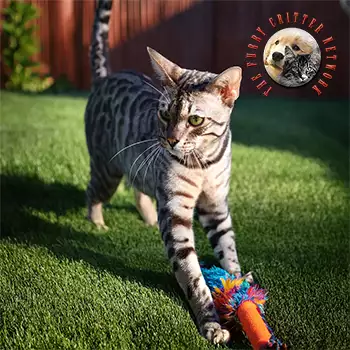

Collars, Harnesses & Leashes

The Egyptian Mau's lean, muscular build and extraordinary speed make collar and harness selection a matter of safety rather than mere preference. Standard collars should always feature a breakaway clasp that releases under pressure — a Mau that catches its collar on a branch, fence, or furniture while moving at full speed needs a collar that gives way rather than becoming a strangulation hazard.

Harnesses are the safer option for any situation where the cat is leashed, and the Egyptian Mau requires a snug, escape-proof design. This breed is notorious for its ability to back out of loose-fitting harnesses, and a single escape outdoors can result in a lost cat that is too fast to catch. Vest-style or figure-eight harnesses that distribute pressure across the chest and shoulders — rather than concentrating it on the throat — provide the most secure fit.

Harness training should begin early and progress gradually. Start by letting the kitten wear the harness indoors for short periods, rewarding calm behavior with treats. Once the cat is comfortable wearing the harness, attach the leash and let it drag under supervision before picking up the other end. Many Maus take to leash walking with surprising enthusiasm once the initial training period is complete.

Leash length matters for safety. A standard four-to-six-foot leash provides enough freedom for exploration without allowing the cat to reach hazards. Retractable leashes are generally not recommended for cats because they provide insufficient control during sudden lunges or panic reactions, and the thin cord can cause injuries if it wraps around the cat or handler.

Grooming Tools

The Egyptian Mau's short, dense coat is relatively low-maintenance compared to longhaired breeds, but regular grooming still provides meaningful benefits. A weekly brushing session removes loose fur, distributes natural skin oils, and gives you an opportunity to check for parasites, skin irritation, or unusual lumps. The Mau's coat has a distinctive texture — silky with a resilient undercoat — that responds well to a fine-toothed metal comb or a rubber grooming mitt.

Rubber curry brushes and grooming gloves are particularly effective for this breed because they conform to the cat's body contour and feel more like petting than grooming. Many Maus that resist traditional brushes will tolerate or even enjoy a grooming glove, making it a practical choice for cats that are sensitive to the feel of bristles on their skin.

Nail trimming is a non-negotiable aspect of Mau care. This breed's active lifestyle keeps nails somewhat naturally filed, but indoor cats still require regular trims every two to three weeks. Guillotine-style or scissor-style clippers designed for cats are both effective — the choice comes down to your comfort and the cat's tolerance. A styptic powder or pencil should always be on hand in case a nail is cut too short.

Dental care tools round out the grooming kit. Finger brushes with enzymatic toothpaste designed for cats are the easiest entry point for dental hygiene. The Egyptian Mau can be resistant to having its mouth handled, so introduce dental care gradually during kittenhood. Dental wipes are an alternative for cats that will not tolerate a brush, though they are less effective at reaching the gum line.

Bowls & Feeders

Bowl material and design have a measurable impact on the Egyptian Mau's eating experience and health. Stainless steel and ceramic are the preferred materials — both are non-porous, easy to sanitize, and do not harbor bacteria the way scratched plastic does. Plastic bowls can also cause feline acne in susceptible cats, a condition that presents as blackheads and irritation on the chin.

Whisker fatigue is a real consideration for this breed. Bowls that are too deep or narrow force the cat's whiskers against the sides during eating, creating sensory discomfort that can lead to food refusal or messy eating habits. Wide, shallow bowls or flat plates eliminate this issue and are strongly preferred by most Maus.

Elevated feeding stations raise the bowl to a height that aligns with the cat's natural eating posture, reducing neck strain and improving digestion. A platform that brings the bowl two to four inches off the ground is typically appropriate for the Mau's medium frame. Some elevated feeders include angled surfaces that tilt the bowl toward the cat, making it easier to access food without pushing it around.

Water bowls deserve as much consideration as food bowls. Many Egyptian Maus prefer running water to still water, making a cat fountain a worthwhile investment for encouraging adequate hydration. Fountains with stainless steel or ceramic construction and replaceable filters provide clean, circulating water that appeals to the breed's preference for freshness. Place water sources away from food bowls — cats instinctively prefer to drink at a distance from their food, a behavior rooted in the wild instinct to avoid contamination.

Travel Gear

The Egyptian Mau's sensitivity to unfamiliar environments makes travel gear selection particularly important. A high-quality carrier is the foundation of safe travel, and for this breed, the carrier should be sturdy enough to contain a cat that may panic, spacious enough for the Mau to turn around and lie down, and opaque enough on at least three sides to provide a sense of enclosure.

Hard-sided carriers offer the most security for car travel and veterinary visits. They cannot be clawed through, provide structural protection in the event of a sudden stop, and are easy to clean if the cat has an accident during transport. Top-loading designs are significantly easier to use with a reluctant Mau — lowering a cat into a carrier generates far less resistance than pushing it through a front door.

Carrier training is essential with this breed and should be an ongoing process, not something attempted the morning of a vet appointment. Leave the carrier out in the home with the door open, place treats and a familiar blanket inside, and allow the Mau to explore it on its own terms. A cat that views the carrier as a safe resting spot rather than a trap will be dramatically easier to transport.

For longer trips, a travel kit should include a portable litter box, a small supply of the cat's regular food, a collapsible water bowl, a familiar blanket or worn clothing for scent comfort, and any medications the cat requires. Disposable litter trays with built-in litter are convenient for road trips and reduce the amount of gear you need to pack.

Safety & ID

Microchipping is the single most reliable form of permanent identification for the Egyptian Mau. Collars and tags can be lost, removed, or broken away — particularly breakaway collars, which are designed to release under pressure. A microchip, implanted between the shoulder blades by a veterinarian, provides a permanent identification link that can be scanned at any shelter or veterinary clinic. Ensure your contact information in the microchip registry is current, as the chip is only useful if the database entry leads back to you.

ID tags on the collar serve as the first line of identification for anyone who finds your cat. A tag should include at minimum your phone number and the cat's name. Including the word "microchipped" on the tag encourages finders to take the cat to a vet or shelter for scanning rather than assuming it is a stray.

Window and balcony safety is a critical concern for the Egyptian Mau. This breed's athleticism and prey drive mean that an open window or unscreened balcony is an invitation to jump. Window screens should be securely fastened and made from pet-proof mesh that can withstand clawing and body impact. Balconies in multi-story buildings should either be fully enclosed with cat-safe netting or declared off-limits.

Household toxin awareness rounds out the safety profile. Many common houseplants — lilies, sago palms, pothos, and dieffenbachia among them — are toxic to cats. The Egyptian Mau's curious and active nature increases its likelihood of investigating and chewing on plants. Maintain a list of cat-safe plants and remove all toxic varieties from accessible areas. Similarly, store cleaning products, medications, and small ingestible objects securely.

Seasonal Gear

The Egyptian Mau's short coat provides limited insulation, making seasonal gear a practical consideration in climates with significant temperature variation. In winter, a cat-safe heated pad placed in the Mau's preferred sleeping area can provide targeted warmth without heating the entire room. Look for pads with chew-resistant cords, internal thermostats, and auto-shutoff features — the breed's curiosity extends to cords and wires, making electrical safety a priority.

Cat clothing — sweaters, vests, and similar garments — is a divisive topic, but some Egyptian Maus tolerate lightweight fleece vests in genuinely cold environments. If your cat accepts clothing, ensure the fit is snug but not restrictive, with no loose fabric or dangling elements that could catch on objects. Most Maus prefer the freedom of movement that comes with no clothing at all, and a warm sleeping area is usually sufficient.

Summer brings its own considerations. UV-protective window film can reduce the intensity of direct sunlight on window perches, preventing overheating during sunbathing sessions. Cooling mats made from pressure-activated gel provide a temperature-regulated surface that the cat can choose to lie on when warm. These do not require electricity or refrigeration and work simply by absorbing and dissipating body heat.

Seasonal parasite prevention is an essential year-round consideration, but the products used should be discussed with your veterinarian rather than selected based on general recommendations. Flea and tick preventatives come in topical, oral, and collar formats, and the right choice depends on your Mau's lifestyle, health status, and any sensitivities. Indoor-only cats face lower parasite risk but are not immune, as fleas can enter homes on clothing, shoes, or other pets.

Always consult a qualified professional before making any health-related decisions. This content is provided for informational reference only and should not replace professional guidance specific to your animal.