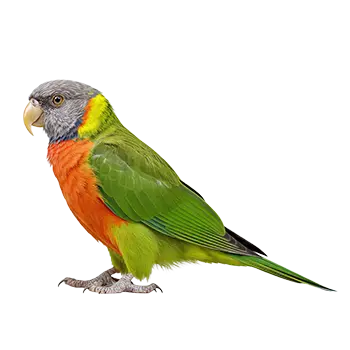

Monitoring your Red-bellied Parrot's weight is one of the most effective early-warning systems for detecting health problems. Birds instinctively hide signs of illness — a survival behavior inherited from wild ancestors who would become targets for predators if they appeared weak. By the time behavioral symptoms become obvious, a bird may already be seriously ill. A digital gram scale accurate to at least one gram allows you to track your parrot's weight consistently and detect subtle losses or gains that signal developing issues.
Establish a baseline by weighing your Red-bellied Parrot at the same time each day, ideally first thing in the morning before the first meal. A healthy adult typically weighs between 120 and 160 grams, though individual birds may fall outside this range depending on their build and overall condition. Record each reading in a log or spreadsheet so you can identify trends over time. A sustained weight loss of more than 10 percent of the bird's baseline weight warrants an immediate veterinary visit, even if the bird appears to be behaving normally.
Perch-mounted scales are a hands-off alternative for birds that resist being handled for weighing sessions. These devices attach to a perch or platform and record the bird's weight whenever it stands on the surface. Some models connect to a smartphone app that logs readings automatically, making it easier to track trends without the daily ritual of catching and placing the bird on a countertop scale. The convenience factor alone makes these devices valuable for owners who find the weighing process stressful for themselves or their bird.
Beyond weight, observing overall physical condition through regular at-home assessments helps you stay attuned to your parrot's health status. Check the keel bone — the central ridge on the breastbone — periodically by gently feeling the chest area. In a bird at healthy weight, the keel should be palpable but not protruding sharply. The eyes should be bright and clear, the nares clean, and the feathers well-groomed. While technology assists with data collection, hands-on familiarity with your bird's normal condition remains irreplaceable.