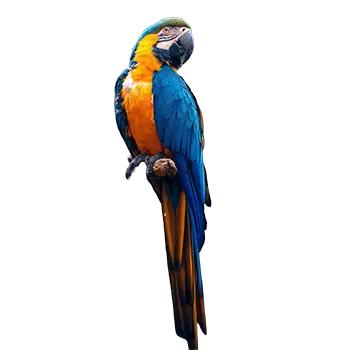

A well-fitted avian harness is one of the most valuable accessories a Blue and Gold Macaw owner can invest in, opening up safe opportunities for outdoor excursions, socialization, and natural sunlight exposure. Unlike wing clipping, which permanently limits the bird's mobility and can cause psychological distress in some individuals, a harness allows the macaw to retain full flight capability while remaining safely tethered to its owner. The challenge lies in the training process — most macaws do not accept a harness willingly at first, and patience measured in weeks or months is typically required.
When selecting a harness, look for designs specifically sized for large macaws. The harness should loop around the body without compressing the chest or restricting the crop, and the attachment point should sit between the wings where the bird cannot reach it easily with its beak. Materials should be resistant to chewing — some harness designs use a thin stainless steel cable core within a fabric sheath to prevent the bird from biting through the tether during a moment of panic or frustration.
Flight lines and outdoor tethering systems offer an alternative for owners who want to provide outdoor perching time without the complexity of harness training. These typically consist of a lightweight stainless steel cable attached to a leg anklet or body harness at one end and a secure ground anchor or overhead line at the other. The cable length should allow the bird to move freely and fly short distances while preventing escape or contact with hazards. Always supervise tethered outdoor time, as predators, loose dogs, and startled passersby can all create dangerous situations.
Training a macaw to accept a harness should follow positive reinforcement principles exclusively. Begin by simply placing the harness near the bird during feeding, allowing it to investigate and become comfortable with the object. Progress to touching the bird with the harness, then draping it loosely, and finally fastening it for increasing durations. Each step should be paired with high-value treats and praise, and any session that produces stress or resistance should be ended on a positive note before the bird becomes truly agitated.