
Physical Maturity & Adult Characteristics

Adult Checkered Garter Snakes (Thamnophis marcianus) typically reach full physical maturity between eighteen and thirty months of age, though growth continues at a diminished rate throughout life. Mature males generally measure eighteen to twenty-eight inches in total length with slender, well-proportioned bodies, while females are noticeably larger and more robust, commonly reaching twenty-four to thirty-six inches and occasionally exceeding forty inches in exceptional individuals. This pronounced sexual dimorphism in size is a consistent feature of the species and becomes increasingly apparent once both sexes have achieved skeletal maturity.

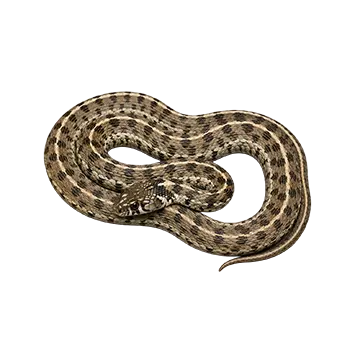
The distinctive dorsal pattern that gives this species its common name is most vivid in healthy adults maintained under proper lighting and nutrition. The characteristic checkerboard arrangement of dark squares on a tan, olive, or yellowish-brown background runs the length of the body and is bordered by pale lateral stripes that vary in intensity among populations. Adult coloration can shift subtly with seasonal changes, diet, and overall health status. Animals maintained on a nutritionally complete diet with adequate vitamin A tend to display richer, more saturated coloration than those on deficient diets, making color quality a useful informal indicator of nutritional health.

Adult body condition should be assessed regularly using both visual and tactile evaluation. A healthy adult Checkered Garter Snake has a gently rounded cross-section when viewed head-on, with no visible spine or rib outlines along the dorsum and no fatty deposits along the lateral body walls. The ventral surface should be smooth and unmarked, without discoloration, scarring, or scale irregularities. Tactile assessment involves gently palpating the body from head to tail to check for unusual lumps, areas of swelling, or regions of abnormal firmness or softness that might indicate abscesses, tumors, or retained fecal material.

Muscle tone in adult garter snakes is best evaluated during handling. A healthy adult will grip firmly when held, demonstrating strong constriction reflexes through the hand and along any support structure. The body should feel dense and muscular rather than limp or flaccid. Adults that lack normal muscle tone, feel unusually soft-bodied, or fail to grip when handled may be experiencing metabolic, neurological, or systemic health issues that warrant veterinary evaluation.

Adult Diet & Long-Term Nutritional Management

The dietary needs of adult Checkered Garter Snakes are less demanding in terms of frequency than those of growing juveniles but require equal attention to nutritional completeness and variety. Adults should be fed once every five to seven days, with meal sizes calibrated to maintain a healthy body condition without promoting obesity. A single feeding session for an average-sized adult might consist of two to three whole nightcrawlers, one to two appropriately sized feeder fish, or a single fuzzy mouse, depending on the food source being offered that week. The guiding principle is that meals should produce a modest, barely visible lump in the midsection that is fully digested within forty-eight to seventy-two hours.

Dietary variety remains critically important throughout the adult stage. Rotating among earthworms, thiaminase-free fish, appropriately sized rodents, and occasional supplementary items such as frog-scented reptilinks or chopped chicken hearts prevents nutritional imbalances and keeps feeding interest high. Adult garter snakes that have been maintained on a single food item for extended periods can develop strong food fixation and may refuse alternative offerings, which becomes problematic if that food source becomes temporarily unavailable or if the animal's nutritional needs change due to illness or reproductive demands.

Thiamine supplementation should continue throughout the adult stage for any animal receiving fish as a regular dietary component. Even thiaminase-free fish species provide less complete nutrition than whole rodent prey, and the water-soluble nature of B vitamins means that the body does not store them in significant quantities. A reptile multivitamin powder containing B-complex vitamins should be applied to fish and invertebrate prey items once weekly. Calcium supplementation with vitamin D3 should continue at a frequency of two to three times monthly for adults not receiving regular whole rodent meals.

Water quality and availability are often underemphasized in adult garter snake husbandry. Adults should have continuous access to a clean, fresh water source large enough to submerge their entire body. Checkered Garter Snakes are enthusiastic soakers and will often spend extended periods partially or fully immersed, particularly during pre-shed periods, after feeding, and during warmer months. The water dish should be cleaned and refilled daily, as garter snakes frequently defecate and release musk in their water. A heavy, ceramic or stone dish that resists tipping is preferable to lightweight plastic alternatives, as active adults will overturn poorly weighted dishes and flood the substrate.

Permanent Enclosure Design & Environmental Enrichment

A permanent adult enclosure for a single Checkered Garter Snake should provide a minimum floor space of 36 by 18 inches, with a height of at least 12 inches. For pairs or trios of adults housed communally, a 48 by 18 inch or larger enclosure is recommended. Front-opening terrariums are strongly preferred over top-opening aquariums for adult garter snakes, as the top-opening design requires reaching over the animal to access the enclosure, which can trigger defensive responses and makes routine maintenance more disruptive. PVC, melamine, and glass terrariums are all suitable materials, with PVC offering the best insulation and humidity retention in most climates.

The thermal gradient for adult Checkered Garter Snakes should maintain a warm zone of 82 to 88 degrees Fahrenheit with a localized basking spot reaching up to 90 degrees, and a cool zone of 70 to 76 degrees. Nighttime temperatures can safely drop to 65 to 70 degrees across the enclosure without ill effect, mimicking the natural diurnal temperature fluctuations experienced by this species throughout its range in the southwestern United States and northern Mexico. Heating should be thermostatically controlled at all times, with temperature verification performed using digital probe thermometers positioned at substrate level in both the warm and cool zones.

Substrate choices for permanent adult enclosures should balance naturalism, humidity management, and ease of maintenance. Coconut coir, cypress mulch, and aspen shavings are all excellent options. Many experienced garter snake keepers use a bioactive substrate system incorporating a drainage layer, organic topsoil and coir mix, and a cleanup crew of springtails and isopods. Bioactive enclosures reduce maintenance frequency, provide excellent humidity regulation, and create a self-sustaining microcosm that enriches the snake's sensory environment. However, bioactive systems require an initial setup investment and a basic understanding of terrarium ecology to function properly.

Environmental enrichment for adult Checkered Garter Snakes should incorporate structural complexity that encourages the full range of natural behaviors. Cork bark tubes and flats, driftwood branches, stone stacks with accessible crevices, and both live and artificial plants create a layered environment that supports thermoregulation, hiding, climbing, and exploration. A large, shallow water feature, whether a simple soaking dish or a more elaborate paludarium-style pool area, serves as a focal point for natural behavior. Adults that are provided with enriched environments demonstrate more active exploration, more consistent feeding, and fewer stress-related behavioral abnormalities than those housed in barren, minimalist setups.

Lighting should provide a consistent photoperiod that reflects natural seasonal patterns. During the active season from spring through fall, a twelve-to-fourteen-hour light cycle is appropriate. Shortening the photoperiod to ten to twelve hours during winter months supports the natural circadian and seasonal rhythms of the species, even in animals that are not being brumated for breeding purposes. Low-level UVB lighting in the 2.0 to 5.0 percent range is beneficial though not strictly essential, and any UVB fixture should be replaced according to the manufacturer's specifications, as UV output diminishes long before the visible light output fades.

Behavioral Patterns & Ongoing Socialization

Adult Checkered Garter Snakes are among the most behaviorally engaging snake species available in herpetoculture, displaying consistent diurnal activity patterns, keen environmental awareness, and a level of interactivity with their keepers that many other snake species do not approach. Adults that have been regularly handled since juvenility are typically calm, curious, and comfortable being held for extended periods. They will actively explore the handler's hands, arms, and clothing, investigating novel scents and textures with rapid tongue-flicking. This exploratory behavior is a sign of a confident, well-socialized animal.

Communal housing of adult Checkered Garter Snakes is practiced successfully by many keepers and reflects the species' natural aggregation tendencies. In the wild, Thamnophis marcianus congregates in groups during brumation and has been observed basking communally during the active season. In captivity, groups of adults often pile together under hides, bask in close proximity, and show no signs of territorial aggression toward each other under normal conditions. The critical caveats for communal housing are that all individuals must be of similar size, feeding must be conducted individually or under close supervision to prevent competitive ingestion accidents, and any individual that shows signs of chronic stress, weight loss, or excessive defensiveness should be separated.

Seasonal behavioral shifts are a normal and expected feature of adult Checkered Garter Snake biology. As photoperiod decreases and temperatures drop in autumn, adults may become less active, reduce food intake, and spend more time in their hides. These behavioral changes are precursors to the natural brumation period and do not indicate illness. Even adults that are not being brumated for breeding may exhibit reduced activity and appetite during the shorter days of winter. Keepers should respect these natural rhythms rather than attempting to force year-round peak activity through artificially elevated temperatures and prolonged photoperiods.

Defensive behaviors in well-socialized adults are typically limited to occasional musking when startled and mild body tensing at the start of handling sessions. Biting is uncommon in regularly handled adults but can occur when the snake is hungry and the handler's hands carry food scent. The bite of an adult Checkered Garter Snake is generally harmless, producing at most a slight scratch or tiny puncture, but the species possesses a mild rear-fang venom delivery system typical of many Thamnophis species. This venom is not medically significant to humans in the vast majority of cases, though individuals with sensitivity to the Duvernoy's gland secretions may experience mild localized swelling, itching, or tingling at the bite site. Washing the area with soap and water is typically sufficient treatment.

Routine Health Maintenance & Preventive Care

Preventive health care for adult Checkered Garter Snakes should include an annual veterinary examination by a reptile-experienced veterinarian, a fecal parasite screening at least once per year, and ongoing keeper-level health monitoring between professional visits. The annual veterinary checkup provides an opportunity for a thorough physical examination, assessment of body condition and hydration, oral cavity inspection for signs of stomatitis, and discussion of any husbandry concerns. Many reptile veterinarians can also perform basic bloodwork on adult garter snakes, which establishes baseline values for liver enzymes, blood glucose, and white blood cell counts that are invaluable for comparison if the animal becomes ill in the future.

Parasite management remains relevant throughout adulthood, particularly for animals housed on naturalistic substrates or those that receive live prey items such as earthworms or fish. Annual fecal examinations screen for common endoparasites including roundworms, hookworms, and protozoan organisms. External parasites, primarily snake mites (Ophionyssus natricis), can be introduced through new cage furnishings, substrate, or contact with other reptiles. Regular visual inspection of the snake's body, particularly around the eyes, chin groove, and cloacal region, should be part of routine handling. Mite infestations are recognizable as tiny dark moving specks on the snake's body and as white or gray dust in the water dish, which consists of drowned mites and their fecal debris.

Obesity is the most prevalent chronic health condition in adult captive garter snakes and is entirely preventable through proper feeding management. Adult Checkered Garter Snakes maintained in the controlled, temperature-stable environment of captivity expend far less energy than their wild counterparts, yet many keepers continue to feed at juvenile frequencies well into adulthood. An obese garter snake develops fatty deposits along the lateral body walls that give the animal a conspicuously rounded appearance, and the body feels soft and doughy rather than firm and muscular on palpation. Chronic obesity leads to hepatic lipidosis, cardiovascular strain, reproductive difficulties, and a meaningfully shortened lifespan. Reducing feeding frequency to once every seven to ten days and substituting lower-calorie prey items such as earthworms for higher-calorie items such as mice is usually sufficient to reverse mild to moderate obesity over several months.

Shedding in adults occurs every six to twelve weeks under normal conditions and should consistently produce a complete, intact shed skin. Incomplete sheds in otherwise healthy adults are almost always a humidity problem. Providing a humid hide, which is simply a hide box containing damp sphagnum moss, during pre-shed periods reliably prevents retained shed issues. If retained shed occurs despite adequate humidity, soaking the snake in lukewarm water for fifteen to twenty minutes will soften the retained skin sufficiently for gentle manual removal. Retained spectacle caps, the clear scales covering the eyes, are the most concerning form of incomplete shedding and should be addressed by a veterinarian if they do not resolve with soaking, as improper removal can damage the underlying eye tissue.

Long-Term Husbandry Considerations

Maintaining a Checkered Garter Snake through its full adult lifespan of six to ten years requires a consistent commitment to environmental stability, nutritional quality, and attentive observation. Unlike many pet reptiles that demand intensive daily management, adult garter snakes are relatively low-maintenance once their enclosure is properly established, but this ease of care can paradoxically lead to complacency. The most successful long-term keepers establish and adhere to a regular husbandry routine that includes daily water changes, weekly feeding, periodic substrate maintenance, monthly enclosure deep-cleaning, and annual veterinary visits.

Equipment maintenance is an often-overlooked aspect of long-term garter snake husbandry. Thermostats, heat mats, ceramic heat emitters, and UVB bulbs all have finite operational lifespans and can degrade in performance or fail entirely without warning. A thermostat malfunction that goes undetected for even a few hours can expose the snake to dangerously high or low temperatures. Keepers should verify thermostat accuracy against an independent thermometer monthly, replace UVB bulbs every six to twelve months according to manufacturer recommendations, and keep backup heating equipment on hand for emergency replacement.

Record keeping for adult Checkered Garter Snakes should document feeding dates and items consumed, shed dates and quality, body weight measured monthly, any behavioral changes, veterinary visits and treatments, and environmental parameter checks. Long-term records reveal patterns that are invisible in the moment, such as gradual weight gain that might not be apparent from week to week but becomes obvious over a six-month trend. These records are also enormously helpful for veterinary consultations, as they provide the clinician with a detailed history that facilitates accurate diagnosis and treatment planning.

Keepers should also plan for contingencies that may affect their ability to care for the animal over its full lifespan. Identifying a backup caretaker, whether a fellow herpetoculturist, a local herpetological society member, or a reptile-experienced pet sitter, who can assume care responsibilities during vacations, emergencies, or life changes ensures that the snake's welfare is protected regardless of circumstances. A written care sheet detailing the specific animal's feeding schedule, dietary preferences, enclosure parameters, and veterinary history should be maintained in an accessible location so that any competent substitute caretaker can maintain proper husbandry without guesswork.

Always consult a qualified professional before making any health-related decisions. This content is provided for informational reference only and should not replace professional guidance specific to your animal.