
Growth Rates & Physical Development

The juvenile phase of a Brazilian Rainbow Boa (Epicrates cenchria) generally spans from approximately four months of age through to sexual maturity, which occurs between two and a half and four years depending on sex, feeding regimen, and environmental conditions. During this period, the snake undergoes its most dramatic physical transformation, growing from a slender neonate of roughly eighteen to twenty inches into a muscular sub-adult approaching three to four feet in length. Growth is not perfectly linear; instead, it tends to occur in spurts that coincide with consistent feeding periods and often slows temporarily around shed cycles or seasonal temperature fluctuations.

Monitoring growth through regular weighing remains essential during the juvenile stage. A digital kitchen scale accurate to one gram is sufficient for younger juveniles, while a larger postal or parcel scale becomes necessary as the animal approaches two feet in length. Weighing once every two weeks provides enough data to identify trends without creating unnecessary handling stress. A healthy juvenile should show consistent weight gain from month to month, with occasional brief plateaus around shedding events being entirely normal. Sustained weight loss or stagnation over a period of four weeks or more warrants investigation into feeding response, environmental parameters, and potential health issues.

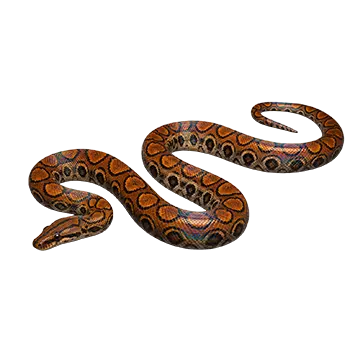
One of the most visually striking aspects of juvenile development in this species is the progressive intensification of the iridescent sheen that gives the Brazilian Rainbow Boa its common name. Neonates display a subtle, almost metallic luster, but as the snake matures through successive sheds, the microscopic ridges on each scale that produce the rainbow diffraction effect become more defined and pronounced. By the time a juvenile reaches twelve to eighteen months of age, the full holographic spectrum of color visible under direct or angled light is unmistakable. The base coloration also deepens during this period, with the rich orange, red, and brown tones becoming more saturated and the lateral ocelli and dorsal saddle markings sharpening in contrast.

Skeletal and muscular development during the juvenile phase supports the transition from a fragile neonate to a robust sub-adult. The skull broadens, jaw musculature strengthens, and the body fills out from a cylindrical cross-section to the slightly laterally compressed profile characteristic of healthy adult boas. Keepers can assess body condition by observing the dorsal midline: in a well-conditioned juvenile, the spine should not be visibly prominent, nor should the animal appear overly round or doughy. A gently rounded triangular cross-section with smooth flanks and no visible ribs indicates optimal body condition.

Dietary Progression & Feeding Management

As juvenile Brazilian Rainbow Boas grow, their prey size must increase proportionally to support continued healthy development. The general guideline is that each prey item should be approximately equal to or slightly larger than the widest point of the snake's body at midbody. A juvenile that began on pinky mice as a neonate will progress through fuzzy mice, hoppers, and eventually small adult mice over the course of the first twelve to eighteen months. Some larger or faster-growing juveniles may transition to small weaned rats by eighteen months, which provide a superior nutritional profile compared to adult mice due to their more favorable calcium-to-phosphorus ratio and higher protein content.

Feeding frequency should gradually decrease as the juvenile grows. Animals under one year of age typically do well on a feeding schedule of once every seven days, while juveniles between one and two years can transition to feedings every ten to fourteen days without any detriment to growth or body condition. This gradual reduction in feeding frequency mirrors the metabolic shift that occurs as the snake's growth rate naturally decelerates approaching maturity. Maintaining a neonate-level feeding frequency in a large juvenile commonly leads to obesity, fatty liver disease, and a shortened lifespan, making disciplined feeding management one of the most impactful husbandry decisions a keeper makes during this stage.

Prey should always be offered pre-killed or thawed from frozen, never live. While juvenile Brazilian Rainbow Boas are generally aggressive and accurate strikers, live prey introduces unnecessary risk of injury. A cornered mouse or rat can inflict surprisingly severe bites, particularly to the face and eyes, and such injuries may become infected or leave permanent scarring. The convenience and safety of a well-maintained frozen prey supply far outweigh any perceived benefit of live feeding, and juveniles raised on frozen-thawed prey from their first meal almost never develop the feeding reluctance sometimes associated with a transition from live to pre-killed.

Refusal to feed is less common in juvenile Brazilian Rainbow Boas than in many other boa and python species, but it does occur occasionally, particularly around shedding, during seasonal temperature drops, or after environmental disruptions such as enclosure relocations. A single refused meal is not cause for concern. If the juvenile refuses two or more consecutive offerings, the keeper should evaluate temperature, humidity, hide availability, and light cycle to identify and correct any environmental stressors. Persistent food refusal lasting beyond six weeks in an otherwise healthy juvenile should prompt a veterinary consultation to rule out internal parasites, respiratory infection, or other underlying medical conditions.

Enclosure Upgrades & Habitat Design

Juvenile Brazilian Rainbow Boas outgrow their neonate enclosures relatively quickly and will need at least one, and often two, enclosure upgrades during the juvenile phase. A good general rule is that the enclosure length should be at least two-thirds the snake's total body length, with sufficient depth and height to provide meaningful temperature and humidity gradients and room for the semi-arboreal behavior that becomes increasingly apparent during adolescence. For a juvenile between twelve and twenty-four months of age, an enclosure measuring approximately 36 by 18 by 18 inches provides adequate space. Larger juveniles approaching adult size may require an upgrade to a 48-inch enclosure before reaching full maturity.

Enclosure type matters for this humidity-dependent species. Glass terrariums with screen tops are popular but present a significant challenge in maintaining the 70 to 80 percent humidity range that Brazilian Rainbow Boas require. Covering a portion of the screen top with foil, plastic wrap, or a custom-cut acrylic panel can help retain moisture, but many experienced keepers prefer PVC or molded plastic enclosures specifically designed for tropical species. These enclosures retain heat and humidity far more efficiently than glass, reduce the keeper's workload for environmental maintenance, and are often lighter and more durable than comparably sized glass tanks.

Furnishing the juvenile enclosure should address three core needs: thermoregulation, security, and enrichment. At minimum, the enclosure should contain two hides — one on the warm side and one on the cool side — sized so that the snake's body contacts the walls and ceiling of the hide when coiled inside. A hide that is too large fails to provide the sense of security that promotes normal feeding and resting behavior. As juveniles grow, they begin to exhibit more climbing behavior than neonates, and the addition of sturdy branches, cork bark tubes, or elevated shelving provides valuable environmental enrichment and exercise opportunities. Branches should be securely anchored and capable of supporting the snake's full weight without shifting or falling.

Substrate during the juvenile phase should prioritize humidity retention while remaining easy to maintain. Coconut coir, cypress mulch, or a layered combination of the two performs well for this species. The substrate layer should be deep enough to retain moisture — typically two to three inches — and should be misted lightly as needed to maintain surface humidity without becoming waterlogged at the bottom of the enclosure. Waterlogged substrate promotes bacterial growth and can lead to ventral scale rot, a condition where the belly scales become discolored, softened, and eventually ulcerated due to chronic contact with excessive moisture. A well-draining substrate layer combined with regular spot-cleaning and periodic full changes every three to four weeks prevents this condition entirely.

Temperament Development & Socialization

The juvenile period is the most transformative phase for temperament in Brazilian Rainbow Boas. Neonates of this species are notoriously nippy and defensive, striking readily at any perceived threat. However, with consistent, patient handling through the juvenile months, the vast majority of individuals undergo a dramatic behavioral shift. By twelve to eighteen months of age, most well-socialized juveniles have largely abandoned defensive striking and transitioned to a calm, inquisitive disposition that makes them one of the more enjoyable medium-sized boas to keep and interact with.

The key to this temperament transformation is regularity. Handling sessions should occur three to four times per week, each lasting ten to fifteen minutes, throughout the juvenile period. The sessions should be conducted at consistent times of day, ideally during the late afternoon or early evening when the snake is naturally becoming more active. Begin each session by gently lifting the snake with a smooth motion from below, supporting its body along as much of its length as possible. Avoid rapid movements, overhead approaches, or gripping the snake tightly, as all of these trigger defensive instincts that counteract the goals of socialization.

Juveniles between six and twelve months often go through a transitional period during which their behavior may seem inconsistent. A snake that tolerated handling well for several sessions may suddenly become defensive again, striking or musking during a session for no immediately apparent reason. These regressions are normal and are often associated with hormonal changes, pre-shed discomfort, hunger, or simply an off day. The appropriate response is to complete a shortened session calmly and return to the normal schedule at the next planned session. Abandoning the handling routine in response to a bad session only delays the socialization process and can reinforce the defensive behavior the keeper is working to extinguish.

By the time a Brazilian Rainbow Boa reaches eighteen to twenty-four months and is approaching sub-adult size, most individuals have settled into what will be their adult temperament baseline. Snakes that have been handled consistently through the juvenile period are typically calm, slow-moving, and curious during handling, often exploring their handler's hands and arms with gentle tongue-flicking rather than defensive posturing. While individual variation exists and some animals will always be more reserved or defensive than others regardless of socialization effort, the species as a whole responds exceptionally well to patient, consistent handling during the juvenile months.

Environmental Fine-Tuning

Temperature management during the juvenile phase follows the same thermal gradient principles established during the neonate stage but requires more attention as enclosure size increases. The warm end should be maintained at 82 to 86 degrees Fahrenheit, the cool end at 76 to 80 degrees, with a localized basking spot of up to 88 degrees available for post-feeding thermoregulation. As the enclosure grows larger, maintaining a clean gradient without cold spots or excessive heat zones requires more thoughtful placement of heating elements and more frequent temperature monitoring. Digital thermometers with probes placed at substrate level on both the warm and cool sides provide the most accurate readings, as ambient room temperature can diverge significantly from conditions within the enclosure.

Humidity management in larger juvenile enclosures often requires adjustments to the keeper's routine. The increased air volume of a 36-inch or 48-inch enclosure means that moisture dissipates more quickly than in the compact neonate tubs most keepers start with. Increasing the size of the water dish, adding a second water source, misting more frequently, and ensuring the substrate layer is appropriately deep and moisture-retentive are all effective strategies. A digital hygrometer placed at substrate level on the cool side of the enclosure provides the most representative humidity reading. Readings consistently below 65 percent indicate that systemic changes to the enclosure's moisture retention are needed, not just more frequent misting.

Photoperiod becomes a more relevant consideration during the juvenile phase, particularly for keepers who intend to breed their animals in the future. Brazilian Rainbow Boas in the wild experience seasonal variation in day length, and replicating a natural light cycle of approximately twelve hours of light and twelve hours of darkness helps regulate the snake's circadian rhythm, appetite, and long-term reproductive physiology. The light source should not be a heat-producing lamp positioned inside the enclosure, as this can create uncontrolled hot spots. Instead, ambient room lighting or a low-wattage LED fixture on a timer placed above the enclosure provides appropriate photoperiod regulation without interfering with the thermal gradient.

Air quality is an underappreciated aspect of juvenile enclosure management. Stagnant, overly humid air promotes the growth of mold and bacteria within the enclosure and can predispose the snake to respiratory infections. Adequate ventilation is achieved through properly sized and positioned vents in PVC enclosures or through the screen portion of a glass terrarium lid. The goal is a gentle exchange of air that prevents stagnation without creating drafts or causing rapid humidity loss. If mold is observed on substrate, enclosure walls, or furnishings, the ventilation is inadequate and must be improved before the mold is simply cleaned away, as the underlying conditions will cause it to return.

Health Monitoring & Common Juvenile Issues

Routine health monitoring during the juvenile phase builds directly on the practices established during the neonate period. Biweekly weigh-ins, visual skin inspections during handling, and careful documentation of feeding and shedding events form the backbone of a preventive health strategy. As the juvenile grows, keepers should also begin monitoring for conditions that are more common or more consequential in older animals, including obesity, scale rot, respiratory infections, and external parasites.

Obesity is one of the most prevalent health issues in captive juvenile Brazilian Rainbow Boas and is almost entirely a product of overfeeding. A juvenile that is fed too frequently or offered oversized prey items will accumulate visceral fat deposits that strain the liver, kidneys, and cardiovascular system. Externally, an obese juvenile displays a visibly distended body profile, skin visible between the scales, and a general sluggishness that contrasts with the alert, responsive behavior of a properly conditioned animal. Correcting juvenile obesity requires a disciplined reduction in feeding frequency and prey size, not a dramatic fast, which can introduce its own metabolic risks. Gradual correction over several months produces the best long-term outcome.

Scale rot, more properly termed ulcerative dermatitis, is a bacterial infection of the ventral scales caused by prolonged contact with unsanitary or excessively moist substrate. Early signs include pinkish or reddish discoloration of the belly scales, followed by the development of small blisters or raised lesions. If caught early, scale rot can often be resolved by improving enclosure hygiene, replacing the substrate with clean, dry material, and applying a veterinarian-recommended topical antiseptic to the affected areas. Advanced cases with open ulceration or involvement of deeper tissue layers require systemic antibiotic therapy prescribed by a reptile veterinarian.

External parasites, particularly snake mites (Ophionyssus natricis), are a persistent concern for any keeper maintaining multiple reptiles. Mites are small, dark, and often first noticed as tiny moving dots around the snake's eyes, chin groove, or cloaca, or as fine black specks in the water dish after the snake has soaked. A mite infestation causes irritation, excessive soaking, anorexia, and can transmit blood-borne pathogens between animals in a collection. Treatment involves thorough disinfection of the entire enclosure and all furnishings, replacement of all substrate, and application of a veterinarian-approved mite treatment to the snake. All animals housed in the same room should be examined, as mites spread readily between enclosures.

Annual or biannual veterinary checkups are recommended throughout the juvenile phase, even for apparently healthy animals. A reptile-experienced veterinarian can perform a physical examination, fecal parasite screening, and blood work that detects subclinical issues before they manifest as overt illness. Establishing a relationship with a qualified reptile veterinarian during the juvenile period ensures that expert care is readily accessible in the event of an emergency, and the accumulated medical history becomes an invaluable resource as the animal transitions into adulthood.

Always consult a qualified professional before making any health-related decisions. This content is provided for informational reference only and should not replace professional guidance specific to your animal.