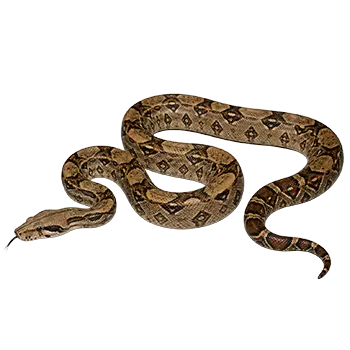

Growth & Physical Development

The juvenile stage of a boa constrictor is defined by rapid and significant growth. From roughly three months of age through the end of the second year, a healthy boa can grow from under two feet in length to four or five feet, depending on sex, subspecies, and feeding regimen. Males tend to be slightly smaller and slower-growing than females, and this difference becomes increasingly apparent as the snake matures through its juvenile period.

During this phase, regular shedding is a visible indicator of healthy growth. Juvenile boas typically shed every four to six weeks, and each successful shed should come off in one clean piece. Retained shed, particularly around the tail tip and eye caps, is a sign that humidity levels need adjustment. Monitoring growth by keeping a simple log of length and weight at each shed cycle can help you track whether your boa is developing at a healthy pace.

As the juvenile grows, its enclosure must be upgraded to accommodate its increasing size. A snake that has outgrown its enclosure will become stressed, may refuse food, and can develop behavioral problems. A good rule of thumb is that the combined length and width of the enclosure should be at least equal to the snake's body length. Upgrading in stages rather than moving a small juvenile into an excessively large enclosure helps minimize stress during transitions.

Physical changes during the juvenile stage extend beyond simple length and weight. The snake's body will become noticeably more muscular, and its coloring may shift subtly as it matures. Some boa constrictor morphs and localities undergo significant color changes between their neonatal and adult phases, with patterns becoming bolder, darker, or more defined as the animal approaches adulthood.

Nutrition & Diet Transition

Feeding a juvenile boa constrictor properly is essential for supporting healthy growth without promoting obesity, which is one of the most common health issues seen in captive boas. As the snake grows, prey size must increase proportionally. The prey item should be roughly equal to the width of the snake at its widest point. A juvenile that started on pinky or fuzzy mice will transition to adult mice, then to small rats as it grows through its first and second year.

Feeding frequency should be adjusted as the snake matures. Young juveniles under one year of age can be fed every seven to ten days. Once the snake reaches approximately two feet in length, stretching feedings to every 10 to 14 days is appropriate. Overfeeding juvenile boas is a common mistake that leads to rapid, unhealthy weight gain and can contribute to fatty liver disease and shortened lifespan. A healthy juvenile boa should feel muscular and firm, not soft and round.

Frozen-thawed prey remains the safest and most convenient feeding option throughout the juvenile stage. If the boa was started on frozen-thawed prey as a neonate, it should continue to accept this food source readily. Warming the prey item to slightly above room temperature using warm water improves the feeding response. Never microwave prey items, as this can cause hot spots that burn the snake's digestive tract.

Fresh water must always be available and should be changed daily or whenever it becomes soiled. Juvenile boas will occasionally soak in their water dish, particularly before a shed cycle. Providing a water dish large enough for the snake to curl up in but not so deep that it poses a drowning risk is important. Soaking behavior is normal, but persistent soaking outside of shed cycles can sometimes indicate mites or other skin irritation and should be investigated.

Behavioral Changes

Juvenile boa constrictors undergo notable behavioral changes as they grow. During the early juvenile stage, the snake may still display some defensive behaviors inherited from its neonatal period, such as striking, hissing, or musking when startled. These behaviors typically diminish with regular, calm handling and consistent routines. By the time a boa reaches 18 months to two years of age, most individuals have settled into a more predictable and docile temperament.

Increased confidence and curiosity are hallmarks of a healthy juvenile boa. As the snake grows and becomes more accustomed to its environment and handler, it will often become more exploratory during handling sessions, actively moving through the hands and investigating new textures and surfaces. This exploratory behavior is a positive sign and should be encouraged through supervised out-of-enclosure time in a safe, escape-proof area.

Feeding response changes are also common during the juvenile stage. Some juvenile boas develop a strong and enthusiastic feeding response, striking at prey with speed and energy. While this is a sign of a healthy appetite, it is important to use feeding tongs and to establish clear routines so the snake learns to distinguish between feeding time and handling time. Opening the enclosure with a snake hook or gently touching the snake before lifting it for handling can help prevent accidental feeding strikes.

Some juveniles may go through brief periods of food refusal, particularly during seasonal changes or before a shed cycle. Short-term refusal lasting one or two missed meals is usually not a concern in an otherwise healthy, well-established juvenile. If refusal extends beyond a month or is accompanied by weight loss, lethargy, or other behavioral changes, a veterinary consultation is advisable.

Enclosure & Habitat Progression

As a juvenile boa constrictor grows, its enclosure requirements evolve considerably. Most keepers will need to upgrade enclosures at least once during the juvenile phase, typically moving from a small neonatal tub to a mid-sized terrarium or PVC enclosure. By the time the boa reaches three to four feet in length, it should be housed in an enclosure measuring at least 36 inches long by 18 inches deep by 18 inches tall, though larger is always better if temperature and humidity can be maintained effectively.

The thermal gradient established during the neonatal stage should be maintained throughout the juvenile period. The warm side of the enclosure should remain between 85 and 88 degrees Fahrenheit, and the cool side should sit between 78 and 80 degrees. As the enclosure size increases, you may need to adjust or upgrade heating equipment to ensure the gradient remains consistent across the larger space. A reliable thermostat controlling all heat sources is non-negotiable for safety.

Hide spots remain critically important for juvenile boas. Provide at least two hides, one on the warm side and one on the cool side, each sized so the snake can curl up inside with its body touching the walls of the hide. Snakes feel most secure in snug hides, and a juvenile that does not feel secure in its enclosure may exhibit stress behaviors such as constant glass surfing, food refusal, or hiding in the water dish.

Substrate options expand during the juvenile stage. While paper towels remain a practical and hygienic option, many keepers transition to coconut fiber, cypress mulch, or similar substrates that help maintain humidity and provide a more naturalistic environment. Avoid cedar, pine, and other aromatic wood substrates, as the oils they release are toxic to reptiles. Spot-clean the enclosure daily and perform a full substrate change every four to six weeks or as needed.

Exercise & Enrichment

While snakes do not require exercise in the same way that mammals do, juvenile boa constrictors benefit from opportunities to move, climb, and explore. Providing sturdy branches, shelves, or elevated platforms within the enclosure encourages natural semi-arboreal behavior. Juvenile boas are more inclined to climb than adults, and providing vertical space and climbing opportunities supports muscle development and overall physical fitness.

Out-of-enclosure handling sessions serve as both socialization and physical activity for juvenile boas. Allowing the snake to move freely through your hands and arms, explore a table surface, or navigate a supervised area provides mental stimulation and physical engagement. These sessions should be calm and controlled, lasting 15 to 30 minutes a few times per week. Always supervise the snake closely to prevent escapes, falls, or exposure to hazardous surfaces.

Environmental enrichment within the enclosure can be enhanced by periodically rearranging decor items, introducing new textures such as cork bark or grapevine branches, and varying the placement of hides. These simple changes encourage the snake to explore its environment and engage in natural investigative behaviors. Avoid making drastic changes all at once, as this can cause temporary stress. Gradual modifications are better tolerated.

Feeding enrichment is another avenue worth exploring during the juvenile stage. Rather than always placing prey in the same spot, varying the location within the enclosure encourages the snake to use its senses to locate food. Some keepers also use feeding puzzles or present prey in ways that require the snake to work slightly harder to access it, though these methods should be used judiciously and only with snakes that are well-established feeders.

Common Health Concerns

Juvenile boa constrictors are generally hardy animals, but there are several health concerns that keepers should be aware of during this growth phase. Respiratory infections remain a risk, particularly if the enclosure is kept too cool, too humid, or has poor ventilation. Symptoms include wheezing, open-mouth breathing, excessive mucus, and lethargy. Early treatment with a reptile-experienced veterinarian typically resolves respiratory infections before they become severe.

External parasites, particularly snake mites, are a common concern for juvenile boas. Mites appear as tiny black or red dots moving on the snake's skin, and they often congregate around the eyes, heat pits, and ventral scales. A snake with mites may soak excessively, exhibit restless behavior, and have small raised bumps along its body. Mites must be treated promptly, as heavy infestations can lead to anemia, stress, and secondary infections. The entire enclosure must be thoroughly cleaned and treated simultaneously.

Inclusion body disease remains a concern throughout the life of a boa constrictor. This viral disease has no cure and is ultimately fatal. Symptoms can include stargazing, loss of righting reflex, chronic regurgitation, and neurological abnormalities. Practicing strict quarantine protocols, purchasing animals only from reputable breeders, and avoiding exposure to animals of unknown health status are the best preventive measures.

Obesity is an increasingly common problem in captive juvenile boas. A boa that is fed too frequently or offered prey items that are too large will develop visible fat deposits along its body, and its spine will become difficult to feel through a thick layer of subcutaneous fat. Obesity leads to a host of secondary health problems including fatty liver disease, reproductive complications, and reduced lifespan. Maintaining a disciplined feeding schedule and resisting the urge to feed more frequently than necessary are key to keeping your juvenile boa at a healthy weight.

Socialization & Confidence Building

The juvenile period is the most important window for shaping the long-term temperament of a boa constrictor. Regular, positive handling experiences during this phase create the foundation for a calm, handleable adult snake. Aim for handling sessions three to four times per week, each lasting 15 to 30 minutes. Consistency is more important than duration, so brief daily sessions can be more effective than infrequent long ones.

When handling a juvenile boa, always approach with calm, deliberate movements. Avoid reaching into the enclosure from directly above, as this mimics the approach of an aerial predator and can trigger a defensive response. Instead, approach from the side and gently scoop the snake from underneath, supporting its body along its full length. As the snake grows heavier, you will need to use both hands and support the body at multiple points to prevent the snake from feeling insecure.

Exposing the juvenile boa to a variety of environments and stimuli helps build confidence. Allowing the snake to explore different rooms, surfaces, and gentle household activities while being supervised helps it learn that novel experiences are not threatening. Boas that are raised in enriched environments with diverse sensory exposure tend to be more adaptable and less reactive as adults.

It is important to recognize that individual temperament varies, and not every boa constrictor will respond to socialization at the same pace. Some juveniles are naturally bold and settle into calm handling quickly, while others are more cautious and require additional patience. Respect the individual animal's comfort level and avoid pushing a nervous juvenile past its threshold. Forced interactions can set back progress and reinforce defensive behaviors. With patience and consistent positive experiences, even the most cautious juveniles typically develop into manageable adults.

Always consult a qualified professional before making any health-related decisions. This content is provided for informational reference only and should not replace professional guidance specific to your animal.