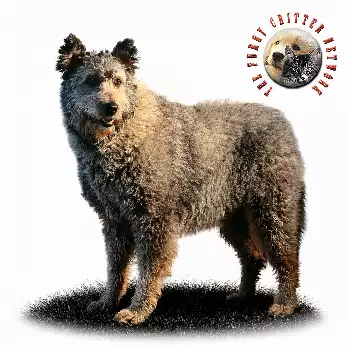

Growth & Physical Development

The Pumi's juvenile period, spanning roughly from three months to about twelve to fourteen months of age, is a time of rapid and sometimes uneven physical growth. During this phase, your Pumi will transition from a round, soft-coated puppy into a leggy, angular adolescent whose body seems to change week by week. Growth spurts are common, and you may notice periods where the legs seem disproportionately long relative to the body, lending the young Pumi an awkward but endearing appearance.

The Pumi's distinctive coat undergoes a significant transformation during adolescence. The soft puppy fur gradually gives way to the characteristic wavy to curly adult coat that forms the breed's hallmark corkscrew curls. This transition can create a somewhat scruffy or unkempt look as the two coat types coexist. Regular grooming during this period helps manage the changeover and prevents matting as the denser adult undercoat develops.

Most Pumis reach their adult height by around ten to twelve months, though they will continue to fill out and gain muscle mass for several months beyond that. Males typically stand 16 to 18.5 inches at the shoulder and weigh 27 to 33 pounds at maturity, while females are slightly smaller at 15 to 17.5 inches and 22 to 29 pounds. Track your puppy's growth against breed-standard expectations, but understand that individual variation is normal and healthy.

During this growth phase, protect developing joints and bones by avoiding high-impact activities such as prolonged running on hard surfaces, jumping from heights, or repetitive stair climbing. The growth plates in a young Pumi's long bones remain open and vulnerable to injury until they close, which typically occurs between twelve and eighteen months of age. Low-impact exercise on soft surfaces and controlled play sessions provide adequate physical stimulation without risking skeletal damage.

Nutrition & Diet Transition

Feeding a juvenile Pumi correctly is one of the most impactful things you can do to support healthy development. From weaning through approximately twelve months of age, the Pumi should be fed a high-quality puppy food formulated for medium-sized breeds. These formulas are designed to deliver the precise balance of protein, fat, calcium, and phosphorus needed for steady growth without the excess caloric density that can lead to overly rapid development and associated skeletal problems.

Feeding frequency should be adjusted as the puppy matures. From eight to twelve weeks, three to four meals per day is typical. By four to six months, most Pumis do well on three meals daily, and the transition to twice-daily feeding can usually occur around six to eight months. Consistent meal times help regulate digestion and establish a predictable bathroom schedule, which also supports housetraining efforts.

The transition from puppy food to adult food generally occurs around twelve months of age for the Pumi, though the exact timing depends on the individual dog's growth rate and body condition. Make the switch gradually over seven to ten days, mixing increasing proportions of adult food with decreasing amounts of puppy food to avoid gastrointestinal upset. Your veterinarian can help determine the optimal timing based on your dog's specific development.

Monitor your Pumi's body condition throughout adolescence by regularly checking that you can feel the ribs without pressing hard and that there is a visible waist when viewed from above. The Pumi is an active, athletic breed that should carry a lean body condition. Overfeeding during the growth period not only promotes excess weight but can accelerate skeletal growth in ways that increase the risk of developmental orthopedic conditions.

Behavioral Changes

Adolescence in the Pumi brings a wave of behavioral changes that can challenge even experienced dog owners. This breed is naturally spirited, independent-minded, and vocal, and all of these traits tend to amplify during the juvenile period. You may notice your previously compliant puppy suddenly testing boundaries, ignoring known commands, or developing new and creative ways to get into trouble. This is entirely normal and reflects the dog's growing cognitive complexity and desire for autonomy.

The Pumi's herding instincts often become more pronounced during adolescence. You may observe your young dog attempting to herd children, other pets, or even adults by nipping at heels, circling, or barking insistently. While these behaviors are hardwired and reflect the breed's working heritage, they need to be managed and redirected consistently. Ignoring herding behavior directed at people can lead to habits that become much more difficult to modify in adulthood.

Fear periods, during which a previously confident puppy suddenly becomes wary or reactive toward familiar objects, people, or situations, commonly occur during adolescence. The Pumi may experience one or more fear periods between approximately eight and fourteen months of age. Respond to these episodes with calm, patient reassurance rather than forcing the dog to confront the source of its anxiety. Flooding a Pumi with frightening stimuli during a fear period can create lasting behavioral damage.

The juvenile Pumi's vocal tendencies also tend to escalate during this stage. Pumis are naturally alert and expressive, and adolescent dogs may bark at anything they find novel, exciting, or suspicious. Establishing clear expectations around barking early in this period is essential. Reward quiet behavior generously and redirect excessive barking toward acceptable outlets, such as a specific alert bark that is acknowledged and then ended on cue.

Training Priorities

Training during the juvenile period is both critically important and uniquely challenging with a Pumi. This breed is exceptionally intelligent and learns quickly, but it also bores easily and can become stubborn if training is repetitive or heavy-handed. Short, varied, and engaging training sessions of ten to fifteen minutes work far better than long, monotonous drills. The Pumi thrives on novelty and will eagerly master new skills when the work feels like a game.

Reliable recall is arguably the single most important command to solidify during adolescence. The Pumi's natural curiosity and prey drive can override its judgment in open environments, and a dog that will not return when called is a safety risk. Practice recall in low-distraction settings first, gradually increasing the difficulty as the dog becomes more reliable. Use high-value rewards and enthusiastic praise to make coming when called the most rewarding thing the dog can do.

Leash manners deserve focused attention during this period as well. The adolescent Pumi is strong for its size and can develop persistent pulling habits if leash walking is not addressed early. Consistent reward-based training that reinforces a loose leash and penalizes pulling by stopping forward movement helps establish lifelong walking habits. The Pumi's intelligence makes it particularly responsive to training methods that are clear, fair, and logically consistent.

This is also an ideal time to introduce more advanced training activities that channel the Pumi's energy and intelligence. Agility foundations, herding instinct tests, trick training, and scent work all provide the mental stimulation this breed craves. A Pumi that is mentally engaged through structured training is far less likely to develop destructive or nuisance behaviors born out of boredom and excess energy.

Exercise & Activity

The juvenile Pumi is a bundle of seemingly inexhaustible energy, and meeting this breed's exercise needs is essential for both physical health and behavioral stability. However, exercise during the growth period must be carefully managed to protect developing joints and bones. The general guideline of five minutes of structured exercise per month of age, twice daily, provides a reasonable starting framework, though the Pumi's natural athleticism may tempt owners to do more.

Free play in a securely fenced yard or safe enclosed area is one of the best forms of exercise for a growing Pumi, as the dog can self-regulate its intensity and take breaks as needed. Interactive games such as fetch, tug, and hide-and-seek provide physical activity combined with the mental engagement this breed requires. Avoid repetitive high-impact activities like extended jogging, jumping exercises, or prolonged fetch sessions on hard surfaces until the growth plates have closed.

Mental exercise is just as important as physical activity for the adolescent Pumi. Puzzle toys, food-dispensing toys, training sessions, and scent games all tire the brain in ways that complement physical exercise. A Pumi that receives only physical exercise without mental stimulation will often remain restless and demanding, no matter how many miles it has walked. Balance is key, and many owners find that a combination of moderate physical activity and challenging mental work produces the calmest, most contented adolescent.

As the Pumi approaches physical maturity around twelve to fourteen months, exercise intensity can gradually increase. This is a good time to begin more structured activities like agility training, hiking on varied terrain, or organized herding work if available. Always watch for signs of fatigue or discomfort, including limping, reluctance to continue, or lagging behind, and adjust the intensity accordingly.

Spay/Neuter Considerations

The decision of when to spay or neuter a Pumi is an important one that should be made in consultation with your veterinarian, taking into account the individual dog's health, lifestyle, and development. Current veterinary research suggests that allowing medium-sized breeds like the Pumi to reach skeletal maturity before altering may offer benefits for joint health and overall physical development. For many Pumis, this means waiting until at least twelve months of age, though recommendations continue to evolve.

Early spaying or neutering, performed before six months of age, has been associated in some studies with increased risks of certain orthopedic conditions and some cancers in medium and larger breeds. However, delaying the procedure also carries considerations, including the management of heat cycles in females and the behavioral effects of intact hormones in both sexes. Intact adolescent males may develop marking behaviors, roaming tendencies, and increased reactivity toward other male dogs.

If you choose to delay altering, responsible management is essential. Intact females should be kept securely confined during heat cycles to prevent accidental breeding, and intact males should be reliably controlled in the presence of females in season. The Pumi's intelligence and agility make it particularly adept at escaping enclosures when motivated by reproductive instincts, so extra vigilance is warranted.

Discuss the specific risks and benefits with your veterinarian, who can assess your individual Pumi's growth trajectory, health status, and living situation to help you make the most informed decision. Regardless of timing, spaying or neutering is a routine surgical procedure with a high safety profile, and the vast majority of dogs recover quickly and completely with appropriate postoperative care.

Socialization & Exposure

Continued socialization during the juvenile period is absolutely critical for the Pumi, a breed whose natural alertness and sensitivity can tip toward wariness or reactivity if early social experiences are insufficient. The primary socialization window begins to close around fourteen to sixteen weeks of age, but this does not mean socialization efforts should stop. Adolescent socialization reinforces and expands upon the foundation laid during the puppy period, ensuring the Pumi grows into a confident and adaptable adult.

Expose your juvenile Pumi to a wide variety of people, including men, women, children of various ages, people wearing hats, uniforms, or carrying unusual objects, and people of different ethnic backgrounds. Each new encounter should be positive and pressure-free. The Pumi should be allowed to approach new people at its own pace, and strangers should be coached to offer a calm, sideways posture rather than looming over the dog or reaching directly for its head.

Introductions to other dogs should be carefully managed during adolescence. The Pumi can be selective about its canine companions and may become reactive or defensive if overwhelmed by overly boisterous dogs. Controlled, one-on-one introductions with known, well-mannered dogs are far more productive than chaotic dog park environments, which can actually worsen social skills in a sensitive breed. Positive canine interactions build confidence, while negative ones can create lasting apprehension.

Environmental socialization is equally important. Expose your Pumi to urban environments, rural settings, different types of flooring and surfaces, elevators, car rides, veterinary clinics, and grooming situations. The more varied and positive these experiences are during adolescence, the more adaptable and resilient the adult dog will be. The Pumi's working heritage means it was bred to function in a variety of environments, and proper socialization unlocks that innate versatility.

Always consult a qualified professional before making any health-related decisions. This content is provided for informational reference only and should not replace professional guidance specific to your animal.