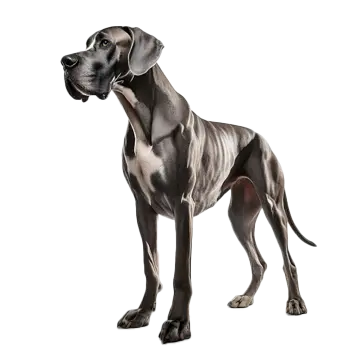

Growth & Physical Development

Few breeds grow as dramatically as the Great Dane during the juvenile and adolescent period. Between three and eighteen months of age, a Great Dane puppy can gain five to ten pounds per week during peak growth spurts, transforming from a compact puppy into a towering adolescent that may weigh over a hundred pounds before its first birthday. This extraordinary rate of growth places enormous demands on the skeletal system, joints, and developing musculature, making this phase one of the most consequential in the dog's entire life.

The growth plates in a Great Dane's long bones remain open much longer than in smaller breeds, typically not closing until eighteen to twenty-four months of age. During this extended period of skeletal development, the bones are particularly vulnerable to injury and to the effects of improper nutrition. Excessive weight gain, over-supplementation with calcium, or too-vigorous exercise on hard surfaces can contribute to developmental orthopedic conditions such as hypertrophic osteodystrophy, panosteitis, and osteochondritis dissecans.

Owners should monitor growth carefully without becoming fixated on achieving maximum size. A lean, steady growth trajectory is far healthier for a Great Dane than rapid bulking. The ribs should be easily felt under a thin layer of muscle and tissue, and the waist should be visible when viewed from above. Growth charts specific to giant breeds can provide useful benchmarks, but individual variation is normal and expected.

Regular veterinary checkups during this period should include assessments of bone and joint development. Your veterinarian may recommend radiographs at key intervals to evaluate growth plate status and screen for early signs of hip dysplasia or other structural concerns. Catching these issues while the dog is still growing allows for the greatest range of intervention options.

Nutrition & Diet Transition

Feeding a growing Great Dane correctly is one of the most important and most commonly misunderstood aspects of giant-breed puppy care. The goal is controlled, steady growth rather than maximum growth. Diets formulated specifically for large or giant breed puppies are essential because they contain carefully calibrated ratios of calcium, phosphorus, and calories designed to support skeletal development without accelerating it beyond what the bones can safely handle.

Free feeding, where food is available at all times, should be avoided entirely with Great Dane puppies. Instead, meals should be measured and offered at set times, typically three meals per day from weaning through about six months, then transitioning to two meals per day for the remainder of the dog's life. Portion sizes should be adjusted based on body condition rather than the feeding guidelines on the bag, which are often too generous for giant breeds and can promote excessive weight gain.

Calcium supplementation is one of the most dangerous mistakes an owner can make with a growing Great Dane. Unlike small breeds, which can tolerate a wider range of dietary calcium, giant breed puppies are highly sensitive to calcium excess. Too much calcium interferes with normal cartilage and bone remodeling and is a documented risk factor for several developmental orthopedic diseases. If you are feeding a complete and balanced large-breed puppy food, additional calcium supplements are not only unnecessary but potentially harmful.

The transition from puppy food to adult food typically occurs between twelve and eighteen months for Great Danes, depending on the individual dog's growth rate and the veterinarian's assessment. This switch should be made gradually over a period of seven to ten days, mixing increasing proportions of adult food with decreasing proportions of puppy food. An abrupt dietary change can cause gastrointestinal upset, which in a giant breed can escalate to more serious conditions.

Behavioral Changes

Adolescence in a Great Dane brings a familiar cocktail of behavioral challenges, amplified by the breed's enormous size. Between six and eighteen months, owners can expect periods of increased independence, selective hearing when it comes to commands that were previously reliable, and a noticeable increase in energy and exuberance. A sixty-pound adolescent Great Dane that jumps on guests is a nuisance; at a hundred and thirty pounds, the same behavior becomes genuinely dangerous.

Fear periods are a normal part of canine adolescent development and can be particularly pronounced in Great Danes. A puppy that was previously confident may suddenly become wary of objects, sounds, or situations that never bothered it before. These fear periods typically occur around eight to eleven weeks and again between six and fourteen months. The appropriate response is calm, patient exposure without forcing the dog to confront whatever is causing the anxiety. Flooding a fearful Great Dane with the source of its fear can create lasting behavioral problems.

Resource guarding, counter surfing, and destructive chewing often peak during adolescence. Great Danes are tall enough to reach kitchen counters and dining tables with ease, which means food management and environmental control become essential household practices. Providing appropriate chew toys rated for powerful jaws and redirecting undesirable behavior toward acceptable alternatives is far more effective than punishment-based approaches.

Despite the challenges, adolescence is also the period when a Great Dane's characteristic gentle temperament begins to emerge. The breed's natural affinity for human companionship deepens, and many adolescent Great Danes become remarkably intuitive about their owners' emotions. Building a strong bond through consistent, positive interactions during this stage pays dividends for the lifetime of the relationship.

Training Priorities

Training is not optional for a Great Dane. The sheer size and strength of the adult dog make early, consistent training an absolute necessity for the safety of the dog, its owners, and everyone who will interact with it. Foundational obedience commands including sit, stay, come, down, and leave it should be established during the juvenile period and reinforced daily through adolescence. A recall command that works reliably is particularly critical, since a loose Great Dane that will not come when called is extremely difficult to physically control.

Leash manners deserve special emphasis. A full-grown Great Dane that pulls on the leash can easily overpower most adults, so teaching loose-leash walking should begin as soon as the puppy starts outdoor excursions. Front-clip harnesses and head halters can serve as management tools during training, but the long-term goal is a dog that walks politely on a standard collar and leash because it has learned that pulling does not lead to forward progress.

Great Danes respond best to positive reinforcement training methods. The breed is sensitive to harsh corrections, and punitive techniques can damage the dog's confidence and erode the trust between dog and owner. Short, upbeat training sessions of ten to fifteen minutes several times per day are more effective than long, repetitive drills. Consistency among all family members in enforcing rules and using the same commands is essential to prevent confusion.

Socialization continues to be a training priority throughout the juvenile period. Great Danes should be exposed to a wide variety of people, animals, environments, and situations in a positive, controlled manner. Puppy classes, supervised play dates with well-mannered dogs, visits to pet-friendly stores, and calm exposure to urban environments all contribute to producing an adult Great Dane that is confident and well-mannered in diverse settings.

Exercise & Activity

Managing exercise during the Great Dane's growth period requires a careful balance between providing enough activity for mental and physical health while protecting developing bones and joints from damage. The old guideline of five minutes of structured exercise per month of age, twice per day, provides a reasonable starting framework, though individual variation and veterinary guidance should always take precedence over general rules.

High-impact activities should be strictly limited until the growth plates have closed, which in Great Danes does not occur until approximately eighteen to twenty-four months. This means no jogging or running alongside a bicycle, no repetitive jumping or agility courses, and no extended hikes on rough terrain. Free play in a safely fenced yard where the puppy can set its own pace and rest when tired is one of the safest forms of exercise during this period.

Swimming is an excellent low-impact exercise option for Great Dane adolescents, as it builds muscle and cardiovascular fitness without placing stress on the joints. Not all Great Danes take to water naturally, so introduction should be gradual and always supervised. A properly fitted canine life vest is recommended, especially during the learning phase, as the breed's deep chest and relatively lean build do not make them natural swimmers.

Mental exercise is just as important as physical activity and carries none of the orthopedic risks. Puzzle feeders, scent work games, short training sessions, and interactive toys all provide cognitive stimulation that helps tire an energetic adolescent Great Dane without subjecting growing bones to excessive stress. A mentally stimulated Great Dane is far less likely to develop destructive behaviors born from boredom.

Spay/Neuter Considerations

The timing of spaying or neutering a Great Dane is a decision that should be made in close consultation with your veterinarian, as recent research has significantly shifted recommendations for giant breeds. Studies have shown that early gonadectomy, performed before the growth plates close, can increase the risk of certain orthopedic conditions including cranial cruciate ligament tears and hip dysplasia. The sex hormones play an important role in signaling growth plate closure, and their premature removal can result in altered bone growth and joint angles.

For male Great Danes, many veterinarians and breed specialists now recommend waiting until at least eighteen to twenty-four months of age before neutering, allowing the dog to reach skeletal maturity. For females, the decision is more nuanced because the protective effects of spaying against mammary cancer and pyometra must be weighed against the orthopedic benefits of delayed surgery. Some veterinarians recommend spaying after the first heat cycle but before the second, while others suggest waiting for full maturity.

Owners who choose to delay spaying or neutering must be prepared for the management responsibilities that come with keeping an intact dog. For males, this includes potential marking behavior, increased interest in roaming, and same-sex aggression. For females, this means managing heat cycles, which occur approximately every six to eight months and involve both behavioral changes and the practical challenges of managing discharge. Intact dogs of either sex should never be left unsupervised with intact dogs of the opposite sex unless a breeding is intentional and planned.

Regardless of the timing chosen, the procedure itself is routine but carries slightly elevated anesthetic considerations for giant breeds. Great Danes are more sensitive to certain anesthetic protocols than smaller dogs, and their deep-chested conformation increases the risk of complications. Choosing a veterinary practice experienced with giant breeds for this procedure is a worthwhile precaution.

Socialization & Exposure

The socialization window that opened during the neonatal period narrows as a Great Dane matures, but the work of exposing the dog to new experiences should continue well into adolescence and beyond. A Great Dane that has been thoroughly socialized is a pleasure to live with and a joy to take into public spaces. One that has not been adequately exposed to the world can become fearful or reactive, and a fearful dog of this size poses significant management challenges.

Structured socialization during the juvenile period should include exposure to people of all ages, appearances, and demeanors. Children, elderly individuals, people wearing hats or uniforms, people using wheelchairs or walkers, and people of varying ethnicities should all be part of the dog's positive social experiences. Each encounter should be kept positive, with the dog receiving treats and praise for calm, confident behavior. Forcing a reluctant puppy to interact with someone it finds intimidating is counterproductive and can create lasting negative associations.

Exposure to other animals should be managed with equal care. Great Dane puppies that learn appropriate play behavior with dogs of various sizes during this period are less likely to develop dog-aggression as adults. However, play sessions should always be supervised, and mismatches in size and energy level should be avoided. A boisterous Great Dane adolescent can inadvertently injure a much smaller playmate, and a negative encounter with an aggressive dog can have lasting behavioral consequences for a sensitive breed like the Great Dane.

Environmental socialization is often overlooked but is equally important. Great Danes should experience a range of surfaces including grass, gravel, tile, metal grates, and wet pavement. They should hear traffic, construction noise, thunderstorms, vacuum cleaners, and crowds. They should ride in cars, visit veterinary offices for positive non-treatment visits, and walk through busy commercial areas. Each new experience should be introduced at a pace the dog can handle comfortably, building confidence gradually rather than overwhelming the puppy all at once.

Always consult a qualified professional before making any health-related decisions. This content is provided for informational reference only and should not replace professional guidance specific to your animal.