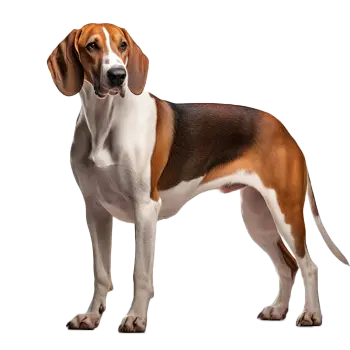

Growth & Physical Development

The American Foxhound's juvenile period is marked by rapid and often dramatic physical growth. Between eight weeks and six months of age, puppies undergo significant skeletal development, gaining height and length at a pace that can seem almost daily. This breed matures into a tall, lean hound, and the gangly, leggy appearance of an adolescent Foxhound is a normal part of the journey. Owners should expect their puppy to look somewhat disproportionate during this stage, with legs that seem too long for the body and paws that hint at the adult size to come.

Growth plates in the long bones remain open throughout the juvenile period and typically do not close until the dog is between twelve and eighteen months of age. During this time, excessive high-impact exercise such as jumping from heights, prolonged running on hard surfaces, or forced endurance work can damage these vulnerable growth plates and lead to lasting orthopedic problems. Activity should be encouraged but kept age-appropriate, favoring free play on soft surfaces over structured, repetitive exercise.

Weight monitoring is an important tool during this phase. American Foxhound puppies should gain weight steadily without becoming overweight, as excess body condition places additional stress on developing joints and bones. A veterinarian can help establish a target weight range based on the puppy's frame and parentage. The ribs should be easily felt beneath a thin layer of tissue, and there should be a visible waist when viewed from above.

By around twelve months, most American Foxhounds have reached close to their adult height, though they will continue to fill out in terms of muscle and chest depth for several more months. Males tend to be slightly larger than females, but both sexes share the breed's characteristic athletic, streamlined build. Full physical maturity is typically reached between eighteen months and two years of age.

Nutrition & Diet Transition

Proper nutrition during the juvenile phase fuels the American Foxhound's substantial growth and supports healthy development of bones, muscles, and organs. A high-quality puppy food formulated for large-breed dogs is the best foundation. Large-breed puppy formulas are specifically designed to provide controlled levels of calcium and phosphorus, which helps promote steady, even bone growth and reduces the risk of developmental orthopedic conditions that can affect larger breeds.

Feeding schedules should be structured rather than free-choice during this period. Most breeders and veterinarians recommend three meals per day from eight weeks through about six months of age, transitioning to two meals per day thereafter. Measured portions prevent overeating, which is important because American Foxhounds are enthusiastic eaters with a tendency to consume food quickly. Slow-feeder bowls can help manage the pace of eating and reduce the risk of gastrointestinal discomfort.

The transition from puppy food to adult food should be gradual and typically occurs between twelve and eighteen months of age, depending on the individual dog's growth trajectory and the veterinarian's recommendation. The switch is made over seven to ten days by progressively increasing the ratio of adult food to puppy food. Abrupt dietary changes can cause digestive upset, so patience during this transition is essential.

Treats play a role in training but should be accounted for within the dog's overall caloric intake. Training treats should be small and low-calorie, and they should never constitute more than ten percent of the daily diet. Table scraps and human food should be avoided entirely, as they can create picky eating habits and contribute to nutritional imbalances during a period when balanced nutrition matters most.

Behavioral Changes

Adolescence in the American Foxhound brings a distinctive set of behavioral shifts that can challenge even experienced dog owners. This breed was developed to work in packs and follow scent trails for hours, and those deep-seated instincts begin to express themselves strongly during the juvenile months. Owners may notice their formerly attentive puppy becoming increasingly distracted by scents, sounds, and the desire to explore beyond the boundaries of the yard or the length of the leash.

Independence is a hallmark of the breed, and it intensifies during adolescence. An American Foxhound that reliably responded to recall at four months may suddenly develop selective hearing at seven or eight months. This is not defiance in the traditional sense but rather the emergence of the breed's genetically ingrained tendency to prioritize scent-driven investigation over human direction. Understanding this distinction is key to managing the behavior without damaging the bond between dog and owner.

Vocalization also tends to increase during this stage. American Foxhounds are a vocal breed, and adolescents may begin baying, howling, or barking with greater frequency and volume. This is a natural behavior rooted in the breed's hunting heritage, where vocalizing during a chase served an essential functional purpose. While this trait cannot be entirely eliminated, it can be managed through training, environmental enrichment, and ensuring the dog receives adequate physical and mental stimulation.

Some adolescent Foxhounds may also test boundaries within the household hierarchy, particularly in multi-dog homes. Mild resource guarding, posturing, or attempts to assert themselves over other pets can emerge during this period. Consistent leadership, clear rules, and positive reinforcement help channel these behaviors productively. Owners who respond with patience and structure rather than punishment will find that most adolescent challenges resolve as the dog matures.

Training Priorities

Training an adolescent American Foxhound requires a thoughtful approach that accounts for the breed's intelligence, independence, and powerful scent drive. Traditional obedience methods that rely heavily on repetition and strict compliance often fall flat with this breed, as Foxhounds are thinkers who quickly lose interest in activities they find monotonous. Short, varied training sessions that incorporate games, scent work, and high-value rewards tend to produce far better results than long, repetitive drills.

Recall training is arguably the most critical skill to develop during this period, and it is also the most challenging for the breed. An American Foxhound that catches an interesting scent may be physically incapable of disengaging from it without extensive training and conditioning. Recall should be practiced in low-distraction environments first and gradually proofed against increasing levels of temptation. A long line provides a safety net during outdoor practice and prevents the dog from self-rewarding by running off.

Leash manners deserve significant attention, as American Foxhounds are strong dogs that grow rapidly. An untrained adolescent can easily pull an adult human off balance. Positive-pressure techniques, direction changes, and rewarding the dog for maintaining a loose leash help establish good habits before the dog reaches full size and strength. Harsh leash corrections are counterproductive and can damage the trust-based relationship that effective Foxhound training depends upon.

Crate training, if not already established, should be reinforced during adolescence. A crate provides a safe space for the dog and a management tool for the owner during periods when supervision is not possible. American Foxhounds that are left unsupervised with access to a yard may discover a talent for fence jumping or digging, making the crate an important part of a broader management strategy. The crate should always be associated with positive experiences and never used as punishment.

Exercise & Activity

American Foxhounds are a high-energy breed with substantial exercise requirements that become increasingly apparent during adolescence. A young Foxhound that does not receive adequate physical outlet will almost certainly find ways to burn energy on its own, and those alternatives—chewing, digging, excessive barking, or escape attempts—are rarely ones that owners appreciate. Providing sufficient daily exercise is one of the most effective strategies for managing adolescent behavior.

Appropriate exercise for a juvenile Foxhound should be varied and engaging. Long walks in areas with interesting scents provide excellent mental and physical stimulation. Hiking on natural trails, where the dog can experience a rich variety of smells, is particularly well-suited to the breed. Off-leash exercise should only occur in securely fenced areas, as the breed's scent drive makes them unreliable off-leash in open environments, regardless of their training level.

While exercise is essential, it must be balanced against the needs of the developing body. Until the growth plates close, typically between twelve and eighteen months, sustained high-impact activities should be limited. Swimming is an excellent low-impact alternative that provides vigorous exercise without stressing the joints. Free play with compatible dogs also allows the young Foxhound to self-regulate its activity level in a way that structured exercise does not.

Mental exercise is an often-overlooked component of the Foxhound's needs. Scent games, puzzle feeders, and nose-work activities tap into the breed's natural abilities and provide a satisfying cognitive workout. Hiding treats around the yard or house and encouraging the dog to find them is a simple activity that can occupy a Foxhound for extended periods. These activities are especially valuable on days when weather or other circumstances limit outdoor physical exercise.

Spay/Neuter Considerations

The decision of when to spay or neuter an American Foxhound is a topic that has evolved considerably in veterinary medicine over the past decade. Current research suggests that for large-breed dogs, delaying the procedure until the dog has reached skeletal maturity—typically between twelve and eighteen months—may offer orthopedic and health benefits. Early spaying or neutering before the growth plates close has been associated in some studies with an increased risk of certain joint disorders, though the evidence continues to be refined.

Owners should discuss the timing of the procedure with their veterinarian, taking into account the individual dog's health, lifestyle, and living situation. For dogs in multi-pet households or those with access to unfixed dogs of the opposite sex, earlier intervention may be warranted to prevent unplanned breeding. For dogs in controlled environments where accidental breeding is not a concern, waiting until the dog is more physically mature may be the preferred approach.

Behavioral expectations around spaying and neutering should be realistic. While the procedure can reduce certain hormone-driven behaviors such as roaming, urine marking, and some forms of inter-dog aggression, it is not a substitute for training. An American Foxhound that bays at passing wildlife or pulls on the leash will continue to do so after the procedure, as these behaviors are rooted in breed instinct rather than reproductive hormones.

Post-surgical recovery typically involves ten to fourteen days of restricted activity, which can be particularly challenging with an energetic adolescent Foxhound. Planning the surgery during a period when the owner can provide close supervision and enforced rest is advisable. An appropriately sized recovery suit or cone prevents the dog from interfering with the surgical site, and short, calm leash walks for bathroom breaks replace the dog's usual vigorous exercise during the healing period.

Socialization & Exposure

The socialization window that began during the neonatal period continues to be critically important throughout the American Foxhound's juvenile months. While the most sensitive period for socialization is generally considered to close around fourteen to sixteen weeks of age, ongoing positive exposure to new people, places, animals, and experiences remains essential for developing a well-adjusted adult dog. An American Foxhound that is inadequately socialized may become fearful, reactive, or difficult to manage in everyday situations.

Exposure to a wide variety of environments helps build the adolescent Foxhound's confidence and resilience. Trips to pet-friendly stores, walks in busy neighborhoods, visits to friends' homes, and experiences with different surfaces, sounds, and visual stimuli all contribute to the dog's social education. Each new experience should be introduced at a pace the dog is comfortable with, and the dog should never be forced into a situation that causes obvious fear or distress.

Interaction with other dogs is particularly important for this pack-oriented breed. Well-managed puppy socialization classes, supervised playgroups with known healthy dogs, and exposure to dogs of different sizes, ages, and temperaments help the young Foxhound learn appropriate canine social skills. American Foxhounds generally get along well with other dogs, but positive early experiences reinforce this natural tendency and help prevent the development of reactivity or social anxiety.

Exposure to children, elderly individuals, people wearing hats or uniforms, and people of varying physical appearances helps ensure the Foxhound grows into a confident, friendly adult. The breed's naturally easygoing temperament is a strong foundation, but it is best supported by deliberate, ongoing socialization efforts. Owners who invest time in this area during the juvenile months are rewarded with a dog that moves through the world with calm assurance and adaptability.

Always consult a qualified professional before making any health-related decisions. This content is provided for informational reference only and should not replace professional guidance specific to your animal.