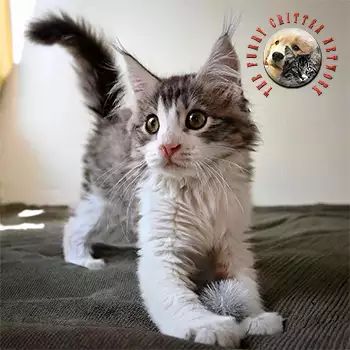

Growth & Physical Development

The Cymric enters the juvenile phase at roughly two to three months of age and continues developing through its first year, though this breed can take up to five years to reach full physical maturity. During the juvenile months, the kitten's body transforms from a round, compact ball of fluff into a more defined version of the sturdy, cobby adult form. Weight gain should be steady and proportional, with most Cymrics reaching roughly half their adult weight by six months.

The breed's signature taillessness comes in several varieties, from the completely tailless rumpy to the stumpy with a short tail remnant to the longy with a near-normal tail. By the juvenile stage, the tail type is well established, and any spinal concerns related to the Manx gene should already have been identified during neonatal veterinary exams. However, continue to monitor rear-end mobility and gait as the skeleton matures, since some subtle spinal issues may become more apparent as the kitten grows larger and more active.

The semi-long double coat of the Cymric begins to fill in during this period. Juvenile Cymrics often go through an awkward coat phase where the fur appears uneven or patchy as the adult undercoat develops. This is normal and resolves as the cat matures. Regular brushing during this stage helps prevent matting and accustoms the kitten to grooming routines.

Muscle development in the hindquarters is particularly important for this breed. Cymrics are known for their powerful rear legs and rabbit-like hopping gait. Encourage active play that engages the hind legs, such as chasing toys uphill on cat trees or jumping for feather wands, to support proper muscular development.

Nutrition & Diet Transition

By two months of age, the Cymric kitten should be fully weaned and eating a high-quality kitten food formulated for growth. Look for a diet that lists a named animal protein as the first ingredient and meets the nutritional profiles established for growth by recognized feeding standards. The caloric demands of a growing kitten are significantly higher per pound of body weight than those of an adult cat, so do not restrict food during this phase unless directed by a veterinarian.

Free feeding, where dry kitten food is available throughout the day, works well for most juvenile cats and ensures they can eat small meals on their own schedule. Supplement with wet food at least once or twice daily to increase moisture intake and provide variety in texture. Cymrics can be prone to weight gain later in life, but during the juvenile stage the priority is supporting robust growth rather than calorie control.

The transition from kitten food to adult food should not happen until the Cymric is at least twelve months old, and some breeders recommend continuing kitten food until eighteen months for this slow-maturing breed. When the time comes, make the switch gradually over seven to ten days, mixing increasing proportions of adult food into the kitten formula to avoid digestive upset.

Fresh water should be available at all times. Many cats prefer running water, so a pet fountain can encourage adequate hydration. Avoid feeding raw diets without veterinary supervision, and never offer cooked bones, onions, garlic, chocolate, or other foods known to be toxic to cats.

Behavioral Changes

The juvenile Cymric is a bundle of energy and curiosity. This phase is characterized by bursts of intense activity followed by deep sleep, a pattern that reflects the developing nervous system and the kitten's growing need to explore and understand its world. Expect zoomies, ambush attacks on unsuspecting feet, and an insatiable interest in anything that moves or rustles.

Cymrics are intelligent and often described as dog-like in their attachment to their families. During adolescence, this trait manifests as a desire to follow you from room to room, participate in whatever you are doing, and vocalize when they feel left out. Some Cymrics develop a fondness for fetching small toys, a behavior that is surprisingly common in this breed and can be encouraged through positive reinforcement.

Territory marking behavior may emerge as the kitten approaches sexual maturity, typically between five and nine months of age. Unneutered males are especially likely to begin spraying, but females can also exhibit marking behavior. This is one of the clearest signals that it is time to discuss spaying or neutering with your veterinarian if you have not already done so.

Adolescent Cymrics may also test boundaries by scratching furniture, counter surfing, or knocking objects off shelves. Redirect these behaviors rather than punishing them. Provide ample scratching posts, elevated perches, and interactive toys. The Cymric responds well to positive reinforcement and is generally eager to earn approval, making this a rewarding breed to guide through the sometimes challenging adolescent period.

Training Priorities

The juvenile period is the ideal time to establish household rules and routines that will carry through adulthood. Cymrics are among the more trainable cat breeds, responding well to clicker training and treat-based rewards. Start with litter box reliability, which should already be established by the time the kitten reaches eight weeks, and build from there.

Teach the kitten to accept handling calmly. This includes touching paws for future claw trimming, opening the mouth for dental inspection, and being held in various positions. Practice these exercises daily in short, positive sessions, always ending with a treat or play reward. A kitten that learns to tolerate handling gracefully will be far easier to care for as an adult, especially during veterinary visits.

Name recognition and a reliable recall can be taught through repetition and positive association. Say the kitten's name before offering food or a favorite toy. Over time, the Cymric will learn to orient toward you when called. This skill has practical safety applications, particularly if the cat ever gains access to the outdoors accidentally.

Discourage biting and scratching during play from the very beginning. If the kitten uses teeth or claws on your skin, immediately stop the interaction, withdraw your hand, and redirect attention to an appropriate toy. Cymrics that learn bite inhibition as juveniles are far less likely to use their teeth inappropriately as adults. Consistency among all household members is essential; if one person allows rough play, the kitten will generalize that behavior.

Exercise & Activity

Juvenile Cymrics need ample physical activity to support healthy growth, burn off excess energy, and prevent boredom-driven behavioral problems. Aim for at least two dedicated interactive play sessions per day, each lasting fifteen to twenty minutes. Feather wands, laser pointers followed by a tangible catch toy, crinkle balls, and puzzle feeders are all effective options.

Cat trees and vertical spaces are especially important for this breed. Cymrics are agile climbers despite their stocky build, and they enjoy surveying their territory from elevated perches. A tall cat tree placed near a window provides both exercise and mental stimulation as the kitten watches outdoor activity. Shelving systems that create elevated pathways around a room can supplement or replace traditional cat trees.

The Cymric's powerful hind legs make them excellent jumpers. Provide opportunities for jumping by placing treats or toys at varying heights. This not only exercises the muscles but also builds confidence and coordination. However, avoid encouraging jumps from excessive heights, particularly during the first year while bones and joints are still developing.

Solo play is also important. Rotate a selection of toys to maintain novelty, and consider automated toys that move unpredictably to engage the kitten's hunting instincts when you are not available for interactive sessions. Puzzle feeders that dispense kibble as the kitten manipulates them combine physical activity with mental challenge and slow down fast eaters.

Spay/Neuter Considerations

Most veterinarians recommend spaying or neutering Cymric kittens between four and six months of age, before the onset of sexual maturity. Early spaying eliminates the risk of uterine infections and significantly reduces the likelihood of mammary tumors. Early neutering prevents spraying, roaming behavior, and inter-cat aggression driven by hormones.

The Cymric's unique genetics add a layer of consideration to the spay/neuter discussion. Because the Manx taillessness gene is a dominant mutation that can cause lethal birth defects when two copies are inherited, responsible breeding requires careful genetic pairing. If your Cymric is not part of a managed breeding program with an experienced breeder, spaying or neutering is strongly recommended to prevent accidental litters that could produce kittens with severe Manx syndrome.

The procedure itself is routine and low risk for a healthy juvenile cat. Recovery is typically quick, with most kittens returning to normal activity within a few days. Your veterinarian may recommend a brief period of restricted activity and will provide instructions for monitoring the incision site. An Elizabethan collar or surgical suit may be needed to prevent the kitten from licking or chewing at the sutures.

After spaying or neutering, metabolic rate decreases slightly, which means caloric needs drop as well. Discuss an appropriate feeding plan with your veterinarian to prevent the gradual weight gain that can follow the procedure. Monitoring body condition score and adjusting food intake accordingly is the most effective approach.

Socialization & Exposure

Although the most sensitive socialization window closes around nine weeks of age, the juvenile period remains critically important for broadening a Cymric kitten's comfort zone. Continued exposure to a variety of people, including visitors of different ages and appearances, helps solidify the confident, sociable temperament for which this breed is known.

Introduce the kitten to other household pets gradually and under supervision. Cymrics generally coexist well with other cats and with cat-friendly dogs, but introductions should proceed at the animals' pace. Use scent swapping, visual barriers, and short supervised meetings before allowing unsupervised access. A rushed introduction can create lasting tension between animals.

Carrier training is an often-overlooked aspect of socialization that pays enormous dividends over the cat's lifetime. Leave the carrier open in the home with a comfortable bed and occasional treats inside so the kitten views it as a safe space rather than a predictor of stressful veterinary visits. Practice short car rides to neutral destinations to reduce travel anxiety.

Expose the kitten to routine household activities such as vacuuming, laundry, cooking sounds, and visitors at the door. The goal is a cat that takes the normal bustle of daily life in stride. Cymrics that are well socialized during the juvenile months typically develop into calm, adaptable adults that handle change with minimal stress.

If you plan to harness-train your Cymric for supervised outdoor walks, the juvenile period is the best time to begin. Start with wearing the harness indoors for short intervals, rewarding the kitten for calm acceptance, before attaching a leash. Move to a quiet outdoor area only after the kitten is comfortable and responsive to leash pressure.

Always consult a qualified professional before making any health-related decisions. This content is provided for informational reference only and should not replace professional guidance specific to your animal.