
Peak Health Maintenance

A Sulphur-crested Cockatoo reaches full physical maturity between three and five years of age, entering a prime period that can span several decades with proper care. During these adult years, the bird is at its strongest, most active, and most resilient. Maintaining peak health requires a proactive approach that combines excellent nutrition, regular veterinary oversight, abundant physical and mental stimulation, and a stable, enriching home environment.

Annual wellness examinations with a qualified avian veterinarian form the cornerstone of preventive health care for an adult cockatoo. These visits should include a thorough physical examination, body weight assessment, and baseline blood work including a complete blood count and biochemistry panel. Establishing normal reference ranges for your individual bird allows the veterinarian to detect subtle changes early, often before clinical symptoms become apparent. Additional diagnostics such as radiographs or specialized testing may be recommended based on the bird's history and examination findings.

Daily observation by the owner is equally important. Because birds instinctively mask illness as a survival strategy, changes in behavior, appetite, vocalization patterns, and droppings can be the earliest indicators that something is amiss. An adult cockatoo that suddenly becomes quieter than usual, loses interest in food or play, changes its sleeping habits, or produces abnormal droppings should be evaluated by a veterinarian promptly. Keeping a log of daily weight, food consumption, and behavioral notes helps establish what is normal for your specific bird.

Environmental factors play a significant role in maintaining adult cockatoo health. Air quality is particularly important, as these birds have sensitive respiratory systems. Avoid exposing the bird to cigarette smoke, aerosol sprays, scented candles, non-stick cookware fumes, and other airborne irritants. Adequate ventilation, natural light exposure for vitamin D synthesis, and consistent day-night cycles that mimic natural photoperiods all contribute to sustained physical and psychological well-being.

Nutrition at Maturity

The nutritional needs of an adult Sulphur-crested Cockatoo are well established but require ongoing attention and management. A balanced pelleted diet should remain the foundation, comprising approximately 60–70 percent of the bird's total food intake. The remaining portion should consist of fresh vegetables, moderate amounts of fruit, and carefully controlled quantities of nuts and seeds. Adult cockatoos have a slower metabolism relative to juveniles and are particularly susceptible to weight gain if their diet is not appropriately managed.

Obesity is one of the most common and preventable health concerns in captive cockatoos. Excess body weight contributes to fatty liver disease, atherosclerosis, joint stress, and reduced overall vitality. Because cockatoos are enthusiastic eaters and can be persuasive in soliciting treats, it is essential to monitor body condition regularly. Your avian veterinarian can teach you how to assess the keel bone prominence and pectoral muscle mass to evaluate body condition between visits.

Dietary enrichment is just as important as nutritional content for an adult cockatoo. Meals should involve foraging effort whenever possible, rather than being presented in a simple open bowl. Foraging trays with hidden food items, puzzle feeders that require manipulation to access the contents, and whole foods that need to be peeled, cracked, or shredded provide mental stimulation and slow down food consumption. This approach mimics the wild foraging behavior that occupies a significant portion of a wild cockatoo's day and helps prevent the boredom-related behavioral issues that plague understimulated captive birds.

Fresh, clean water must be available at all times and changed at least twice daily. Cockatoos are notorious for dunking food in their water dishes, creating a bacterial breeding ground within hours. Some owners use water bottles or enclosed drinking systems to maintain cleaner water, though these should be checked regularly to ensure they are functioning properly and the bird knows how to use them.

Exercise & Enrichment

An adult Sulphur-crested Cockatoo requires a minimum of three to four hours of supervised out-of-cage time daily, and many thrive with significantly more. These are large, powerful birds with energy levels that demand substantial outlets. A cockatoo confined to its cage for the majority of the day, regardless of how spacious that cage may be, will almost inevitably develop behavioral and psychological problems including feather destruction, excessive screaming, stereotypic movements, and aggression.

The enrichment strategy for an adult cockatoo should address physical exercise, mental challenge, and emotional fulfillment. Physical exercise includes climbing, flapping, and interacting with play gyms and activity centers. Mental challenges are provided through foraging opportunities, puzzle toys, and training sessions that build on the foundation established during the juvenile period. Emotional fulfillment comes from quality social interaction with bonded companions, both human and, where appropriate, avian.

Toy rotation is essential to maintaining an adult cockatoo's interest in its enrichment items. Even the most engaging toy becomes predictable and boring after several days of continuous availability. Maintain a collection of toys and rotate them on a weekly basis, keeping several out of sight and reintroducing them as novel items. Destructible toys made from untreated wood, leather strips, palm fiber, and other shreddable materials are particularly important, as the act of destruction itself satisfies deep behavioral needs.

Training should continue throughout the adult years, not merely as a means of maintaining obedience but as a vital form of mental stimulation and relationship building. Adult cockatoos are highly capable learners that enjoy the challenge and social interaction of training sessions. Expand beyond basic commands into trick training, color and shape discrimination, and cooperative care behaviors such as willingly presenting feet for nail filing or opening the beak for examination. Every training session is an opportunity to strengthen the bond between bird and owner while exercising the cockatoo's remarkable intelligence.

Preventive Health Care

Beyond annual veterinary examinations, a comprehensive preventive health care program for an adult Sulphur-crested Cockatoo encompasses several interconnected components. Routine blood work should be performed annually to monitor organ function, lipid levels, calcium and vitamin levels, and overall metabolic health. Because cockatoos are prone to fatty liver disease and atherosclerosis, lipid panels are particularly valuable for early detection of cardiovascular and hepatic concerns.

Parasite screening is important for birds that have any exposure to outdoor environments, other birds, or fresh-picked vegetation. Internal parasites and external parasites such as feather mites or lice can cause irritation, feather damage, and more serious systemic illness if left untreated. Your avian veterinarian may recommend periodic fecal examinations and physical inspections to screen for these issues, with treatment protocols tailored to the specific parasites identified.

Dental health, while not involving teeth in the traditional mammalian sense, is relevant to cockatoos through beak health and oral condition. The beak should be symmetrical, smooth, and free of cracks, flaking, or overgrowth. An adult cockatoo with adequate chewing opportunities will generally self-maintain its beak, but nutritional imbalances, liver disease, or viral infections can cause beak abnormalities that require veterinary attention. The oral cavity should be free of plaques, abscesses, or abnormal growths.

Vaccination protocols for cockatoos are less standardized than those for dogs or cats, but polyomavirus vaccination may be recommended depending on your bird's risk profile and your veterinarian's assessment. Disease screening for Psittacine Beak and Feather Disease, Proventricular Dilatation Disease, chlamydiosis, and other conditions may be advised periodically, particularly if the bird has contact with other psittacines. Discuss an appropriate screening schedule with your avian veterinarian based on your bird's individual circumstances.

Behavioral Maturity

Full behavioral maturity in Sulphur-crested Cockatoos typically develops between three and six years of age, and with it comes both the deepening of the bird's personality and the potential intensification of certain challenging behaviors. The adult cockatoo has fully developed its social intelligence, communication skills, and emotional depth, making it one of the most rewarding and simultaneously demanding companion animals in existence.

Hormonal behavior becomes a significant consideration in adult cockatoos, particularly during breeding season, which is typically triggered by increasing daylight hours in spring. Hormonal surges can cause increased aggression, territorial behavior, excessive screaming, regurgitative feeding directed at favored humans or objects, and intensified bonding behavior. Managing hormonal triggers through environmental controls, including maintaining consistent light cycles of no more than ten to twelve hours of daylight, limiting access to enclosed dark spaces that mimic nest cavities, and avoiding petting the bird along the back and under the wings, can help moderate these seasonal changes.

The depth of emotional life in an adult Sulphur-crested Cockatoo cannot be overstated. These birds form profoundly intense bonds with their companions and experience emotions that are visible in their body language, vocalizations, and behavior. They can exhibit joy, frustration, jealousy, grief, and affection in ways that are unmistakable to those who know them. This emotional complexity is a central part of the cockatoo ownership experience and requires owners who are prepared to engage with the full spectrum of the bird's emotional needs.

Consistency in routine, environment, and social interaction is critically important for the behavioral stability of an adult cockatoo. These birds thrive on predictability and can become distressed by significant changes in their daily schedule, living arrangement, or social group. When changes are necessary, introduce them gradually and provide extra reassurance and positive interaction during transition periods. A behaviorally mature cockatoo that feels secure in its environment and relationships is far less likely to develop problematic behaviors than one experiencing chronic uncertainty or instability.

Feather & Skin Health

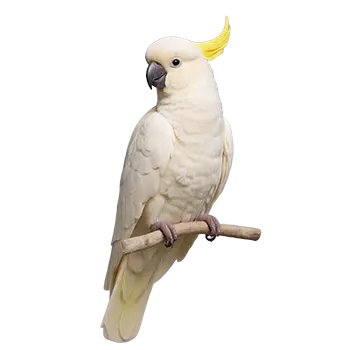
The brilliant white plumage and dramatic yellow crest of an adult Sulphur-crested Cockatoo are indicators of overall health and well-being. Healthy feathers are smooth, symmetrical, and bright white with clean yellow coloring on the crest and undertail coverts. The powder-down feathers produce a fine white dust that is a normal and healthy characteristic of the species, though it requires owners to manage air quality and cleaning in the home environment.

An adult cockatoo typically undergoes one to two major molts per year, during which old feathers are shed and replaced with new growth. Molting is a nutritionally demanding process, and birds may benefit from increased protein and vitamin supplementation during these periods as recommended by your avian veterinarian. The bird may be slightly less active and more irritable during heavy molts, as the sensation of multiple growing pin feathers can be uncomfortable. Gentle misting and bathing can help soothe the skin and ease the emergence of new feathers from their sheaths.

Feather destructive behavior remains the most significant plumage concern in captive Sulphur-crested Cockatoos and can manifest even in adult birds that previously had perfect feathering. The causes are complex and often multifactorial, including psychological stress, inadequate environmental enrichment, hormonal imbalances, dietary deficiencies, medical conditions, and disruptions to the bird's social structure. Any sudden onset of feather picking, plucking, or barbering in an adult bird warrants a thorough veterinary evaluation to rule out medical causes before behavioral interventions are pursued.

Skin health is closely linked to feather health and overall systemic condition. The skin beneath the feathers should be smooth, pinkish, and free of flaking, redness, or swelling. Dry skin can result from low environmental humidity, inadequate bathing opportunities, or nutritional deficiencies. Regular bathing, appropriate humidity levels in the bird's living area, and a nutritionally complete diet all contribute to maintaining the skin and plumage in excellent condition throughout the long adult years.

Always consult a qualified professional before making any health-related decisions. This content is provided for informational reference only and should not replace professional guidance specific to your animal.