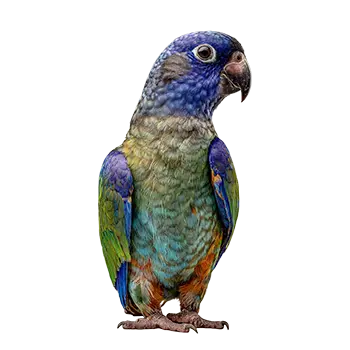

The Blue-Headed Pionus reaches full physical maturity between two and three years of age, entering a long prime that can span two decades or more with proper care. By this stage, the bird has acquired its full adult plumage, including the rich cerulean blue head feathering, the dark green body plumage with bronze and blue-green iridescence on the upper breast, and the distinctive red undertail coverts that flash during flight and displays. An adult in prime condition typically weighs between 220 and 280 grams, with individual variation influenced by sex, skeletal frame, and genetic background.
Assessing body condition in a Pionus requires hands-on evaluation, as the dense feathering conceals the body contour. Gently palpate the keel bone, which runs along the bird's breastbone. In a bird of ideal weight, the keel is palpable but flanked on both sides by firm pectoral muscle. A keel that protrudes sharply indicates underweight, while a keel that is difficult to locate beneath a thick layer of fat signals obesity, a condition to which Pionus parrots are particularly prone due to their relatively sedentary nature compared to more active species.
Maintaining prime condition requires a holistic approach that balances nutrition, exercise, mental stimulation, and preventive health care. The adult Blue-Headed Pionus is a creature of routine, and abrupt changes to its environment or schedule can produce stress-related health and behavioral consequences. Establishing and maintaining a consistent daily rhythm of waking, feeding, interaction, foraging, and sleep provides the predictable framework within which this species thrives.
The adult plumage undergoes an annual molt, typically triggered by seasonal changes in photoperiod and temperature. During molt, the bird replaces its feathers progressively over a period of several weeks to a few months. This process is energetically costly, and the bird may appear slightly less vibrant, eat more, or display mild irritability during heavy molt phases. Supporting the bird with optimal nutrition and reduced stress during this period promotes the growth of healthy, brilliantly colored replacement feathers.