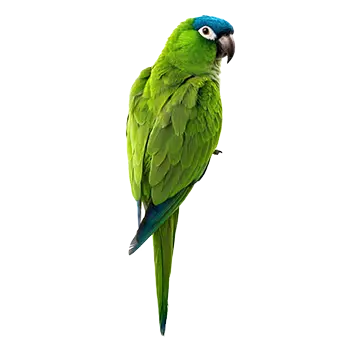

Breeding Readiness & Pair Selection

Successful Blue-Crowned Conure breeding begins long before the first egg is laid. Careful assessment of breeding readiness, thoughtful pair selection, and an understanding of the species' reproductive biology are prerequisites for producing healthy chicks and maintaining the well-being of the parent birds. Breeding should only be undertaken by individuals who have the knowledge, resources, and commitment to raise chicks responsibly and find appropriate homes for every bird produced.

Blue-Crowned Conures reach sexual maturity between two and three years of age, though physical maturity does not automatically indicate readiness for breeding. Both the hen and the cock should be in excellent physical condition, at a healthy weight, free of infectious disease, and showing no signs of nutritional deficiency or chronic illness. A pre-breeding veterinary examination is essential and should include a complete physical assessment, blood work to evaluate organ function and nutritional status, and screening for sexually transmitted avian pathogens including Chlamydia psittaci.

Because Blue-Crowned Conures are sexually monomorphic, meaning males and females are visually indistinguishable, DNA sexing is required to confirm the sex of each bird in the pair. Surgical sexing was once common but has been largely replaced by DNA testing, which can be performed from a blood sample or a freshly plucked feather. Confirm the sex of both birds before investing time and resources in conditioning, as same-sex pairs will bond and display courtship behaviors but will not produce fertile eggs.

Pair compatibility is not guaranteed even when both birds are healthy and of opposite sex. Blue-Crowned Conures are selective in their mate choices, and forced pairings between incompatible birds can result in aggression, stress, and injury. Introduce potential pairs in adjacent cages where they can see and hear each other without physical contact. Signs of mutual interest include synchronized preening, feeding each other through the cage bars, calling to each other, and choosing to perch as close together as the cage boundaries allow. Allow the courtship to develop naturally over weeks or months before housing the pair together.

Pre-Breeding Conditioning & Nutrition

Conditioning a pair of Blue-Crowned Conures for breeding involves optimizing their physical condition, adjusting their environment to stimulate reproductive behavior, and ensuring their diet provides the elevated nutritional resources that egg production, incubation, and chick-rearing demand. This conditioning period typically begins six to eight weeks before the intended breeding season and sets the stage for a successful reproductive cycle.

Nutritional conditioning is the foundation of breeding preparation. The hen's calcium reserves will be heavily drawn upon during egg formation, and inadequate calcium can lead to egg binding, soft-shelled eggs, and metabolic bone disease. Increase calcium availability by offering cuttlebone, mineral blocks, and calcium-rich vegetables such as broccoli, kale, and bok choy in greater quantities than the standard maintenance diet provides. A veterinarian may also recommend a calcium supplement, particularly for first-time breeding hens.

Protein intake should also be increased during the conditioning period to support egg production and, later, the demands of feeding rapidly growing chicks. Cooked egg with crushed shell, cooked legumes, sprouted seeds, and high-quality pelleted foods all contribute to elevated protein availability. Sprouted seeds are particularly valuable because the germination process increases the bioavailability of vitamins, minerals, and amino acids while reducing fat content compared to dry seeds.

Environmental conditioning involves manipulating the photoperiod to simulate the increasing day length that triggers reproductive hormones in wild populations. Gradually increase the light period to 12 to 14 hours per day over several weeks. This extended light exposure, combined with the increased nutritional plane and the presence of a nest box, signals to the birds' endocrine systems that breeding conditions are favorable. Humidity can also be slightly elevated to mimic the onset of the wet season, which corresponds to the natural breeding season for Blue-Crowned Conures in their South American range.

During the conditioning period, minimize stressors that could disrupt the pair's hormonal preparation. Avoid cage relocations, changes in household routine, introduction of unfamiliar people or animals, and unnecessary veterinary visits unless a health concern arises. The pair should feel secure and settled in their breeding environment before reproductive behaviors begin.

Nest Box Setup & Egg Laying

The nest box is a critical component of the breeding setup, and its design, placement, and preparation directly influence whether the pair will accept it as a suitable nesting site. Blue-Crowned Conures are cavity nesters in the wild, using natural hollows in trees, and the nest box must approximate the dimensions and characteristics of a natural cavity to trigger nesting behavior.

A suitable nest box for Blue-Crowned Conures should measure approximately 12 inches long by 12 inches wide by 18 to 24 inches tall, with an entrance hole of about 3 inches in diameter positioned near the top of the front panel. An internal ladder or a section of hardware cloth attached to the inside below the entrance allows the hen to climb in and out without damaging her feathers or eggs. The box should be constructed from untreated hardwood or thick plywood and mounted high on the exterior of the cage, with the entrance hole accessible through an opening in the cage wall. Most pairs prefer the nest box to be positioned in a quiet corner with minimal visual disturbance.

Line the bottom of the nest box with two to three inches of clean, untreated pine shavings or aspen bedding. Avoid cedar shavings, which release aromatic oils that can irritate the respiratory tract, and avoid corn cob bedding, which is prone to mold growth. Some hens will rearrange the bedding extensively, chewing and shredding it to create a concave nest cup. This reshaping behavior is normal and should not be corrected by releveling the bedding.

Once the hen accepts the nest box, egg laying typically begins within one to three weeks. Blue-Crowned Conure clutches generally consist of three to four eggs, laid at intervals of approximately 48 hours. The hen may begin incubating after the first or second egg is laid, which means chicks will hatch asynchronously over several days. Some breeders choose to delay incubation by removing eggs as they are laid and replacing them with dummy eggs, returning all real eggs at once when the clutch is complete. This technique promotes synchronous hatching and more uniform chick development, but it requires careful handling of the eggs during storage.

Fertility can be assessed by candling the eggs at approximately seven to ten days after incubation begins. Hold each egg gently against a bright, focused light source in a darkened room. Fertile, developing eggs will show visible blood vessels radiating outward from a dark central embryo. Clear eggs without vascular development are infertile and can be removed from the nest. Dead-in-shell embryos may show a dark ring or diffuse darkness without defined vasculature.

Incubation & Hatching

The incubation period for Blue-Crowned Conure eggs is approximately 24 to 26 days, during which the developing embryos are entirely dependent on the parent birds or an artificial incubator for the precise temperature and humidity conditions required for normal development. Understanding the incubation process and knowing how to support it allows the breeder to intervene appropriately if complications arise while respecting the parents' natural instincts.

In parent-incubated clutches, the hen does the majority of the sitting, though the cock often relieves her for brief periods during the day, allowing her to eat, drink, and stretch. The hen's brood patch, an area of bare skin on the ventral abdomen with enhanced blood flow, transfers body heat directly to the eggs. Most hens will leave the nest box only briefly and will return quickly, especially during the later stages of incubation when the embryos are most sensitive to temperature fluctuations.

The breeder's role during parent incubation is primarily one of monitoring and support. Ensure that food and water stations are conveniently positioned so the hen does not need to be away from the nest longer than necessary. Offer high-energy, easily consumed foods such as sprouted seeds, warm cooked grains, and softened pellets near the cage during the incubation period. Avoid disturbing the pair unnecessarily, but do conduct brief daily nest checks to verify that the eggs are intact and that the nest box bedding remains clean and dry. Excessive nest box inspections can stress the hen and may cause her to abandon the clutch.

If artificial incubation is necessary, whether because the parents have abandoned the clutch, the hen is inexperienced, or the eggs are at risk, maintain the incubator at 99.3 to 99.5 degrees Fahrenheit with relative humidity between 45 and 55 percent. Turn the eggs a minimum of three times daily through the first 21 days, then stop turning during the final days to allow the chick to position itself for hatching. Increase humidity to 60 to 65 percent during the final three days to prevent the inner membrane from drying and trapping the chick.

Hatching is an active process that the chick drives from inside the egg using its egg tooth, a small calcified projection on the tip of the upper beak. The chick first internally pips by breaking through the inner membrane into the air cell, and then externally pips by creating a small hole in the shell. The period between external pipping and full emergence can take 12 to 48 hours and should not be rushed by the breeder. Premature assisted hatching risks hemorrhage from incompletely absorbed blood vessels and yolk sac injuries. Assist only if the chick has made no progress for more than 48 hours after the initial external pip, and even then, proceed with extreme caution and veterinary guidance.

Parental Care & Chick Monitoring

Once chicks hatch, the demands on the parent birds intensify dramatically. The hen, and to a lesser extent the cock, must keep the chicks warm, feed them around the clock, and maintain nest hygiene. The breeder's role shifts to close monitoring of both the parents' performance and the chicks' development, with readiness to intervene if parental care proves inadequate.

Healthy parent-feeding behavior is characterized by the hen spending the majority of her time in the nest box during the first week, emerging only briefly to eat before returning to brood the chicks. The cock typically feeds the hen, who in turn feeds the chicks from her crop contents. Some experienced cocks also enter the nest box and feed the chicks directly. Watch for signs that feeding is occurring: the chicks' crops should be visibly full after the hen returns from her feeding breaks, and daily weighing of the chicks should show consistent gains.

Weigh each chick at the same time daily, handling them gently and returning them to the nest box promptly. Record the weights and compare them against expected growth curves for conure chicks. During the first week, daily weight gains of 3 to 5 grams are typical. A chick whose weight stalls or declines over two consecutive days may not be receiving adequate parental feeding and should be supplemented with hand-feeding while remaining in the nest with its siblings.

Nest box hygiene requires periodic attention without excessive intrusion. Check the bedding daily for moisture, soiling, or mold, and replace it if necessary, being careful to handle the chicks as briefly as possible during the change. Soiled bedding can harbor bacteria and fungi that cause respiratory or skin infections in the chicks. Some breeders place a thin layer of fresh bedding over slightly soiled material rather than performing a complete change, minimizing disturbance to the nest environment.

Not all pairs are competent parents, particularly first-time breeders. Signs of parenting failure include chicks with persistently empty crops, chicks that are cold to the touch or pushed to the edges of the nest box, aggressive behavior by either parent toward the chicks, or a hen that abandons the nest box for extended periods. If parenting failure is identified, the chicks must be pulled for hand-rearing immediately. Delayed intervention in cases of parenting failure leads to rapid chick decline and can be fatal within hours for very young birds.

Responsible Breeding Practices

Breeding Blue-Crowned Conures carries ethical responsibilities that extend beyond the technical aspects of pairing, incubation, and chick-rearing. Every breeding decision should be guided by a commitment to the health and genetic welfare of the species, the well-being of the individual birds involved, and the assurance that every chick produced will be placed in a suitable, permanent home.

Genetic diversity should be a priority in any breeding program. Avoid pairing closely related birds, as inbreeding increases the frequency of deleterious recessive traits and reduces the overall genetic fitness of the offspring. If possible, obtain unrelated breeding stock from different bloodlines and maintain records of lineage for each bird in the program. Breeding registries and avicultural societies can assist with pedigree tracking and connecting breeders who have complementary bloodlines.

The physical welfare of the breeding hen must be carefully managed. Chronic egg production depletes calcium reserves, strains the reproductive tract, and increases the risk of egg binding, oviductal prolapse, and metabolic exhaustion. Limit breeding to no more than two clutches per year, and allow the hen at least four to six months of reproductive rest between breeding cycles. During rest periods, remove the nest box, reduce the photoperiod to 10 to 12 hours, and return the diet to maintenance levels. Monitor the hen's weight and condition closely to ensure full recovery before the next breeding cycle.

Screen all prospective chick buyers or adopters before placement. A responsible breeder ensures that each chick goes to a home where it will receive appropriate housing, diet, veterinary care, and social interaction for the full duration of its 20 to 30 year lifespan. Provide buyers with a detailed care guide, dietary recommendations, and veterinary records for the chick, and make yourself available for ongoing support and questions after placement. Include a clause in the sales agreement requiring the buyer to contact you if they can no longer keep the bird, so that the bird can be rehomed rather than surrendered to a shelter or abandoned.

Stay informed about the conservation status and regulatory requirements for Blue-Crowned Conures. While the species is currently classified as Least Concern by the IUCN, captive breeding programs have a role in maintaining genetically healthy populations outside their natural range. Familiarize yourself with applicable local, state, and federal regulations regarding avian breeding, sales, and record-keeping, and ensure full compliance with all legal requirements.

Always consult a qualified professional before making any health-related decisions. This content is provided for informational reference only and should not replace professional guidance specific to your animal.